SAEDNEWS: Green plum lavashak is a traditional and popular snack known for its distinctive, deliciously tangy flavor. In this article, you’ll learn more about the calories and nutritional value of this tasty fruit leather.
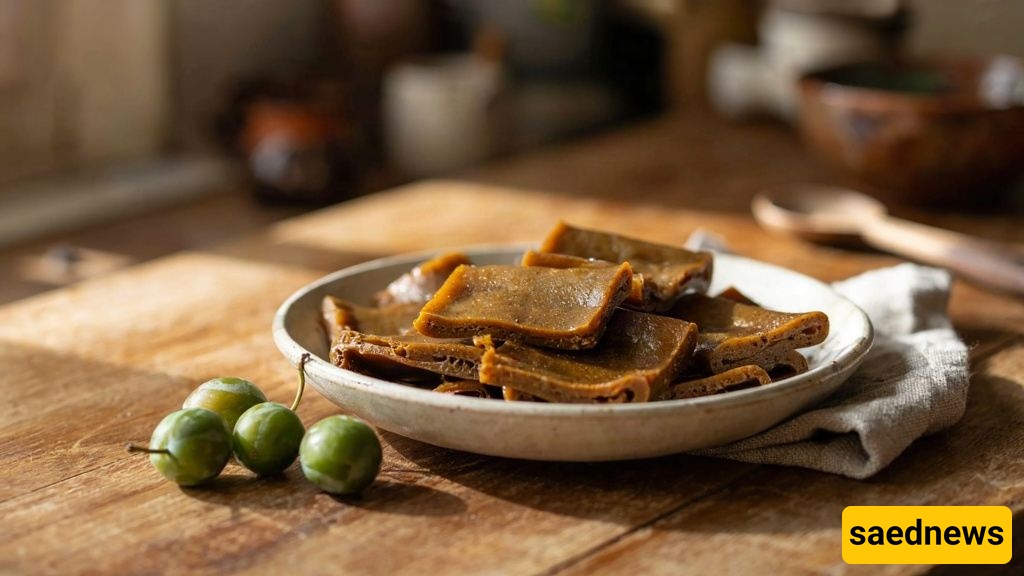
According to Saednews, Green plum fruit leather, known as lavashak-e gojeh sabz in Persian, is one of the most popular and nostalgic traditional snacks in Iranian food culture. Its distinctive sour flavor stimulates the taste buds and, for many people, brings back memories of childhood and family gatherings.
However, in recent years, as awareness of health and fitness has increased, an important question has emerged among consumers: How nutritious is green plum fruit leather, and how many calories does it contain?
Many people assume that because this snack is “sour,” it must be low in calories and therefore a completely harmless, diet-friendly snack. However, the scientific and nutritional reality is more complicated.
Fresh green plums are very low in calories, but the process of making fruit leather involves removing water, concentrating the fruit, and potentially adding sugar or salt. These processes can significantly change its nutritional composition.
In this comprehensive article, we examine the calories, macronutrients, vitamins, and minerals found in green plum fruit leather, explore the factors that influence its nutritional value, and determine how this popular snack can fit into a healthy and balanced diet.

To better understand its nutritional value, it is first important to know what green plum fruit leather is made from.
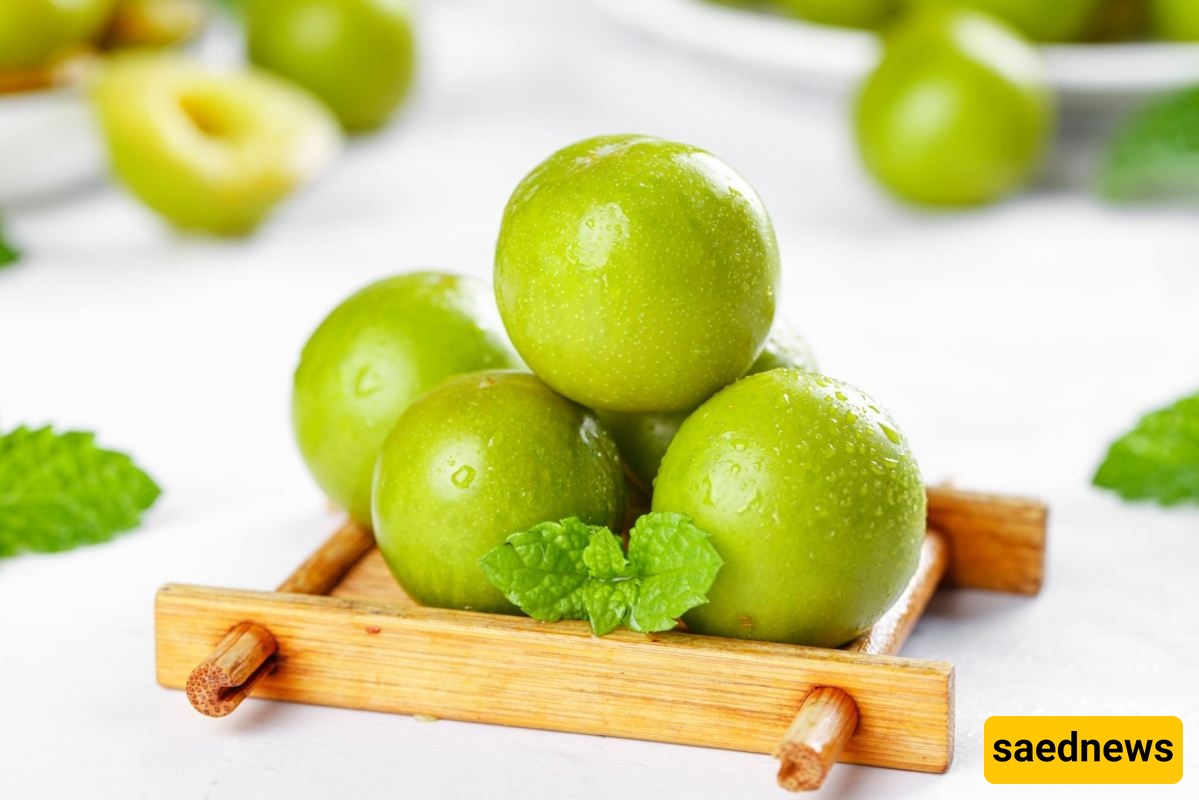
Green plum, sometimes called “aloocheh” in parts of Iran, is the unripe fruit of plum trees or closely related plum varieties. Because of its high acidity and phenolic compounds, it has a naturally tart and astringent flavor.
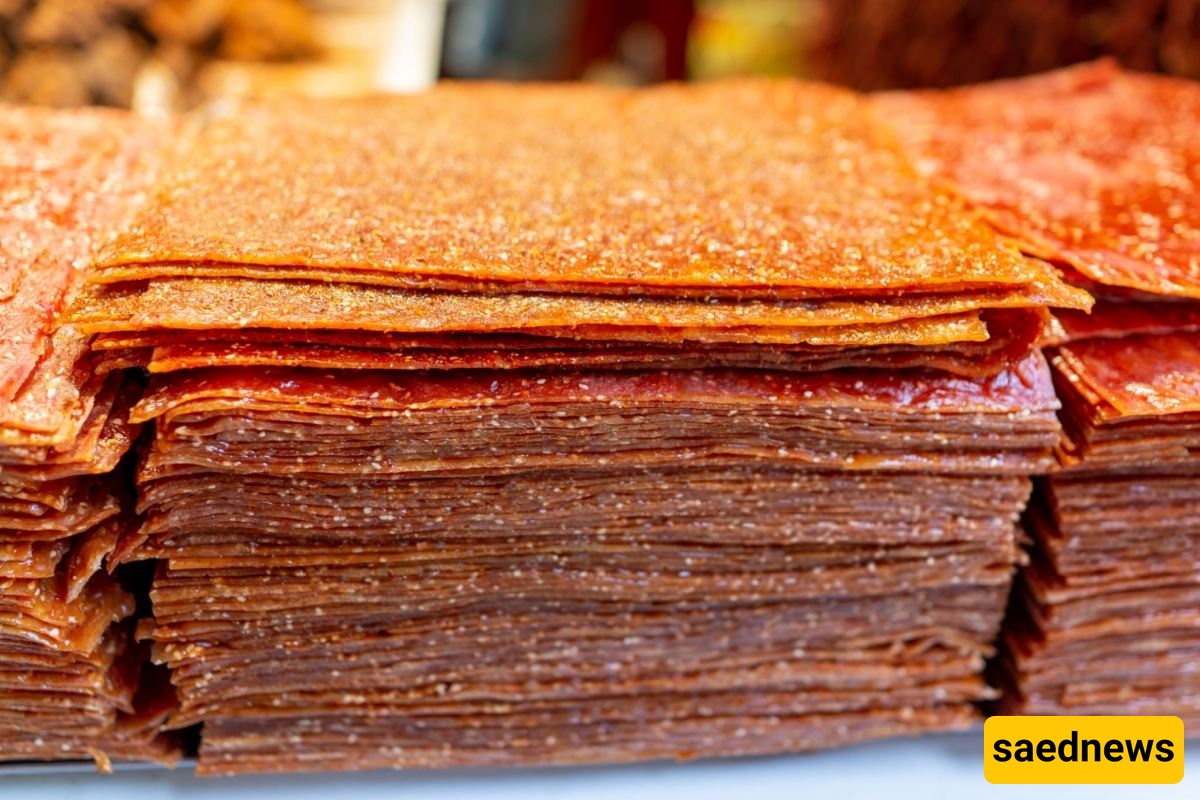
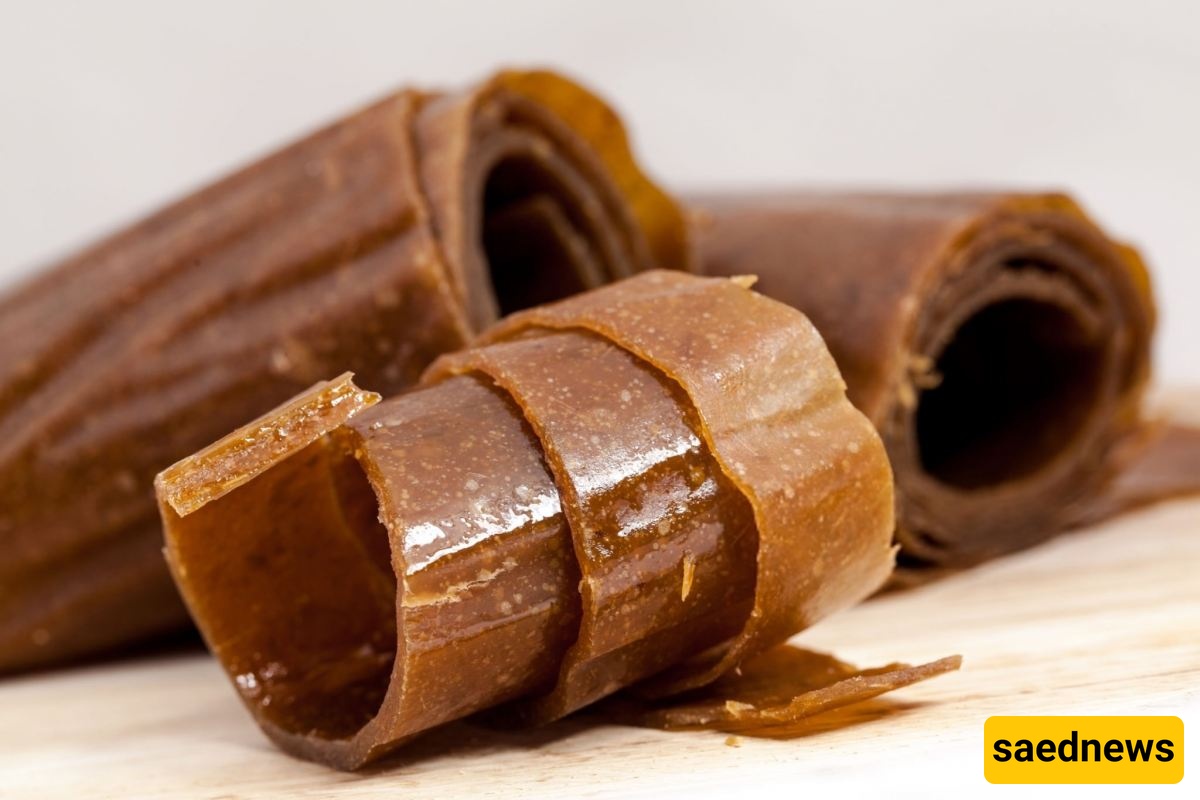
To make fruit leather, the plums are washed, crushed, and pitted before being turned into a puree. The puree is then heated and concentrated before being spread into thin layers on special trays and dried.
One important point is that traditional and homemade versions often contain salt to improve flavor and shelf life. Industrial products may contain not only salt but also sugar, glucose syrup, food acids, and certain preservatives to achieve the desired flavor and texture.
These differences in ingredients are among the main reasons why the calorie content and nutritional value of green plum fruit leather can vary considerably.
The most common question consumers ask is how many calories this snack contains. There is no single fixed answer, because the calorie content depends on how the product is prepared. However, a reasonable average range can be provided.
In general, 100 grams of green plum fruit leather without added sugar contains approximately 270–320 calories. Industrial varieties containing added sugar may reach 350 calories or even 400 calories per 100 grams.
But why is the calorie content so much higher than that of fresh green plums?
Fresh green plums contain only around 40–50 calories per 100 grams. The major difference comes from the drying process. Fruit leather is produced by removing more than 80–85% of the fruit’s water.
When water is removed, nutrients such as natural sugars—including fructose and glucose—as well as carbohydrates and fiber become concentrated into a much smaller volume. As a result, the energy density of each gram of fruit leather is several times higher than that of fresh fruit.
Therefore, if you assume that one piece of fruit leather contains roughly the same number of calories as one fresh green plum, you may be seriously underestimating its energy content. A small piece of fruit leather may be made from five or six whole green plums.
This concentration of calories is one of the most important factors to consider when consuming fruit leather while trying to lose weight.
For a clearer picture, let us look at the approximate nutritional composition of 100 grams of homemade green plum fruit leather without added sugar:
Carbohydrates: Approximately 65–75 grams. Most of the calories in fruit leather come from carbohydrates. These include the fruit’s natural sugars and, when added, industrial sweeteners.
Dietary fiber: Approximately 3–5 grams. Drying preserves much of the fiber, meaning fruit leather contains a concentrated amount of fiber that can support digestive health.
Protein: Approximately 1–2 grams. Protein contributes very little to its nutritional profile, so fruit leather should not be considered a significant protein source.
Fat: Less than 1 gram. Green plum fruit leather is naturally very low in fat.
Sugar: Naturally, it may contain approximately 40–50 grams of fructose and glucose. In industrial products, this amount can be considerably higher because of added sugars.
Fresh green plums are a good source of vitamin C. However, vitamin C is highly sensitive to heat and oxygen. During prolonged cooking and drying, a significant portion—sometimes 50–70%—of the original vitamin C may be lost.
Nevertheless, some vitamin C remains, meaning green plum fruit leather can still provide a small amount of this antioxidant.
Potassium is an essential mineral that contributes to blood-pressure regulation and normal muscle function. Green plum fruit leather may contain approximately 200–300 milligrams of potassium per 100 grams.
The amounts of iron and calcium are relatively small and generally do not make a major contribution to daily nutritional requirements.
Sodium is one of the main nutritional concerns associated with green plum fruit leather.
Because salt is commonly used—particularly in industrial products designed for stronger flavor and longer shelf life—some varieties can contain very high amounts of sodium. According to the figures stated above, certain products may contain approximately 1,000–3,000 milligrams of sodium per 100 grams.
That is a very high amount, especially for people who need to limit their sodium intake, including individuals with high blood pressure.
The nutritional composition of fruit leather is not always the same. Several factors can increase or decrease its calorie content.
Some manufacturers add sugar or glucose syrup to balance the naturally sour flavor. One tablespoon of sugar contains roughly 45–50 calories, so added sugar can quickly increase the total calorie content.
Riper green plums generally contain more natural sugar. Fruit leather made from very unripe plums may contain slightly less sugar and calories but will usually have a stronger acidic and sour flavor.
Some producers add apple puree or other fruits to improve texture and thickness. These ingredients can affect the final sugar and calorie content.
Sun-drying over an extended period may result in some degree of fermentation and can alter certain sugars, although the overall calorie content usually does not change dramatically.
The natural acidity of green plum fruit leather may stimulate saliva production and digestive secretions and can increase appetite. For this reason, sour fruit leather is sometimes consumed before a meal or as a snack to stimulate the appetite.
Although some vitamin C is lost during drying, green plum fruit leather may still contain phenolic compounds and flavonoids that have antioxidant properties. These compounds can help the body deal with oxidative stress and may contribute to the reduction of inflammation.
The fiber content—approximately 3–5 grams per 100 grams—can support normal bowel movements and help prevent constipation. Fiber may also contribute to a longer-lasting feeling of fullness, although this benefit should be considered alongside the relatively high calorie density of the product.
When homemade and prepared without added sugar or excessive salt, green plum fruit leather can be a healthier alternative to snacks such as potato chips, cheese puffs, or chocolate.
It contains very little fat and can provide naturally occurring fruit carbohydrates and fiber.
As mentioned above, excessive sodium is one of the major concerns, particularly with commercial products.
High sodium intake can contribute to elevated blood pressure and increase cardiovascular and kidney-related health risks. People who need to restrict sodium should carefully check the nutrition label or choose a homemade, low-salt version.
Even without added sugar, drying concentrates the fruit’s naturally occurring sugars.
A small piece of fruit leather may contain considerably more calories than people expect. Excessive consumption can be problematic for people trying to lose weight and for those managing blood glucose levels.
People with diabetes should treat fruit leather as a concentrated source of carbohydrates and consume it carefully within their overall dietary plan.
The high acidity of sour fruit leather may contribute to enamel erosion when consumed frequently.
After eating it, rinsing the mouth with water can help. It is also advisable to wait at least 30 minutes before brushing your teeth, allowing saliva time to help restore the mouth’s pH balance.
People with acid reflux, stomach ulcers, or irritable bowel syndrome (IBS) may experience heartburn, bloating, or stomach discomfort after consuming sour fruit leather.
Its acidity may aggravate reflux symptoms in some individuals.
Green Plum Fruit Leather for Weight Loss
If you are trying to lose weight, green plum fruit leather should be viewed as a portion-controlled snack rather than a low-calorie food.
With approximately 300 calories per 100 grams, green plum fruit leather is relatively energy-dense. Unfortunately, its sour flavor can lead people to assume that it contains very few calories, which may encourage overeating.
Portion size is the key.
A reasonable snack serving is approximately 20–30 grams, or about one palm-sized piece or slightly smaller. This provides roughly 60–90 calories, depending on the recipe and ingredients.
This can be a satisfying option when you simply want something sour and flavorful.
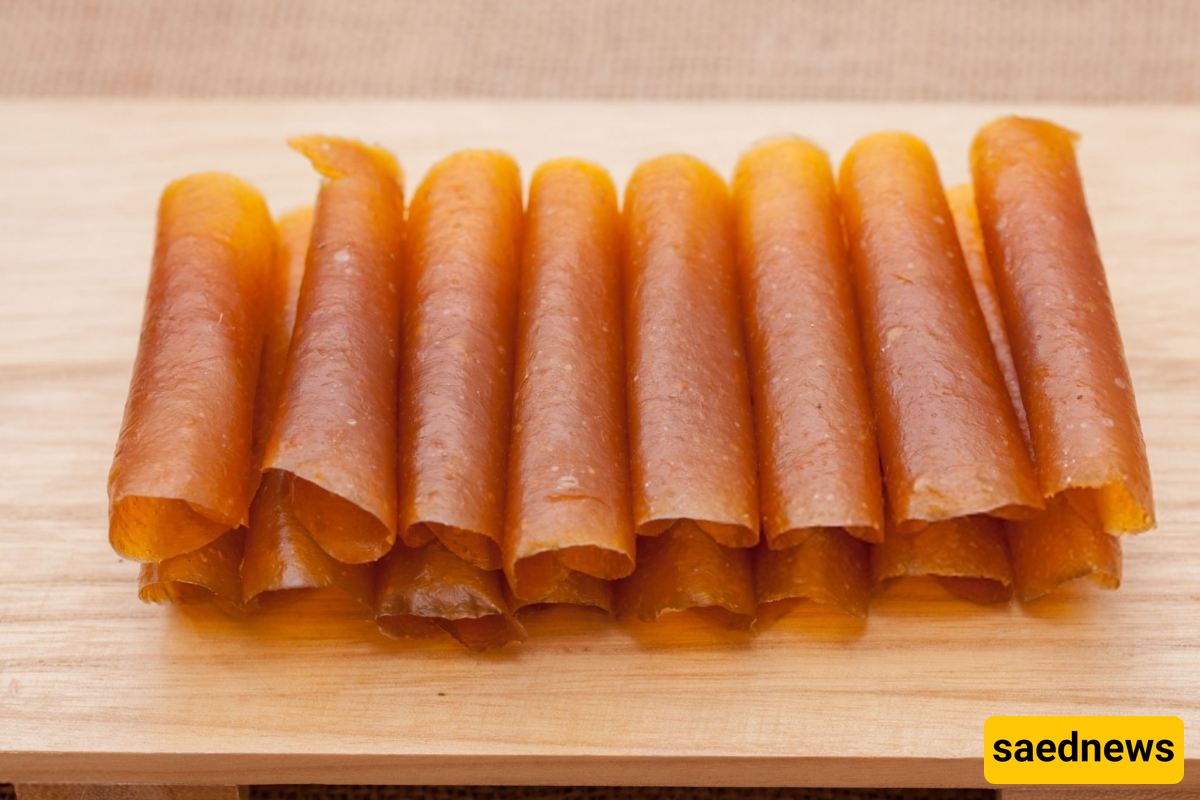
It can be consumed as an afternoon snack or, for some people, before a meal if sour foods stimulate their appetite.
However, people who experience reflux or stomach irritation may want to avoid eating it late at night or immediately after meals.
If you have a choice between homemade and commercial fruit leather, a homemade version is often easier to control because you can reduce the amount of salt and sugar.
When purchasing an industrial product, check the nutrition label and look for options with lower levels of added sugar and sodium.
To put its calorie content into perspective, here are approximate values per 100 grams:
Green plum fruit leather: 270–320 calories
Potato chips: 520–540 calories
Cheese puffs: Around 540 calories
Raisins: Around 300 calories
Dried figs: Around 250 calories
Plain biscuits: Around 450 calories
As this comparison shows, green plum fruit leather can have a calorie content similar to raisins and dried figs while generally containing much less fat than chips and similar processed snacks.
However, this does not mean that it can be eaten without limits.
To enjoy the distinctive flavor of green plum fruit leather while maintaining a balanced diet, consider the following tips:
Watch your portion size: Put your intended serving in a small bowl or on a plate rather than eating directly from the package. This makes it easier to avoid overeating.
Read the nutrition label: When buying commercial products, pay particular attention to sodium, total sugar, and added sugar.
Choose low-salt and no-added-sugar varieties: These are generally preferable when available.
Pair it with complementary foods: Eating a small amount alongside almonds or walnuts can provide healthy fats and protein and may help make the snack more satisfying.
Protect your teeth: Rinse your mouth with water after eating acidic fruit leather.
Consider individual dietary needs: Young children and people with conditions requiring restrictions on sodium, sugar, or acidic foods should choose portions carefully and seek professional dietary advice when necessary.
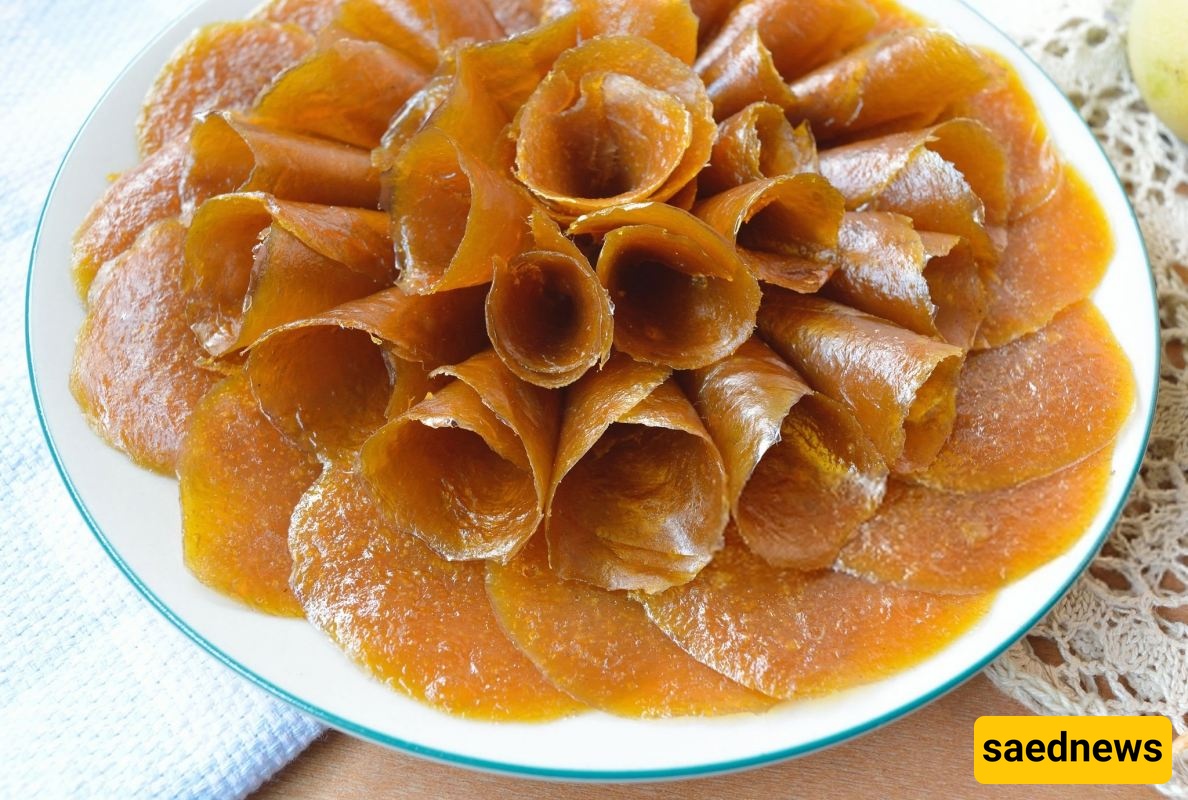
Green plum fruit leather is a beloved traditional Iranian snack with a distinctive sour flavor and strong nostalgic appeal. When it is homemade, made with quality ingredients, and eaten in moderation, it can fit into a healthy and balanced diet.
However, the common belief that green plum fruit leather is automatically low in calories and ideal for dieting is misleading.
The drying process removes most of the fruit’s water, concentrating its natural sugars and calories. Added salt can also significantly increase its sodium content.
The most important factors are portion size and product quality. Consuming a modest serving of approximately 20–30 grams as an occasional snack can allow you to enjoy its flavor while keeping its calorie contribution relatively small.
On the other hand, eating large quantities because you assume that sour foods are low in calories can contribute to excessive calorie intake and potentially interfere with weight-management goals.
For the greatest control over ingredients, homemade preparation is an excellent option. Making green plum fruit leather at home allows you to control the amount of salt and sugar and gives you greater confidence in the quality of the ingredients.
With a better understanding of its calories and nutritional characteristics, you can continue enjoying this traditional snack mindfully and in moderation as part of a balanced diet.