SAEDNEWS: Male redback spiders somersault into their mates’ fangs during mating before constricting their abdomens to escape. A new study suggests the two behaviors may have evolved independently rather than being controlled by closely linked genes.
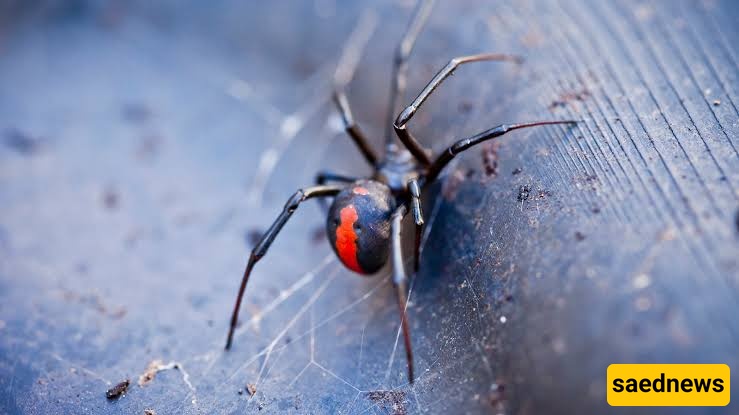
According to SaedNews: Male redback spiders perform an extraordinary mating maneuver: they somersault so their abdomen lands directly in the female’s fangs, apparently inviting cannibalism. Yet the male then constricts his abdomen, helping him pull free before the female can kill him and allowing mating to continue.
A study published August 12 in Biology Letters examines the genetic basis of this unusual behavior and suggests that even complicated animal actions may arise from relatively straightforward genetic mechanisms.
Redbacks are small venomous spiders native to Australia. Females are generally black or brown and have an orange-red dorsal stripe and hourglass-shaped marking, while much smaller males are light brown with white and pale markings. Their close relatives, New Zealand’s venomous katipō spiders, do not practice self-sacrificial mating. Among the 31 known widow spider species, only redbacks and brown widows are known to exhibit this behavior.
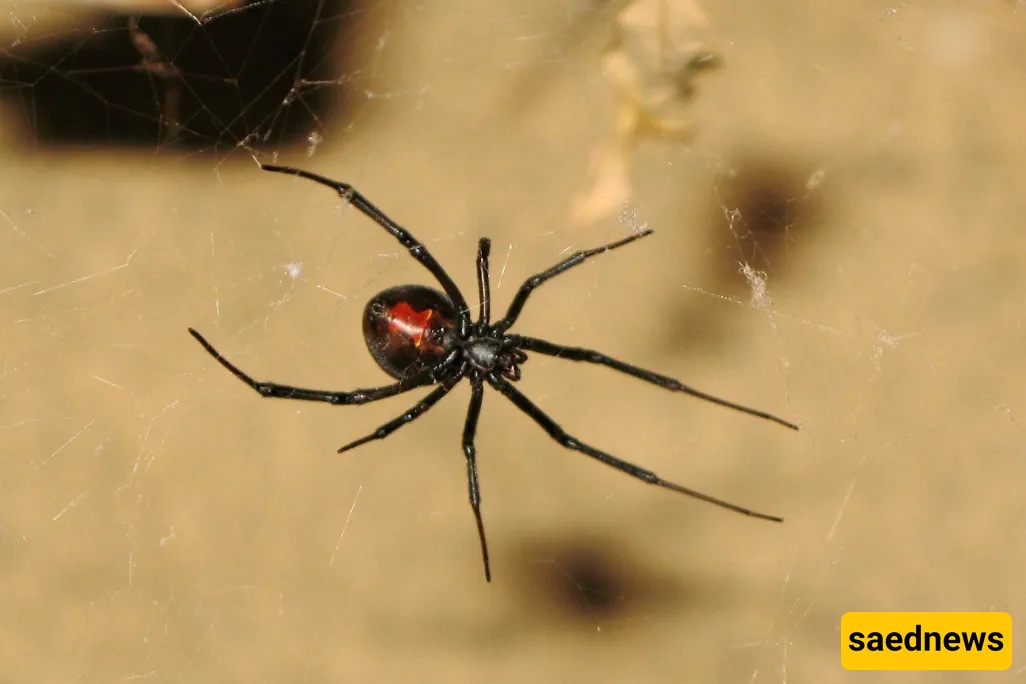
Researchers estimate that katipō and redbacks diverged around 100,000 years ago. Lead author Kardelen Özgün Uludağ of the University of Hamburg says the close relationship between the species makes their dramatically different mating systems unusual.
To investigate whether genetics explained the difference, researchers crossbred the spiders. They raised eggs from both species, produced hybrid offspring through several mating combinations and eventually mated hybrid males with katipō females. Infrared cameras recorded the encounters, allowing scientists to examine whether the males somersaulted and constricted their abdomens. The experiment documented 104 successful matings.
Because the two behaviors occur almost immediately one after another, researchers initially suspected they might be controlled by a “supergene,” or several linked genes located near one another on a chromosome. Instead, only about half the hybrid males performed both behaviors; others displayed just one. The researchers therefore concluded that the genes may be far apart on the same chromosome or located on different chromosomes.
Michael Kasumovic of the University of New South Wales, who was not involved in the research, says the finding suggests the two traits evolved independently despite their importance to survival.
The experiments indicate that somersaulting may be controlled by a gene or supergene at one location on the spider’s X chromosome. Male and female spiders both have two X chromosomes, but males have only one complete set of DNA on each X chromosome, while females have two sets.
Abdominal constriction appears genetically more complicated and may involve several genes, along with possible signals from females.
The findings may also matter for conservation. Redbacks are invasive in New Zealand and threaten katipō through hybridization. Understanding how the two species interbreed could help conservationists address the problem, Vink says.