SAEDNEWS: Scientists have shown that fiber-optic telecommunications cables can detect a diving blue whale even when it is no longer vocalizing, offering a potential new way to monitor whales near the seafloor.
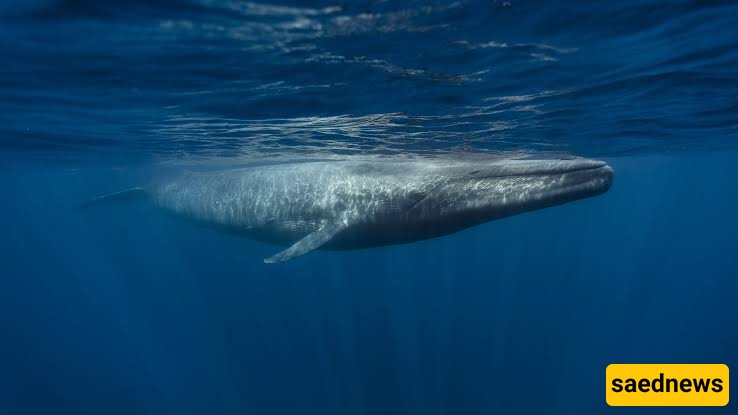
According to SaedNews: Nearly 1,000 feet beneath the waters off Norway’s Svalbard archipelago, researchers detected something enormous moving through the ocean. As the object displaced water, it generated low-frequency waves that traveled toward the seabed and produced a barely perceptible strain in a fiber-optic cable buried below it.
The signal was recorded from shore using laser pulses sent through the cable. Tiny imperfections in the glass scatter some of the light back, allowing scientists to detect changes in the fiber. Such signals can come from submarines or large ships moving above the cable. This time, however, the source was a blue whale.
Scientists have traditionally relied on hydrophones—underwater microphones—to locate whales by listening for their calls. In 2020, Norwegian researchers showed that subsea telecommunications cables could also passively detect whale vocalizations, publishing their findings in 2022. Their latest study examines whether the same infrastructure can reveal whales when they make no sound.
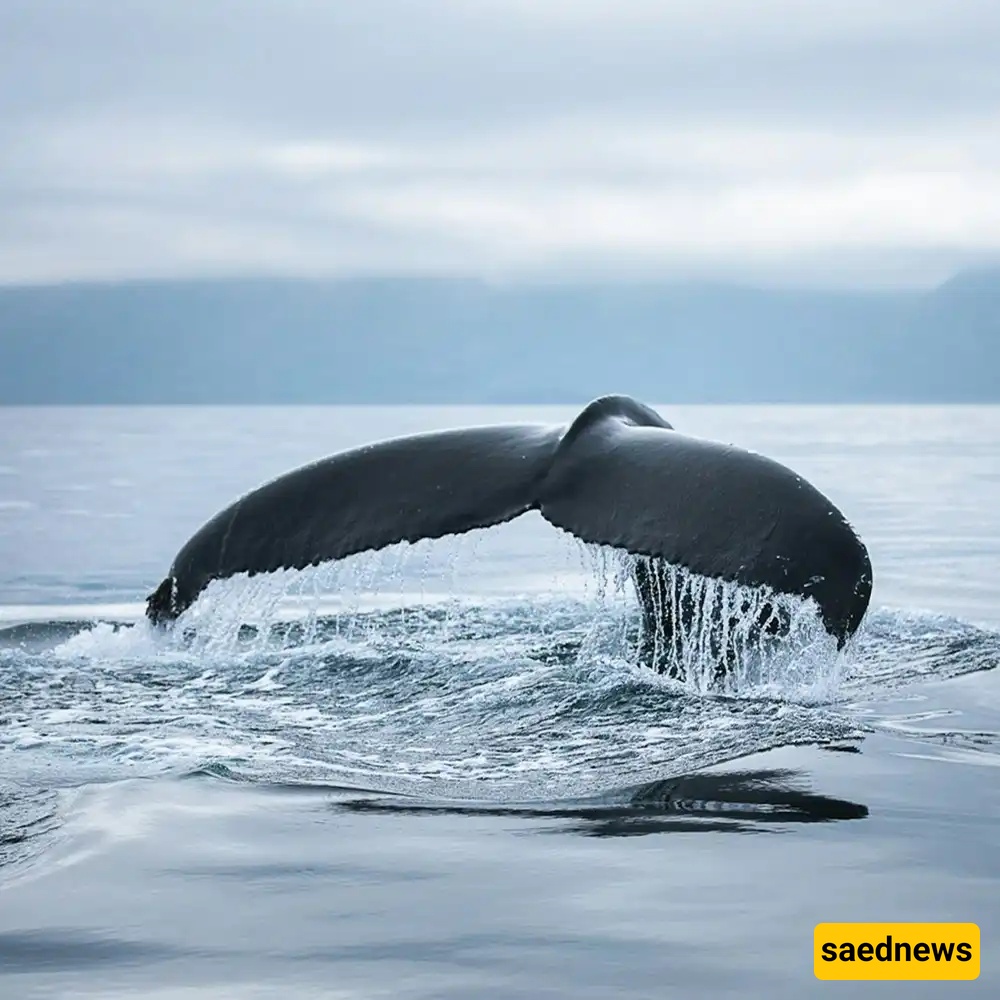
The discovery built on two earlier findings: researchers had learned that cables could register whale calls, while separate work had shown that ships could be detected because their hulls push water outward and create measurable low-frequency waves.
“Similar to when you drop a rock on the sea surface, you get these beautiful waves,” said Martin Landrø, a geophysicist at the Norwegian University of Science and Technology and lead author of the study.
Ships and submarines can stretch the fiber in a similar way as they pass overhead. Automatic Identification System data allowed researchers to match those disturbances with specific vessels. The whale presented a more difficult case.
The animal was initially vocalizing near the surface, and the research team detected its call from the shore-based interrogator station. After the whale descended, however, the researchers observed a comparable disturbance in the cable even though the animal had become silent. Its earlier call provided the link that allowed them to attribute the underwater signal to the whale.
Landrø said the sequence showed that the whale was calling before diving, followed by a very low-frequency signal unrelated to vocalization that could instead be associated with the animal’s swimming or movement.
The technique is known as distributed acoustic sensing, or DAS. Using low-frequency DAS measurements, the researchers identified hydrodynamic pressure and velocity fields produced by the whale’s movement. Shima Abadi, a mechanical engineer at the University of Washington’s School of Oceanography in Seattle who was not involved in the research, described the study as an important first step toward assessing whether the method is practical.
Because blue whales are the largest animals on Earth, their movement can displace enough water to affect a cable. Yet separating these signals from whale calls is difficult because the movement-related frequencies are considerably lower. The researchers already had experience interpreting similar signals from ships, while the whale’s dive offered a continuous connection between the surface and the seabed.
To reconstruct the whale’s low-frequency disturbance, the scientists turned to the Rayleigh equation, a physics formula developed in 1917 to describe the collapse of tiny bubbles in water. Although a bubble and a blue whale differ enormously in scale, the underlying physics allowed the equation to be applied to the whale’s disturbance.
The finding could provide a new means of observing whales close to the seafloor, where they have often remained beyond scientists’ reach. Landrø said the system could eventually reveal seasonal or daily behavioral changes, track animals, and identify whales that are not vocalizing. Researchers currently use suction tags attached to whales at the surface to investigate their underwater behavior, but those devices can detach and generally have limited lifespans. William Wilcock, a marine geophysicist at the University of Washington’s College of the Environment who was not involved in the study, said the technique could be particularly useful for animals such as gray whales that feed along the bottom.
The National Museum of Natural History holds a two-ton, 19-foot-long blue whale skull known as “Big Blue.” Beginning in the late 1970s, the specimen hung from the museum’s ceiling for several decades. It is now kept at the Garber Preservation, Restoration and Storage Facility in Suitland, Maryland.
Subsea cables are primarily designed for telecommunications and the transfer of information, including banking data, large files and foreign intelligence. They link islands and continents and are expensive to install. Inside each cable are extremely thin optical fibers—often hundreds of them—protected by plastic or metal casing. The completed cable is generally only an inch or two across and is buried or secured to the seafloor.
An estimated 600 subsea cables are currently active, spanning more than 930,000 miles across the world’s seafloor. The fiber used in the Norwegian research is 160 miles long. It was installed in 2015 and serves as a connection between two cities.
Telecommunications companies commonly own these cables, although data companies such as Google and Amazon are increasingly involved. Some cables contain “dark fibers,” meaning individual glass fibers remain unused until additional capacity is required. Companies sometimes make those spare fibers available to scientists for research and monitoring. But access remains limited. Wilcock noted that most communications cables are unavailable to researchers, and using them commercially can be prohibitively expensive.
Beyond detecting silent whales, the cables can have geopolitical significance. They may register “dark” vessels traveling above them and potentially intercept sensitive information carried through the infrastructure. Landrø said distinguishing a whale from a ship or submarine can be possible because whales tend to have more irregular shapes. At the same time, his team must handle the data carefully because the research station is less than 200 miles from the nearest Russian outpost and roughly 700 miles from the North Pole, an especially sensitive region for governments and one rich in untapped natural resources.
The researchers are not using the technology to search for hidden military activity. Instead, they are applying it to cetaceans in an environment that scientists have long found difficult to study. Understanding the density of whale populations is increasingly important for shipping, military activities and industrial projects in the ocean. The new method could help monitor whale numbers, which Wilcock described as important for understanding the recovery of whale populations following whaling.
Distance is currently the main constraint. The study reports that hydrodynamic pressure and velocity signals from a cruise ship were detectable at a water depth of 413 meters, or 1,400 feet, and from as far as 550 meters, or 1,800 feet, from the fiber. Smaller blue whales, by comparison, could be observed while diving within 40 meters, or 130 feet, of the fiber-optic cable. Access to the infrastructure is another obstacle, since many data companies do not permit outside researchers to use their cables.
The technology remains at an early stage, but it offers a glimpse of how existing subsea infrastructure might help researchers investigate whales in the deep ocean. Abadi said important questions remain, including the greatest water depth and animal-to-cable distance at which detection remains possible. Even with those limitations, she suggested that the cables could eventually provide an underwater observation capability comparable in some ways to satellite imagery above the ocean.