SAEDNEWS: Rising temperatures and overheated homes in England are putting millions of children at risk. Experts warn of sleep problems, dehydration, and even increased risk of sudden infant death syndrome, calling for improved housing standards and better support during heatwaves.
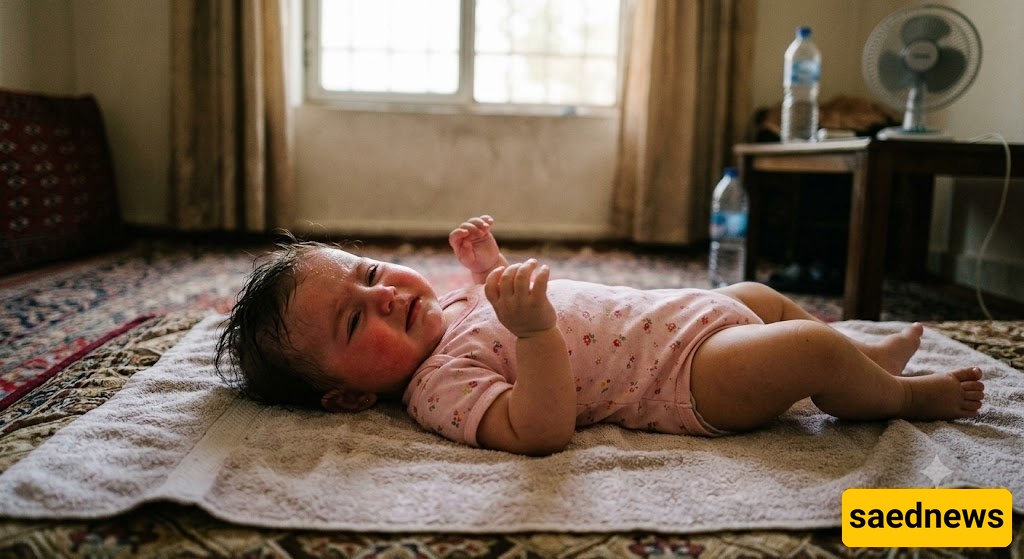
According to Saed News’ children’s service, the National Housing Federation (NHF) and the Chartered Institute of Housing (CIH) in the UK, based on new statistical studies, have found that one in every six babies in England lives in an overheated home. This is due to the climate crisis, which has caused unprecedented temperature increases across the country during this summer.
This week, a rare red warning for extreme heat was issued in parts of England and Wales, and hundreds of schools were closed due to forecasts of record-breaking temperatures. Based on analysis of housing survey data in England, it is estimated that a total of 1.6 million children are living in homes that are too hot.
This situation poses serious health risks for children under five, especially infants, who are less able to regulate their body temperature and manage dehydration.
It also increases the risk of Sudden Infant Death Syndrome (SIDS) in infants and young children. Therefore, parents are advised to keep room temperatures between 16 and 20°C—something that may be difficult for most British families during heatwaves, as homes in the UK are typically designed to retain heat due to the country’s generally cool and rainy climate, and often lack cooling systems common in warmer countries, such as shutters or air conditioning.
The UK Met Office has stated that the likelihood of temperatures reaching 40°C has tripled since 2000, and future heatwaves could last a month or more. It is also predicted that by 2050, more than nine in ten homes in the UK could become overheated, and if adaptation measures are not taken, heat-related deaths could rise to 10,000 per year.
In this situation, British experts emphasize the need to strengthen building regulations regarding overheating and to develop policies that help protect people from the cost of staying cool during future heatwaves.
Advice: keeping the room as cool as possible
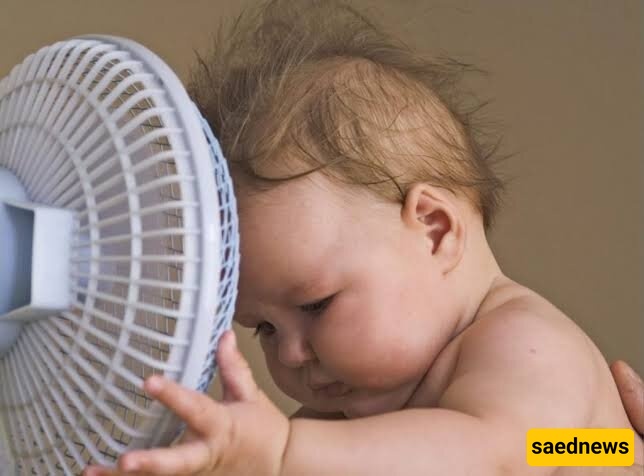
The main recommendation is to keep a baby’s sleeping room between 16 and 20°C. The UK charity Lullaby Trust, which works to prevent unexpected infant deaths, suggests using a fan to cool the room, but not pointing it directly at the baby. Placing a bowl of ice in front of the fan can help cool the circulating air. The charity also recommends keeping curtains closed during the day to block heat and sunlight, and using a room thermometer.
Using light clothing and bedding
To keep babies as cool as possible, lightweight clothing and bedding should be used—for example, a short-sleeved vest or even just a diaper. The children’s charity Tommy’s also recommends cotton sheets and advises against waterproof bedding that can trap heat and cause sweating. Experts also advise against swaddling, so the baby can move away from blankets if they become too warm.
Maintaining airflow when outdoors
To prevent sun exposure, it is not recommended to cover a stroller with a blanket, as this can block airflow and increase the baby’s temperature. It also makes it harder to monitor the child. Instead, use a sunshade or canopy. For babies over six months, sunscreen with SPF 50 or higher should be used. Younger infants should wear a hat and be kept in the shade.