SAEDNEWS: Chilgoza: A Pine Species Native to India, Pakistan, Afghanistan, and the Western Himalayan Forests
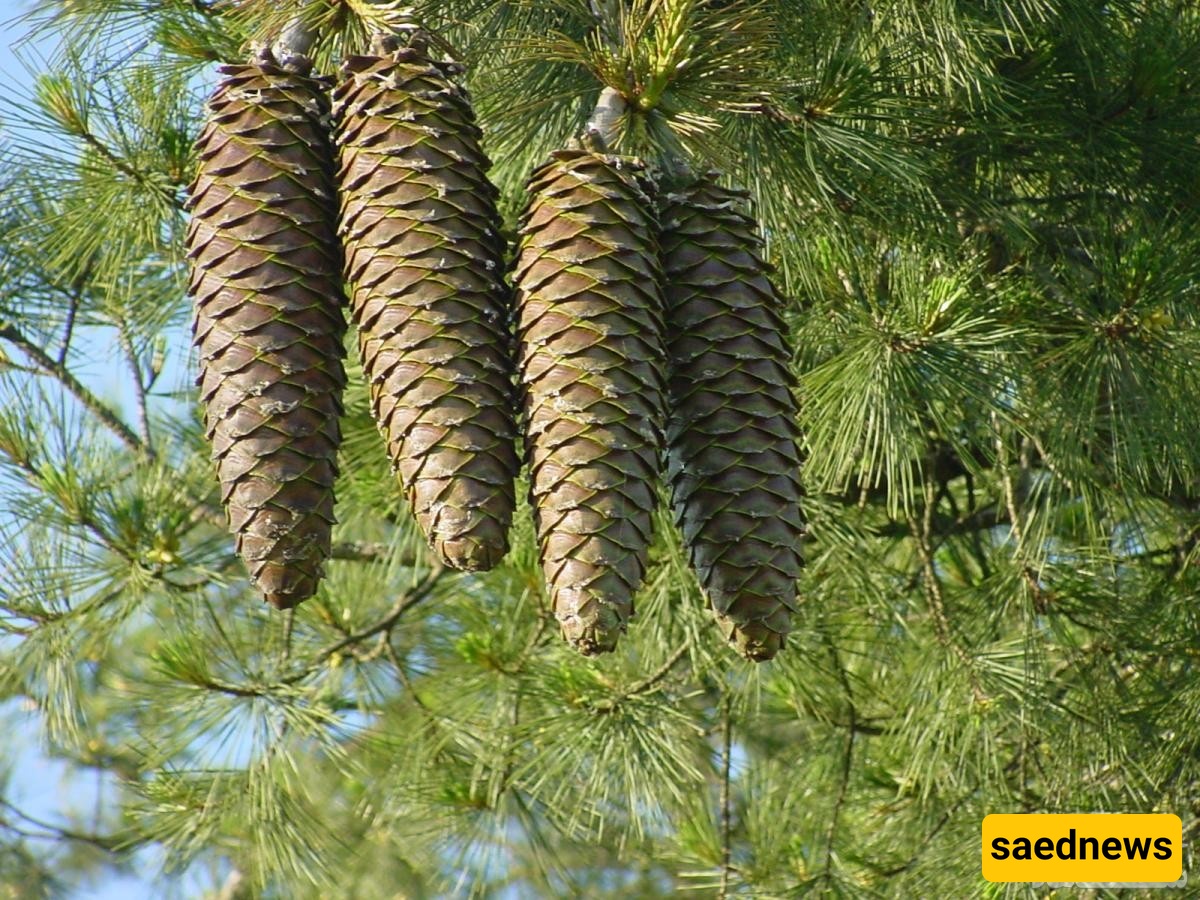
According to Saednews, Chilgoza comes from a species of pine native to the Himalayas, Pakistan, and Afghanistan. Apart from its high price, it is rich in protein, fiber, antioxidants, potassium, vitamin E, fats, and energy. Although the name “Chilgoza” may sound inappropriate or even offensive to some people, this is a misunderstanding—Chilgoza is not a swear word. It is, in fact, a nutritious nut whose kernel resembles sunflower seeds and has a taste similar to almonds and pistachios. People in Mashhad are well acquainted with it and are strong fans of it.
If you travel through different parts of Khorasan Province, you will see Chilgoza repeatedly in dried fruit shops from north to south and east to west. It is a brown seed that, when seen inside its woody shell, resembles a date pit. When roasted, it opens with a distinctive sound and the seed comes out. In fact, Chilgoza is the fruit of a type of large pine tree with short, thick needle-like leaves, native to Pakistan, Afghanistan, and northeastern Iran, including Shirvan. In the past, people in Shiraz and Arak consumed it heavily, but today it is commonly consumed in northern Iran, especially Gilan, and throughout Mashhad. Chilgoza is a high-fat seed rich in essential amino acids and beneficial unsaturated fatty acids. Its oil, like olive oil, helps prevent the increase of bad cholesterol and protects arteries from damage, reducing the risk of heart attacks.
Chilgoza grows in sunny environments with well-drained soils. During its first 10 years, the plant grows up to about 7 feet in height and 4 feet in width. The tree can reach up to 25 meters in height with a deep, wide, and long crown. Its bark is flaky and wrinkled, and when peeled, a light greenish-gray layer appears.
Chilgoza seedlings do not tolerate shade. The seeds can grow in sandy, loamy, and clay soils, but prefer well-drained soil and do not tolerate swampy, waterlogged conditions. The seedlings are drought-resistant. Farmers who previously cultivated saffron but now grow watermelons may find Chilgoza a better alternative to saffron, as saffron-growing regions often have suitable climate and soil pH for Chilgoza cultivation. It performs better in warm and dry regions. The seed grows best in neutral (non-acidic) soil. It is recommended to plant Chilgoza seeds individually in pots and keep them under cold frames, especially in late winter. A short cold period of about 6 weeks at 4°C helps seed germination.
When cultivating Chilgoza seedlings, it is important to note that they have weak and compact root systems. Therefore, once suitable climatic conditions are available, they should be transferred to their permanent location and carefully maintained for 1–2 years. Seedlings are usually transplanted when they reach 30–90 cm in height, but it is better to transplant them earlier, at 5–10 cm. Larger seedlings have difficulty adapting and establishing, so relocation should be avoided. The tree develops extensive roots and is highly resistant to strong winds.
Chilgoza grows in sunny environments with well-drained soils and reaches about 7 feet in height and 4 feet in width within the first 10 years. Mature trees can reach 10–25 meters in height with a deep, wide crown. Branching is upright, but in dense forests the crown becomes narrower and shallower. The bark is flaky and wrinkled, revealing a light greenish-gray layer similar to Pinus bungeana when peeled.
These trees do not tolerate shade. They grow well in both dry and moderately moist soils, though they are drought-resistant. They thrive in sandy or gravelly-loam soils with good drainage and sufficient sunlight. They do not tolerate waterlogged conditions. They can also grow in clay soils. Established seedlings are drought tolerant.
Chilgoza can be a suitable alternative crop for farmers who previously cultivated saffron. Since saffron-growing lands often have appropriate climate and soil pH conditions, Chilgoza can also be cultivated successfully there. It can generally be grown in many parts of Iran, but performs best in warm and dry regions.
In Afghanistan, stations have been established to support Chilgoza seed conservation, and many growth areas have been designated as protected regions. However, most Chilgoza forests—both inside and outside protected areas—are threatened by declining soil fertility and erosion caused by tree cutting for fuel and timber, overgrazing, and conversion into agricultural land. Therefore, there is a growing need for sustainable forest management and reforestation programs to prevent population decline of these trees.
In Afghanistan, Chilgoza trees are found in dense forests in Paktia, Kunar, Laghman, Nuristan, and the Nerkh mountains. If a tree produces cones in one year, it will produce Chilgoza seeds two years later. Mature cones open slightly, while immature ones remain closed. Inside young cones, the seeds are soft and watery, but they gradually harden into Chilgoza nuts.
For harvesting, long poles with hooked tools resembling small sickles are used to detach cones from the trees. The cones are then stored in shaded rooms for several days. Afterwards, they are exposed to sunlight, allowing them to open naturally and release the seeds.
These forests are naturally grown, not cultivated. The taste of raw Chilgoza differs significantly from roasted market Chilgoza. In Kabul, raw Chilgoza is often roasted in hot sand over fire.
Chilgoza helps reduce blood triglycerides and supports liver health. Due to its fiber and fat content, it can suppress appetite. Its potassium and manganese content help regulate blood pressure, while magnesium helps reduce insomnia, muscle pain, fatigue, stress, and anxiety.
It contains one of the highest levels of certain fatty acids among nuts. These fats help the liver eliminate harmful triglycerides.
Its monounsaturated fats have properties similar to olive oil and are beneficial for the heart.
It reduces cholesterol and protects blood vessels, lowering the risk of heart attacks.
Antioxidants protect cells from damage caused by free radicals.
It is a rich source of iron and helps increase red blood cell levels.
Cuttings should be taken from trees younger than 10 years. They should include short stems with clusters of needle-like leaves. To improve rooting, buds can be removed several weeks before taking cuttings. However, growth from cuttings is generally slower.
Chilgoza has a very warm nature (hot temperament) and is not suitable for people with dry body constitutions, such as those with yellow bile or melancholic temperaments. It is more suitable for moist temperaments, especially phlegmatic individuals.