SAEDNEWS: The plant known scientifically as Mandevilla hybrids belongs to the Apocynaceae family and is native to the tropical forests of Central and South America, including countries such as Brazil.
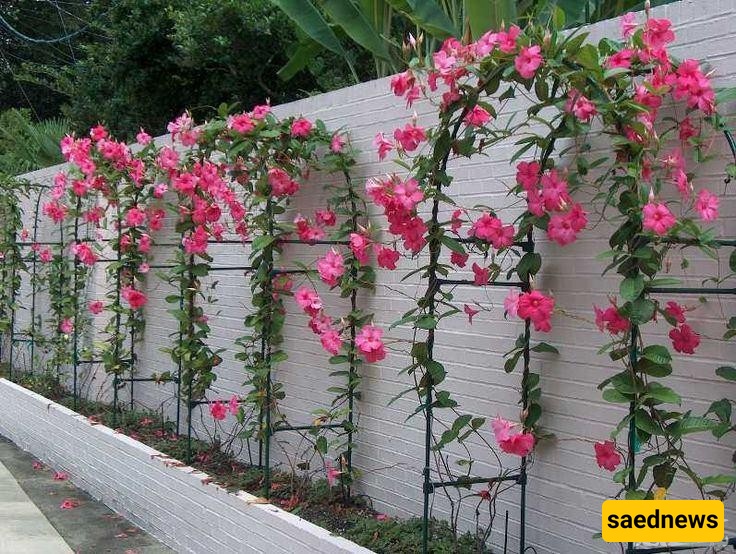
According to Saednews:
Scientific Name: Mandevilla
Family: Apocynaceae (Oleander family)
Native Region: South America
Mandevilla is a beautiful perennial climbing plant native to the tropical forests of Central and South America. It is not cold-tolerant and thrives in warm climates. This evergreen plant begins flowering from spring to autumn once it reaches about 25 cm in height.
With proper care, Mandevilla remains attractive for many years. It can grow up to 4 meters in length. Its trumpet-shaped flowers appear from spring through autumn and come in pink, white, and red colors.
The leaves are oval-shaped, dark green in color, and approximately 6 cm long.
The flowers are trumpet-shaped and appear in pink, white, or red. The flower clusters are typically 15 to 20 cm long.
Mandevilla grows best in warm conditions between 18°C and 29°C. Cold weather causes leaf drop. The minimum temperature it can tolerate is around 13°C, at which point the plant should be moved to a warmer, sheltered location.
Mandevilla is a tropical, sun-loving plant, but excessive direct sunlight may scorch or damage it.
It is best placed where it receives morning sunlight and is protected from intense afternoon sun. Partial shade is also suitable.
For indoor cultivation, especially during colder months, place it near a bright window with filtered light using a thin curtain.
Mandevilla tolerates mild soil dryness. Water the plant when the top layer of soil becomes relatively dry. Regular but controlled watering is important.
Overwatering can lead to root rot, resulting in yellowing leaves, leaf drop, and plant decline. In garden conditions, watering may be needed daily depending on climate.
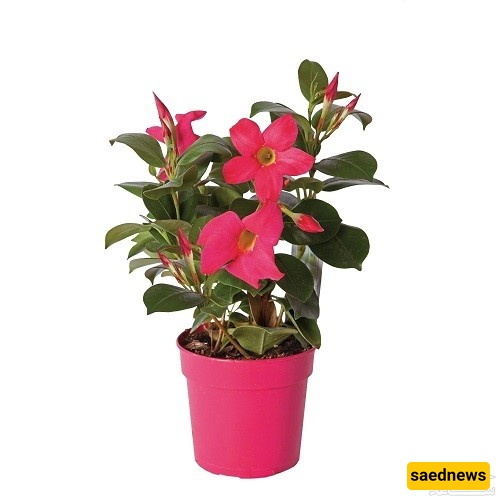
A rich, well-draining soil is ideal. A suitable mix includes equal parts peat moss, garden soil, and sand.
During the growing season (spring and summer), feeding the plant with a phosphorus-rich fertilizer (10-20-10) according to product instructions helps promote growth and flowering.
Mandevilla is commonly propagated through cuttings. Softwood cuttings in late spring or semi-hardwood cuttings in summer can root within 6–8 weeks.
Using rooting hormones such as IBA (1000–1500 ppm) improves rooting success. High humidity should be maintained during propagation.
Seeds can also be used for propagation. They should be planted in spring at temperatures between 18°C and 23°C.
Pinching back stems encourages lateral growth, resulting in a fuller and bushier plant with more flowers. The best time for pruning is spring, especially for young plants.
If left unpruned, the plant may become difficult to manage, particularly in pots.
Pruning involves cutting about 1.5 cm from the tip of the selected stem.
In winter, when moving the plant indoors, about 30% of each stem can be trimmed.
For plants grown in garden soil, a more severe pruning may be necessary before winter to prevent cold damage. In such cases, stems are cut back leaving only 20–25 cm.
Regular misting is sufficient to keep leaves clean. Chemical leaf polish products should not be used.