SAEDNEWS: Never ignore your individuality, but learn to act as a team and cooperate with your spouse. If you maintain about 20 to 25 percent separation and independence after marriage, this helps keep roughly 75 percent of togetherness healthy and balanced. In the rest of this article, we will discuss more about individual freedoms after marriage.

According to the Family Magazine Service of Saed News, the common belief that spouses must do everything together is a widespread misconception. This belief likely stems from another mistaken idea that portrays husband and wife as two lovebirds who go everywhere together and do everything jointly. In this view, any meaningful experience without the other is considered unacceptable. They do nothing alone and function only as a couple. But where does independence after marriage stand?
One of the issues that arises in married life is the limitation of individual freedoms. In such cases, the first reaction people show is resistance. For example, before marriage, a person may have had the habit of going hiking or spending time with friends every Friday. After marriage, their spouse may oppose this habit and resist it. For instance, when the person gets dressed and prepares to leave the house, the spouse may react quickly and say: “Where are you going? You are married now, and if you want to go somewhere, we should go together.”
At first, couples may accept such behavior and compromise for each other. However, over time, resistance begins to form, and they say: “We also want our personal life and individual freedom.” When resistance develops in a marriage, it can gradually turn into a kind of competition over when they should be together and when they should be free, eventually leading to conflict and arguments between the couple.
According to Dr. Arnold A. Lazarus, most married individuals transfer dependency patterns from their parents to their spouses. For example, when 6-year-old Pat asks 7-year-old Kim if she can come and play, Kim responds: “I have to ask my mom for permission.” However, if 26-year-old Pat asks 27-year-old Kim whether she would like to go bowling, attend a football game, or watch a horror movie that her spouse dislikes, it would be unreasonable for Kim to say she must ask her husband for permission.
Even more unreasonable would be if 27-year-old Alice, who is invited to the opera (which she loves while her husband dislikes), says: “I have to see if my husband allows me.”
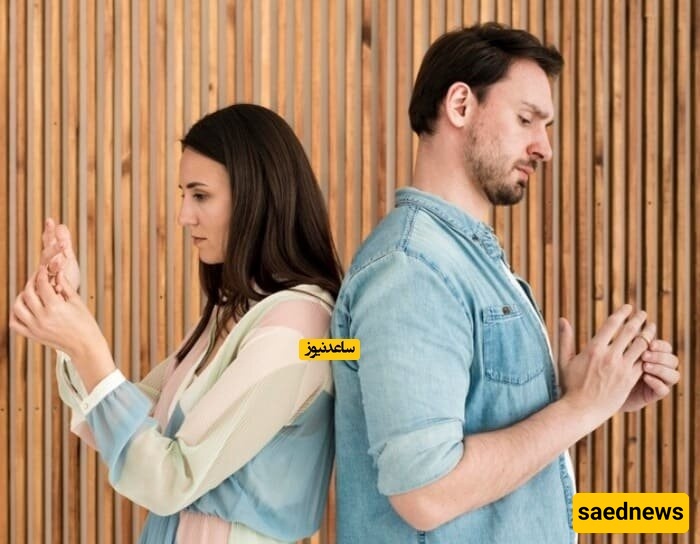
This discussion is not about promoting irresponsibility or indifference in marriage, but rather highlighting that words often reflect underlying thoughts and behaviors. There is a significant difference between “asking” and “informing.” Statements such as “My husband won’t let me go out at night,” “My wife doesn’t allow me to join a gym,” or “He doesn’t know I play golf on weekends,” are examples reported in couples therapy sessions where excessive control limits personal freedom in marriage.
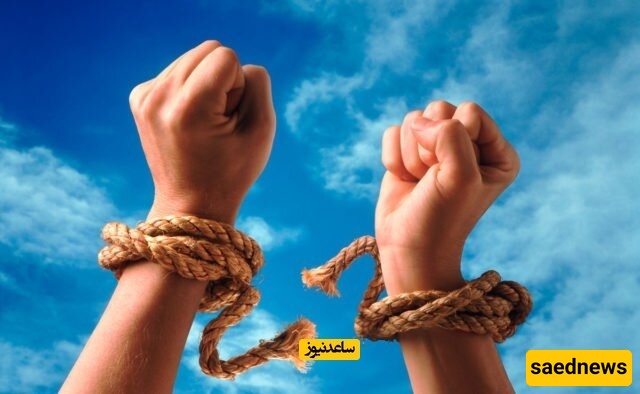
It is not surprising that some cartoonists depict marriage as chains and shackles. However, in reality, a healthy marriage should enhance independence and personal freedom.
Some individuals feel guilty when they do things alone or attend events without their spouse, believing that any activity not shared by all family members goes against family principles. However, forcing a partner to do something they dislike creates resentment and tension in the relationship.
For example, Millie returned home after spending time with friends and found that her husband, who had stayed home to do some tasks, had unloaded the dishwasher and done the laundry. The next night, when the husband returned from spending time with friends, he saw that Millie had painted the living room—a task he disliked and had been postponing.
Social gatherings had become a source of conflict for a couple who sought therapy from Dr. Arnold Lazarus. “Fred” disliked such parties, preferring to stay home and read or watch television, while his wife “Kay” loved them. Kay enjoyed dressing up, meeting new people, seeing old friends, and catching up on news.
Kay often tried to persuade her husband to accompany her, but this sometimes led to arguments. Fred would even try to create tension just before leaving to avoid attending.
The therapist asked Fred whether he would object if his wife attended these parties alone while he stayed home peacefully. Fred replied that he would actually be happy. The therapist then asked Kay why she insisted on taking him with her at such a cost. When asked why she did not go alone, Kay replied: “What would people think? What would I say if they ask where my husband is?”
The therapist suggested she could simply say he was traveling, not feeling well, or busy with important work. He also explained that she could honestly say her husband does not enjoy such events and that they mutually agreed he does not need to attend.
Kay eventually applied this advice not only to parties but also to shows she enjoyed that her husband did not. As a result, both partners experienced greater independence, less conflict, and a more intimate relationship.
The main point is that spouses must trust each other and support each other’s personal growth. Marriage is a bond between two people—but two independent individuals. It should not mean total dependence or restriction.
It is beneficial for couples to share common interests in leisure activities. For example, if both enjoy hiking, they can do it together. However, when interests do not align, forcing one partner to sacrifice their preferences in the long term creates problems and dissatisfaction.
Over time, such behavior leads to frustration, as individuals feel they have not grown personally within the relationship. In many young couples, this eventually results in fatigue and emotional exhaustion after years of marriage.