Saed News: A Zionist newspaper, acknowledging that Mossad has launched a special unit for cognitive warfare and the character destruction of Iranian leaders, revealed that this unit is extensively cooperating with the Iranian opposition abroad.
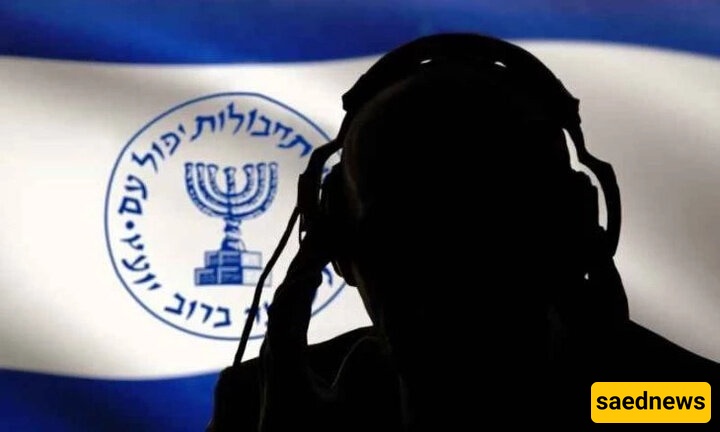
According to SAEDNEWS, the Zionist newspaper Israel Hayom disclosed in a report new dimensions of the Israeli regime’s conspiracies against Iran, revealing a significant transformation in the operations of Mossad against Iran. According to the report, Mossad has shifted over recent years from its traditional focus on assassinations and military operations toward a new approach called “influence warfare,” aimed at weakening the Iranian system from within.
The report states that in recent years, a special unit within Mossad titled the “Influence Operations Department” has been established. This unit was created as part of organizational reforms led by Mossad chief David Barnea, with the aim of “targeting the political and social depth in Iran, not only its military structure.”
Investigations by the Zionist newspaper indicate that this agency seeks to damage the image of Iranian officials through media campaigns and public pressure, attempting to remove Israel’s adversaries from their positions without physical elimination.
The report adds that this approach is based on the use of media, social networks, public sources, and even the creation of fake accounts and targeted content inside Iran, aiming to weaken public trust in the country’s leadership and portray it as fragile.
The newspaper quotes a former official in this unit as saying that such operations are less costly than assassinations and can have a greater long-term impact, as they target Iran’s “psychological and media security.”
According to the report, Mossad does not limit itself to intelligence gathering but also analyzes public morale inside Iran, extensively exploiting social and economic protests with the aim of increasing internal pressure on the system.
Israel Hayom writes that the unit has developed advanced digital tools in recent years, including “digital armies” and “fake accounts” designed to damage the image of Iranian officials, and cooperates closely with opposition media groups abroad to disseminate messages aimed at weakening the ruling establishment in Tehran.
The Zionist media admits that despite these efforts, Iran’s system has remained resilient, and the idea of its “rapid collapse,” promoted in some circles, has not materialized—indicating the inefficiency of this agency.
The article concludes that confrontation with Iran is no longer purely military, but has become a long-term struggle involving multiple tools, combining information warfare, psychological operations, and attempts to influence Iranian public opinion in order to gradually bring about political change.