SAEDNEWS: Pancakes and crepes may look similar at first glance, but they differ significantly in their ingredients, thickness, texture, cooking methods, and serving styles. In this guide, we’ll explore their key differences in detail.
According to Saednews, Pancakes and crepes are two popular dishes that look quite similar at first glance. Both are made from a batter containing flour, milk, eggs, and butter, cooked in a frying pan, and usually served warm with sweet or savory fillings and toppings. However, taking a closer look reveals some clear differences in their ingredients, thickness, texture, cooking methods, and serving styles. Understanding these differences can help you choose the right recipe, prepare the batter correctly, and achieve better results when cooking and serving them.
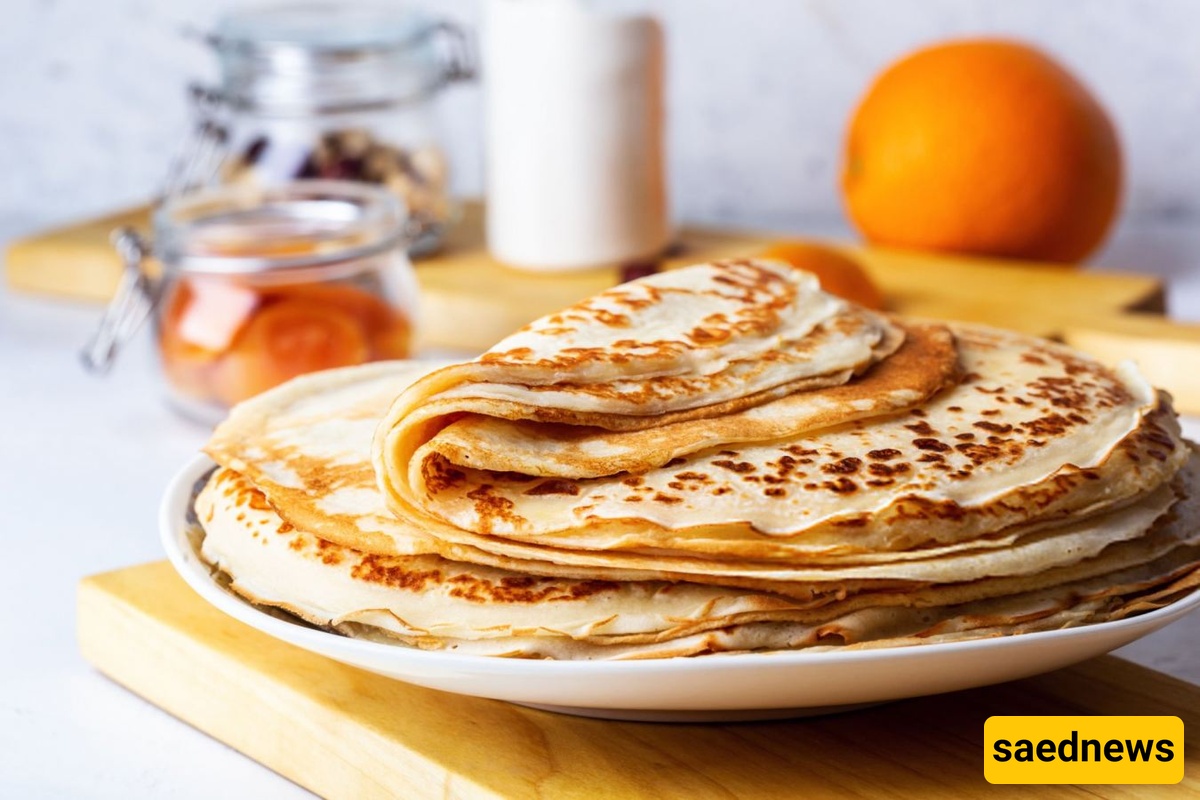
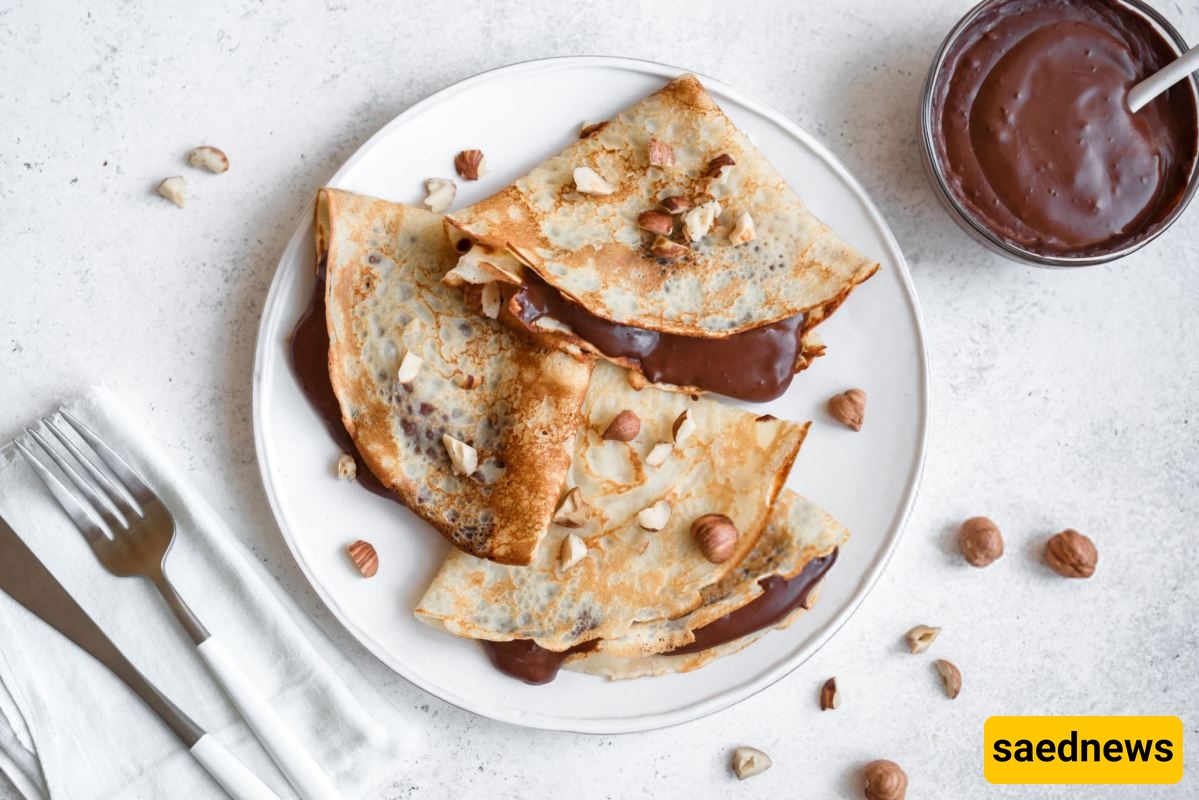
Crepes are very thin, wide, round pancakes made from a simple mixture of flour, eggs, milk, and butter. They can be considered a variation of pan-cooked cakes, similar to pancakes, but their defining characteristics are their extremely thin texture and large, flat surface.
Crepes originated in France and are particularly popular in Brittany, a region in western France.
Traditionally, crepes in Brittany were served more like a type of bread, often filled with savory ingredients. Over time, people in the region began using white flour to make crepes and filling them with sweet ingredients as well. Today, crepes can be prepared with both sweet and savory fillings.
Crepes can be cooked in nonstick or cast-iron pans. Special crepe pans are also available, making preparation easier and helping spread the batter evenly across the cooking surface.
Pancakes are thin, flat, round cakes made by pouring batter into a frying pan and cooking it until set. In many cultures, pancakes are considered a type of quick bread and are commonly served for breakfast, as an afternoon snack, or as a dessert.
During cooking, pancakes are usually flipped over so that both sides cook evenly. This helps give them a golden-brown surface and a pleasant texture.
Pancakes are generally made with a thicker, more consistent batter. Their recipes often include a leavening agent, such as baking powder or baking soda. These ingredients allow the batter to rise during cooking, making pancakes thicker, fluffier, and more substantial than crepes.
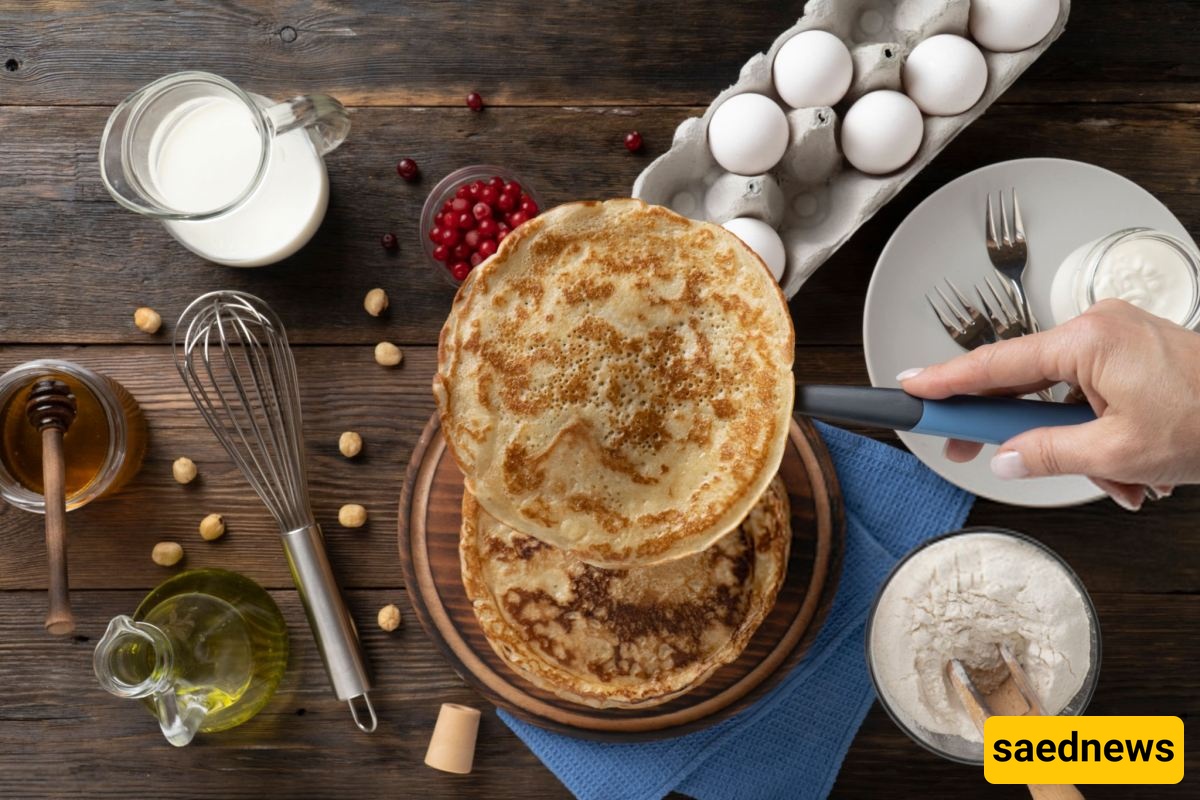
Pancakes are commonly stacked on top of one another and served with chocolate sauce, maple syrup, honey, or fresh fruit.
One of the main differences between pancakes and crepes lies in their ingredients and how their batters are prepared.
Both dishes are made with flour, eggs, milk, and butter or oil. However, the proportions of these ingredients and the additional components used are different.
Pancake batter usually contains baking powder or baking soda. These leavening agents help the batter rise during cooking, creating a light and fluffy texture.
Crepe batter, on the other hand, does not contain a leavening agent. As a result, crepes remain thin and flat rather than rising during cooking.
Another important difference is batter consistency. Pancake batter is thicker and more cohesive, whereas crepe batter is much thinner and more liquid. This thinner consistency allows the batter to spread easily across the pan, forming an extremely thin layer.
Crepe batter also typically needs to rest after preparation. Resting allows the flour to absorb the liquid fully and helps create a smoother, more uniform batter, resulting in a better texture.
Because crepes do not contain leavening agents and are made with a thin batter, they are much thinner than pancakes. They generally have a larger diameter and a wider surface.
Crepes have a soft, delicate, and flexible texture, making them easy to roll or fold. Their flexibility also makes them ideal for filling with a variety of sweet or savory ingredients.
Pancakes, by contrast, are thicker and fluffier. In many recipes, they have a smaller diameter than crepes and are cooked as smaller, thicker circles.
Their texture is more spongy and airy, thanks to the leavening agents and thicker batter. Pancakes are commonly stacked and served with sauces, syrups, or other toppings.
Pancakes and crepes are prepared in similar ways, but there are some differences in the cooking process and equipment.
Both are cooked in a frying pan, and each side is generally cooked before the food is flipped over. However, crepes are usually prepared in nonstick pans, cast-iron pans, or specially designed crepe pans.
The smooth, heated surface of these pans makes it easier to spread the thin crepe batter evenly.
For pancakes, a regular or nonstick frying pan works perfectly well. Since pancake batter is thicker, it holds its shape easily and does not need to be spread across the entire pan.
One important consideration when cooking either dish is temperature control. Excessively high heat can burn the outside while leaving the inside undercooked. On the other hand, heat that is too low can cause the batter to dry out or stick to the pan.
Although pancakes and crepes share several ingredients, their differences in batter consistency, thickness, and texture make each one suitable for different serving styles.
Crepes are ideal when you want a thin, delicate, and flexible base that can be filled or folded with sweet or savory ingredients. Pancakes are a better choice when you prefer a thicker, fluffier dish, especially for a traditional breakfast served with syrup, honey, chocolate, or fresh fruit.