SAEDNEWS: Learn how to make chicken stew with a variety of recipes, from simple and elegant versions to tomato-based, saffron-infused, and Northern Iranian sour chicken stew. Discover step-by-step instructions, essential cooking tips, the best spices and side dishes, and answers to common questions about cooking chicken.
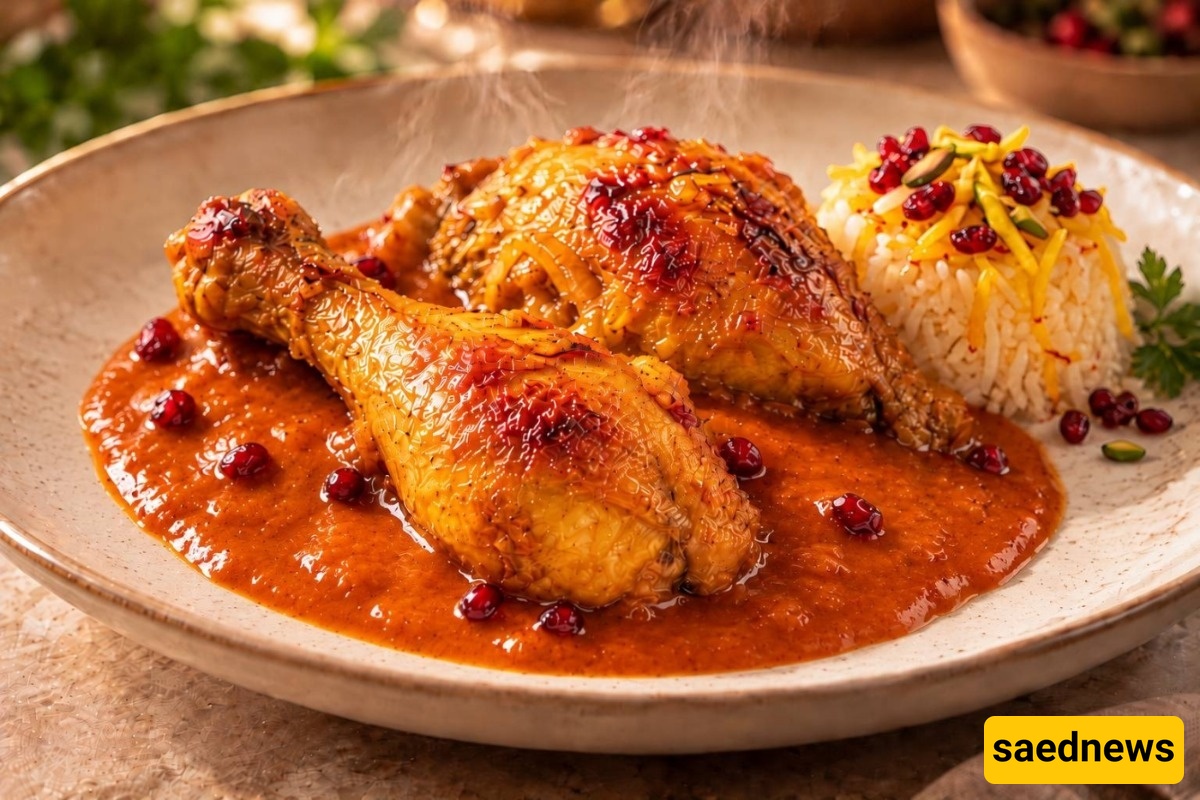
According to Saednews, Saffron chicken stew is a versatile Persian dish that works equally well for everyday meals and special occasions. With its rich, golden-red sauce and delicate saffron aroma, this dish is an excellent base for several traditional Persian meals, including chicken with rice and Zereshk Polo ba Morgh (Persian barberry rice with chicken). It can be served simply for a family dinner or presented elegantly for guests.
This complete guide covers everything from the ingredients and preparation to cooking techniques, serving suggestions, and popular variations. Whether you are looking for a simple homemade chicken stew or a restaurant-style dish for entertaining, this recipe will help you achieve tender chicken and a flavorful, well-balanced sauce.
The following quantities are suitable for preparing a classic Persian saffron chicken stew for four people.
Ingredient | Quantity |
|---|---|
Chicken pieces | 4 pieces (approximately 800–900 g) |
Onions | 2 medium-to-large (approximately 300 g) |
Tomato paste | 2 level tablespoons |
Strong brewed saffron | 3 tablespoons |
Turmeric | 1 teaspoon |
Black pepper | A pinch (about ⅛ teaspoon) |
Salt | 1 teaspoon |
Fresh lemon juice or bitter orange juice | 1 tablespoon |
Cinnamon stick | 1 small piece |
Vegetable oil | 3 tablespoons |
Butter | 15–20 g |
Boiling water | Approximately 2 cups |
Follow these steps to prepare tender chicken with a rich sauce, beautiful color, and authentic Persian flavor.
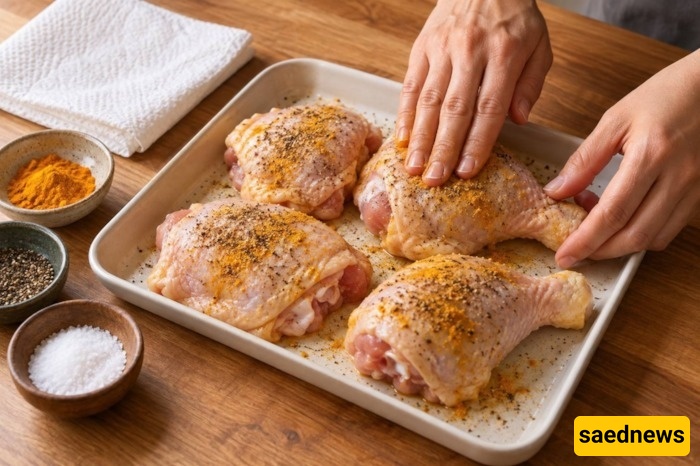
Pat the chicken pieces dry with paper towels. Rub them with half a teaspoon of turmeric, black pepper, and a little salt. Set aside for 15–20 minutes to allow the seasoning to penetrate the meat.
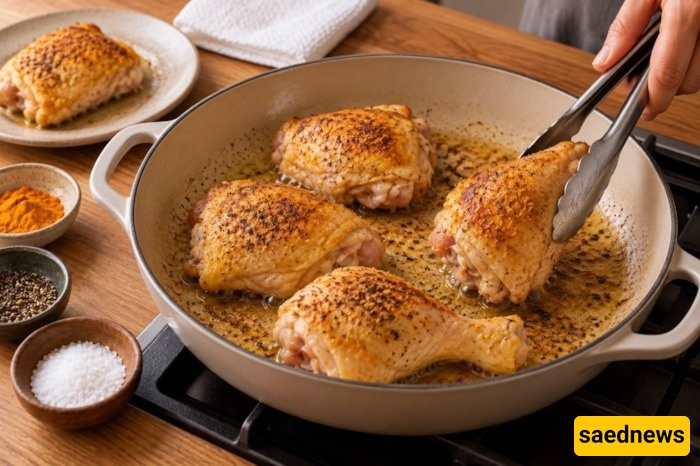
Heat 2 tablespoons of oil in a wide pot over medium-high heat. Add the chicken pieces and fry each side for approximately 3–4 minutes, until golden brown.
The chicken does not need to cook through at this stage. Remove the pieces from the pot and set them aside.
Thinly slice the onions and add them to the same pot. Cook over medium heat until soft and golden.
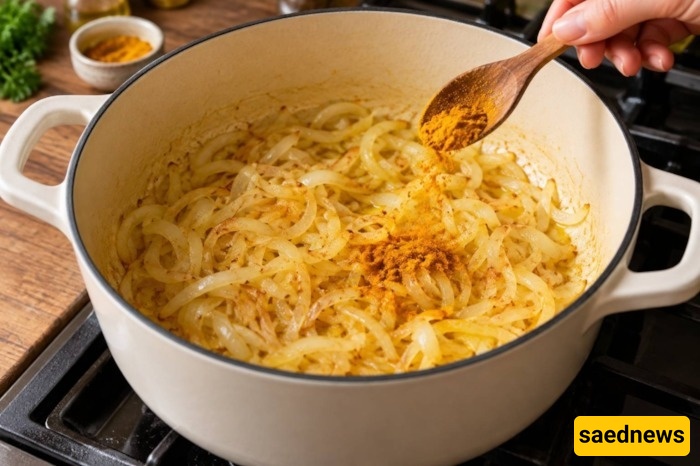
Add the remaining turmeric and sauté for another 30 seconds to release its aroma.
Move the onions to one side of the pot and add the tomato paste to the empty space. Fry for 2–3 minutes, stirring occasionally, until the paste darkens slightly and loses its raw smell.
Mix the tomato paste thoroughly with the onions.
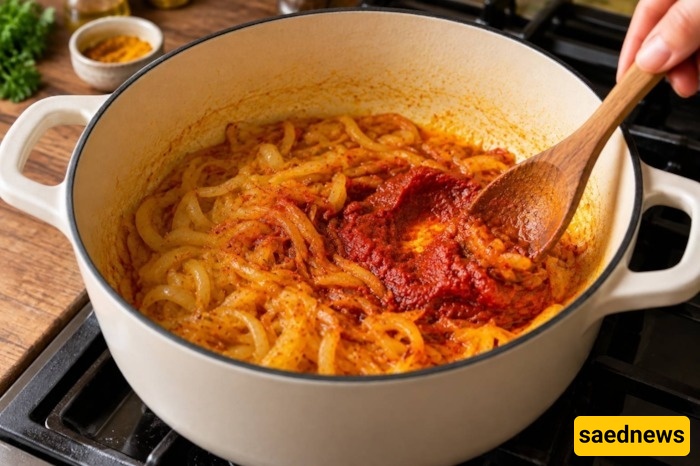
Pour in 1½ cups of boiling water and stir until the tomato paste dissolves completely. Add the small cinnamon stick.
Return the browned chicken pieces to the pot. If the liquid seems insufficient, add another half cup of boiling water.
The sauce should reach approximately one-third to halfway up the chicken pieces. The chicken should not be completely submerged.
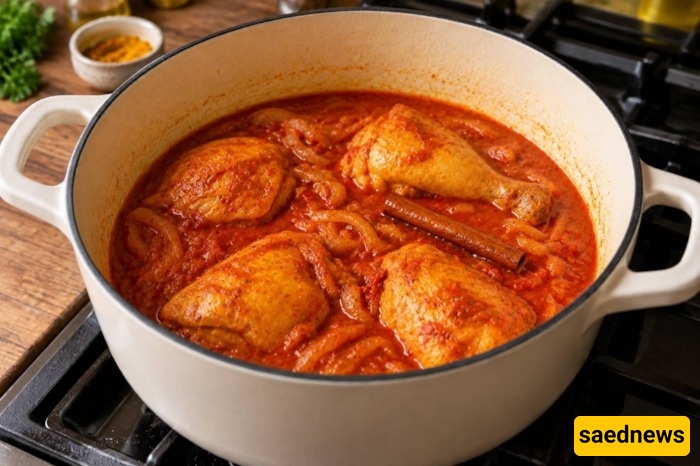
Once the sauce begins to boil, reduce the heat to low and leave the lid slightly ajar.
Approximate cooking times are:
Bone-in chicken thighs or legs: 45–55 minutes.
Chicken breast: 30–35 minutes.
Turn the chicken once during cooking so both sides absorb the flavor of the sauce.
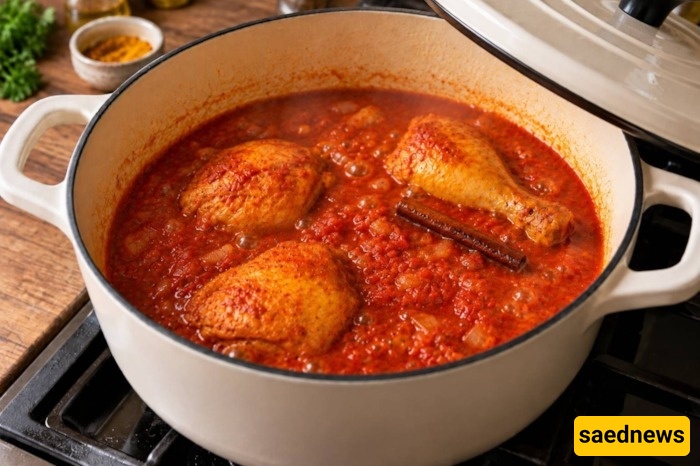
About 15 minutes before the chicken finishes cooking, pour the concentrated brewed saffron over the chicken and into the sauce.
Gently shake the pot or spoon some sauce over the chicken to distribute the saffron evenly.
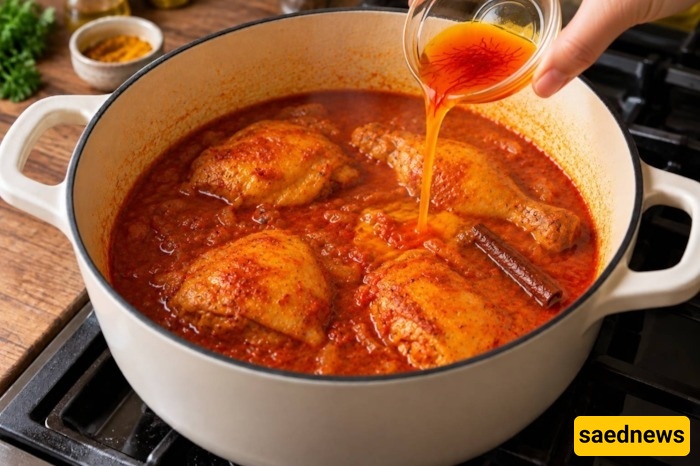
Approximately 10 minutes before the end of cooking, taste the sauce and adjust the salt.
Add the fresh lemon juice or bitter orange juice gradually. The acidity should balance the richness of the tomato paste and saffron without overpowering their flavors.
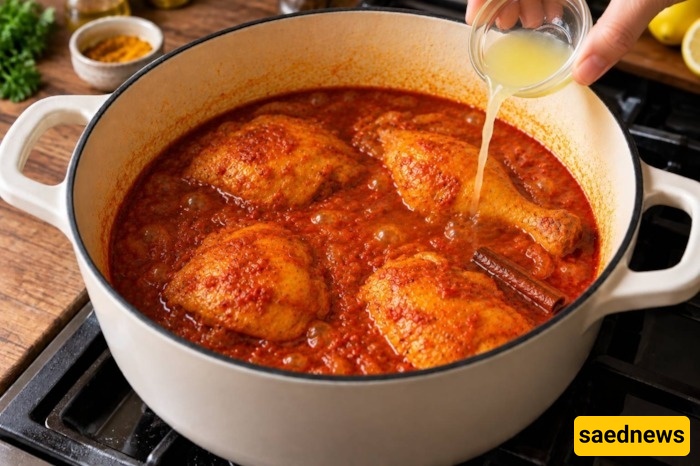
During the final 10–15 minutes, remove the lid and let the sauce thicken over low heat.
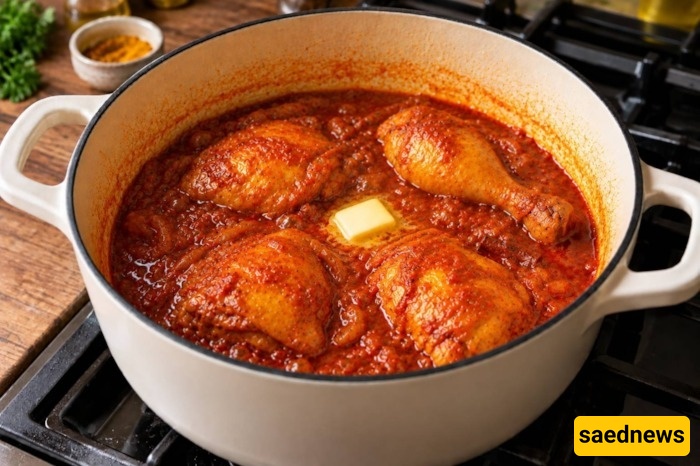
Once the sauce has reduced and coats the chicken rather than remaining watery, remove the cinnamon stick.
Add the butter and gently shake the pot until it melts into the sauce.
If you prefer a juicier saffron chicken stew, keep the sauce slightly thinner and reduce it for less time.
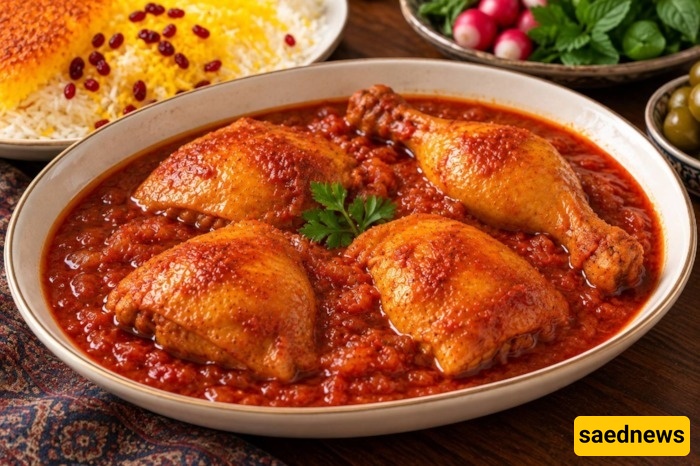
Carefully transfer the chicken pieces to a serving dish and spoon the sauce over them.
For an elegant presentation, leave part of the golden chicken surface visible rather than covering every piece completely with sauce.
Serve with plain Persian rice, barberry rice, saffron rice, or crispy tahdig (Persian rice crust).
You can also serve the chicken as a more substantial stew with carrots, bell peppers, potatoes, or other vegetables. In this case, use slightly less sauce and arrange the vegetables alongside the chicken.
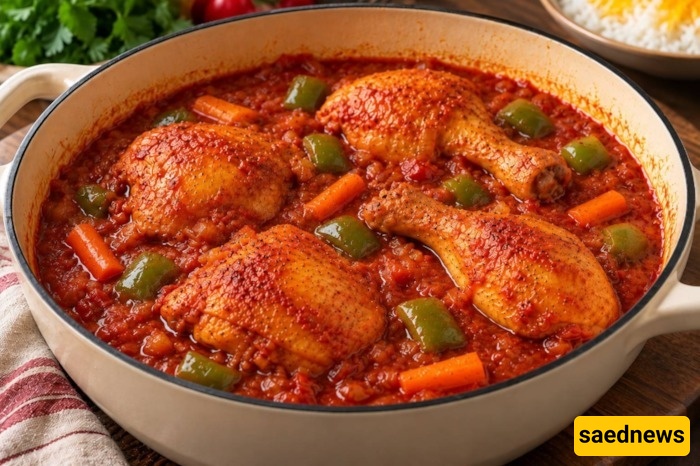
For a colorful variation, follow the main recipe but add two carrots and half a bell pepper.
After sautéing the onions and tomato paste, slice the carrots into rounds or thick matchsticks.
Add the carrots to the pot and sauté for 2–3 minutes with the onion and tomato paste.
Return the browned chicken to the pot and add the boiling water.
About 15–20 minutes before the chicken is done, cut half a bell pepper into thick strips and add it to the sauce.
Finish with the brewed saffron and adjust the seasoning as described in the main recipe.
Do not add the bell pepper at the beginning, as prolonged cooking can make it too soft and allow its aroma to overpower the sauce.
The carrots absorb the savory sauce and contribute a gentle sweetness, while the bell pepper adds a mild, fresh aroma without masking the saffron or tomato flavors.
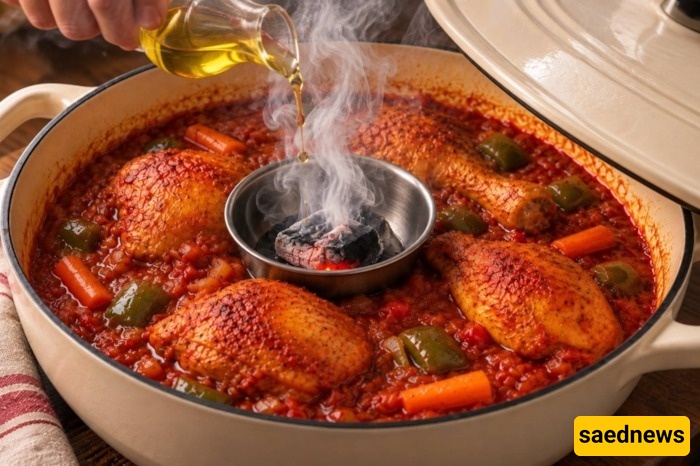
To give the finished chicken stew a subtle smoky aroma, prepare the chicken and sauce according to the main recipe.
Heat a small piece of charcoal over a flame until it is glowing red. Place it in a small, heatproof metal cup and carefully position the cup in the center of the pot.
Add a few drops of oil to the hot charcoal and immediately cover the pot with a lid.
Allow the smoke to infuse the chicken for approximately 2–3 minutes, then carefully remove the cup and charcoal.
Avoid smoking the chicken for too long, as excessive smoke can make the flavor bitter and overpowering.
Safety note: Handle the charcoal with appropriate heatproof tools and ensure adequate ventilation.
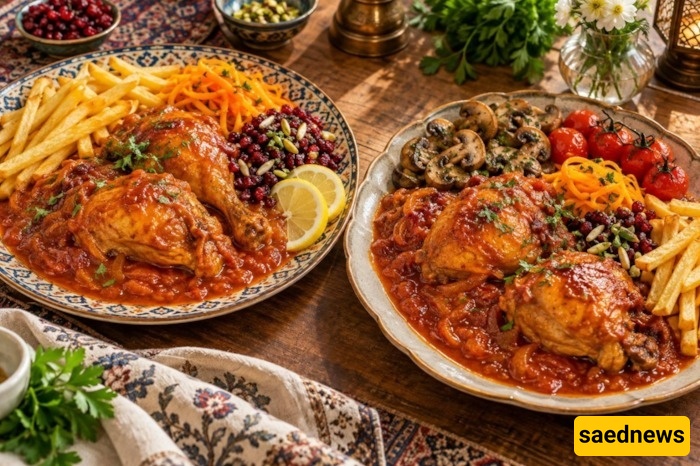
For an attractive restaurant-style presentation, prepare a selection of colorful garnishes.
Fried potatoes: Cut two potatoes into strips and fry until golden and crispy.
Saffron carrots: Cut one carrot into thin strips and sauté in a little butter for 3–4 minutes, until tender but still holding its shape.
Buttered barberries: Gently sauté 2–3 tablespoons of barberries in a little butter for about 30 seconds. Finish with a few drops of brewed saffron.
Sautéed mushrooms: Cook a few mushrooms over relatively high heat to prevent them from releasing too much moisture.
Cherry tomatoes: Add a few cherry tomatoes to the same pan and sauté for 1–2 minutes.
Arrange the potatoes, carrots, barberries, and mushrooms around the chicken. Add a few slices of fresh lemon alongside the meat.
For a more festive presentation, sprinkle a small amount of slivered pistachios or almonds over the barberries. Keep the garnishes beside the chicken rather than piling them on top, so the golden surface and rich sauce remain visible.
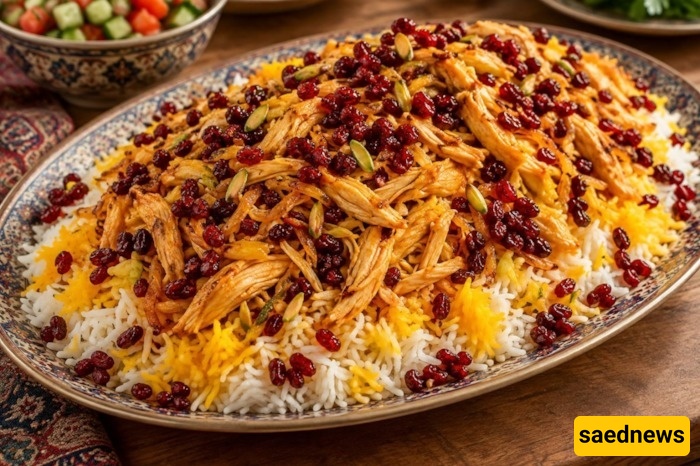
Zereshk Polo ba Morgh is a classic Persian combination of saffron chicken and rice topped with tart barberries.
Once the chicken is ready, prepare the barberries separately.
Pick through the barberries to remove any debris.
Soak them in cold water for a few minutes, then drain them gently.
Melt 25 g of butter in a frying pan over low heat.
Add the barberries and sauté for just 30–60 seconds. Excessive heat or prolonged frying can make them dark and bitter.
Add 1–2 tablespoons of sugar to balance the tartness, stirring for a few seconds.
For a more festive version, add another 1–2 tablespoons of concentrated brewed saffron.
Spread the prepared barberries over plain white rice or saffron rice. Serve the chicken alongside the rice, with its thick sauce spooned over the meat.
For a simpler homemade version, reduce the sugar and saffron or sauté the barberries with just a little butter.
There are two common ways to incorporate carrots into this dish.
Method 1: Cook the carrots in the chicken sauce.
Add the carrots directly to the sauce, allowing enough time for them to become tender without falling apart.
Thin carrot slices: 20–25 minutes.
Medium matchsticks: 25–30 minutes.
Thick matchsticks: 30–40 minutes.
Add them according to their size and the remaining cooking time.
Method 2: Prepare the carrots separately.
Cut the carrots into fine matchsticks and sauté them in a little butter for 4–5 minutes. Add the washed barberries and sauté for approximately 30 seconds.
Finish with a little brewed saffron and, if desired, a small amount of sugar. Spoon the carrot-and-barberry mixture over the cooked rice before serving.
Chicken breast is particularly suitable for this version because it is easy to shred after cooking and produces an even texture.
Place the chicken breast in a pot with one onion, a little turmeric, black pepper, and a small amount of salt.
Cook until the chicken is completely tender.
Remove it from the pot and shred it using two forks.
Heat a little butter or oil in a frying pan.
Add the shredded chicken and sauté for 2–3 minutes.
Stir in 1–2 tablespoons of concentrated brewed saffron and a few tablespoons of chicken stock or sauce to keep the meat moist and flavorful.
In a separate pan, sauté the washed barberries in a little butter for approximately 30 seconds. Add a small amount of sugar and saffron if desired.
To serve, spread the cooked rice on a platter and arrange the shredded chicken and barberries over the top.
For a more festive presentation, reserve some saffron-colored rice and use it as a decorative layer beneath the chicken and barberries.
If you enjoy sweet-and-sour flavors, try a Persian chicken stew made with pomegranate molasses.
In this variation, chicken is cooked with onions and pomegranate molasses, with walnuts added if desired. The result is a thick, flavorful sauce with a distinctive sweet-and-sour taste.
This version offers a delicious alternative to the tomato-based saffron chicken stew.
A few simple techniques can significantly improve the texture, flavor, and presentation of your dish.
Avoid turning the chicken too often. Once tender, the meat can separate from the bones if moved repeatedly. Spoon the sauce over the chicken or gently shake the pot instead.
Keep the sauce slightly thinner if preparing ahead. The sauce will thicken as it cools and during reheating. Reheat over low heat to prevent the chicken from drying out.
Choose an appropriately sized pot. If the chicken pieces are spread too far apart, you may need to add more water to cover the bottom. This can delay the reduction of the sauce.
Consider removing excess chicken skin. For a lighter, more refined stew, remove excess skin because it can release too much fat into the sauce.
Add saffron toward the end. This helps preserve its delicate aroma and distinctive flavor.
Fry the tomato paste carefully. It should deepen in color and lose its raw smell without burning.
The most effective solution is to increase the amount of unsalted sauce or add an additional piece of unsalted chicken.
You can also add a little hot water and allow the sauce to simmer until the consistency is right. Although adding a whole potato is a common kitchen suggestion, it does not magically absorb excess salt and should not be relied on as the primary solution.
The most common cause is burning the tomato paste or over-frying the spices.
Low-quality saffron or excessive amounts of bitter seasonings can also affect the flavor. Fry the tomato paste only until its color deepens and its raw smell disappears.
If lemon juice, bitter orange juice, or another acidic ingredient makes the sauce excessively sour, add a very small amount of sugar.
Start with approximately ¼ teaspoon, taste, and adjust if necessary. The goal is not to make the stew sweet but to soften the sharpness of the acidity.
The traditional seasoning combination includes:
Turmeric
Black pepper
Salt
Saffron
A small piece of cinnamon stick can be added for a warmer, more festive aroma. Remove it before serving.
For a different flavor, you can also use a small amount of paprika for mild color and aroma, garlic powder for a stronger savory taste, or a pinch of ground ginger for warmth.
Use these additional spices sparingly so they do not overpower the chicken, tomato paste, or saffron.
For a reliable restaurant-style flavor, the combination of turmeric, black pepper, saffron, and a small cinnamon stick remains an excellent choice.