SAEDNEWS: Learn why jelly releases water and how to prevent it. Discover the effects of excess water, poor dissolving, freezing, temperature changes, and watery fruits, plus simple tips for firm, smooth jelly.
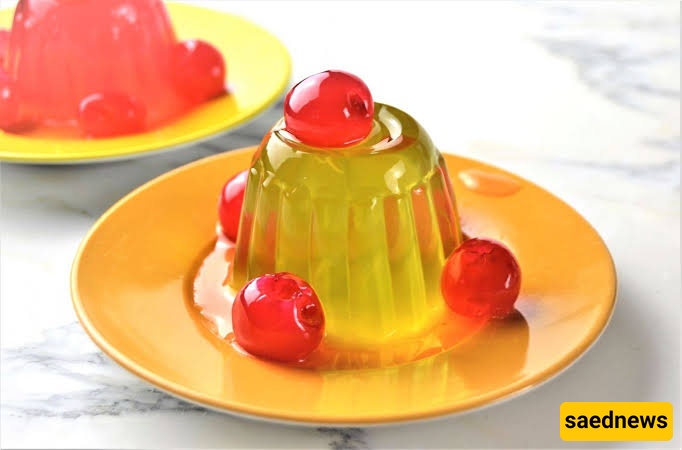
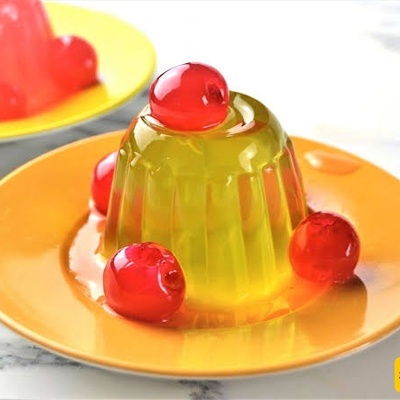
According to Saednews, Water separating from jelly is one of the most common problems people encounter when preparing this delicious dessert. Many people assume that watery jelly has gone bad, but that is not always the case. Sometimes, the tiny droplets you see on the surface are simply moisture from the refrigerator air settling on the cold jelly. In other cases, however, water separates from the jelly itself and collects at the bottom of the dish or around its edges. Understanding the cause can help you prevent the problem and keep your jelly smooth and firm.
One of the most common reasons jelly releases water is adding more water than necessary. The gelatin in jelly powder can hold only a certain amount of liquid. If you add too much water, the jelly becomes weak and soft, and some of the excess liquid may separate after the jelly sets.
Always measure the water according to the instructions printed on the specific package you are using. Jelly packages can differ in size and formulation, so there is no single amount of water that works for every product. Use the same measuring cup for both the hot and cold water as well. Using two cups with different capacities can alter the water-to-powder ratio and increase the chance of water separation.
If the main problem is that the jelly never became firm in the first place, the cause should be investigated separately, because jelly that fails to set is not necessarily the same as jelly that releases water.
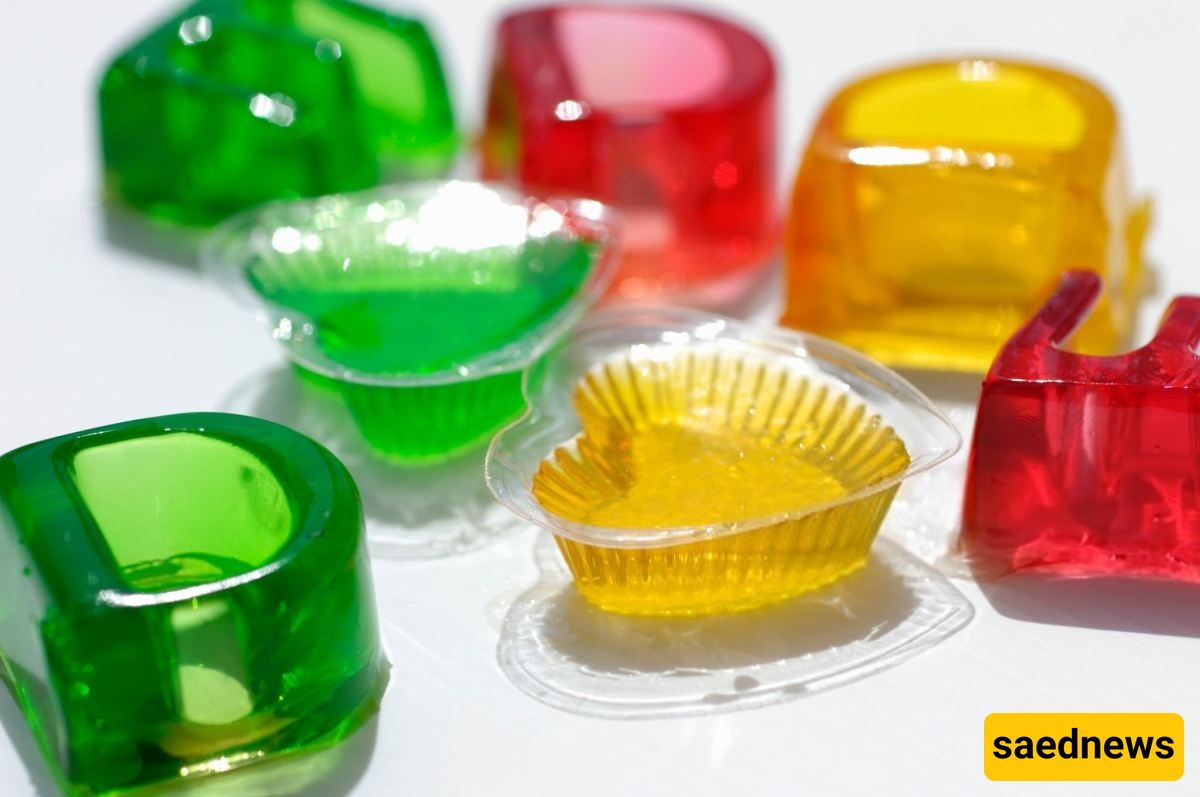
Jelly powder needs to dissolve completely in hot water. If some powder remains at the bottom or sticks to the sides of the container, the ingredients will not be distributed evenly. As a result, some parts of the jelly may become firm while other areas remain soft, eventually causing water to separate.
After adding the hot water, stir gently until the liquid becomes completely clear and uniform. Colored particles or sediment at the bottom of the container are signs that the powder has not fully dissolved. This simple step can prevent many problems later.
Jelly continues to change gradually even after it has set. If it remains in the refrigerator for several days, its structure may contract slightly, causing some of the water inside it to separate. In this situation, the jelly may pull away from the sides of the container, with a small amount of liquid appearing at the bottom.
It is best to prepare jelly relatively close to when you plan to serve it. Cover the container as well to prevent the surface from drying out and to keep it from absorbing odors from other foods. There is no single storage time that can be given for every type of plain jelly without knowing its exact ingredients. Jelly made with milk, ice cream, cream, or fresh fruit has different storage considerations and should generally be consumed within a few days.
The freezer is not a good way to make jelly set faster. When jelly freezes, ice crystals form inside it and can damage its structure. Once the jelly warms up and the ice melts, a significant amount of water may separate from the gel. Scientific studies also indicate that freezing and thawing can alter gel structure and increase liquid separation.
Keep jelly in the regular refrigerator compartment instead. If you place it in the freezer for a few minutes to speed up the setting process, remove it before it actually freezes.
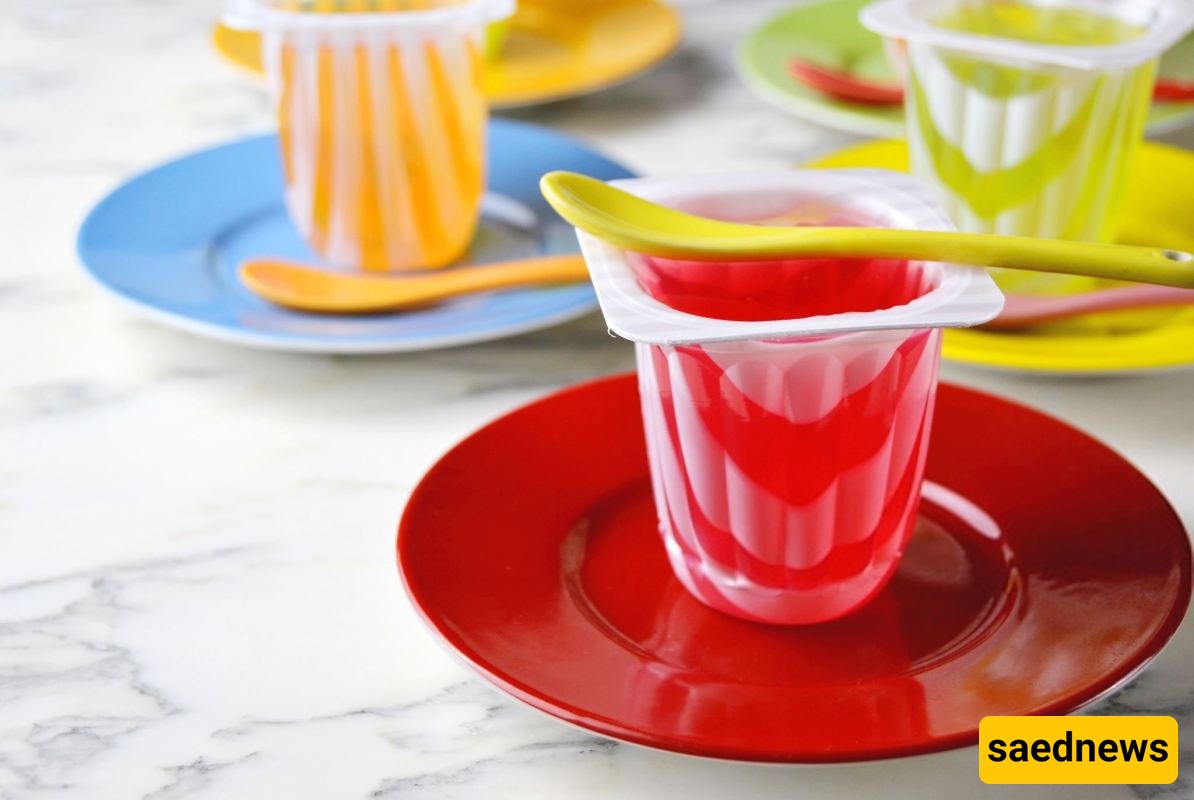
Taking jelly out of the refrigerator and repeatedly moving it between a cold environment and a warmer room can cause condensation. The cold surface of the jelly may "sweat" when it comes into contact with warm room air. If this happens repeatedly, more droplets can collect on the surface or inside the container.
Keep the jelly refrigerated until close to serving time. Avoid taking the entire container out of the refrigerator several times. If you only need part of it, remove that portion and return the rest to the refrigerator.
Sometimes jelly looks perfectly fine while it is inside the mold but starts releasing water after being turned onto a serving plate. One possible cause is heating the mold too much to loosen the jelly. Excessive heat can soften the outer layer and cause liquid to collect around it.
Place the mold in lukewarm water for only a few seconds. The water should not be hot, and it should not enter the mold. If you prepared the jelly in a glass or Pyrex dish, excessive heating of the glass can also soften the surface of the jelly and contribute to water separation.
Some people grease their jelly molds heavily to make the dessert easier to remove. Oil does not mix with jelly and may appear as liquid around the dessert after it is turned out of the mold.
If you are using a suitable mold, a large amount of oil is usually unnecessary. If you do use oil, apply only a very thin layer and wipe away any excess with a clean paper towel.
Fruits such as watermelon, oranges, strawberries, and peaches can gradually release water. If the fruit is still wet or contains a large amount of juice when added to the jelly, moisture can collect around the fruit pieces and make the jelly appear watery.
Dry the fruit thoroughly after washing it. The pieces should not be overly soft or overripe. If you are using canned fruit, place it in a strainer and allow the excess syrup to drain completely before adding it to the jelly.
Some fresh fruits, including pineapple, kiwi, papaya, and figs, contain enzymes that can interfere with gelatin. In these cases, the main problem is usually that the jelly does not set properly or remains soft rather than simply releasing water. Heating the fruit or using canned versions can reduce the activity of these enzymes.
For ice cream jelly or jelly made with milk, the temperature of the ingredients is particularly important. If very cold ice cream or milk is added to warm jelly, the ingredients may not combine properly. The dessert may become layered or release liquid after sitting for a while.
Allow the jelly mixture to cool slightly before adding the dairy ingredients. The milk or ice cream should not be extremely cold either. Add the ingredients gradually and stir until the mixture becomes smooth and uniform.
When making layered jelly, each layer needs to set properly without becoming excessively dry or firm. If the previous layer remains in the refrigerator for too long, condensation may form on its surface. Pouring the next layer over a wet surface can weaken the bond between the layers.
You should also avoid pouring hot jelly mixture directly over a set layer. The heat can partially melt the surface of the lower layer, causing liquid to collect between the layers.
Before adding a new layer, gently remove any droplets from the surface with the corner of a clean paper towel. The next jelly mixture should be cooled but still fluid enough to pour easily.
Jelly can release water for several different reasons, including incorrect water measurements, incompletely dissolved powder, prolonged refrigeration, freezing, repeated temperature changes, excessive heat when removing it from a mold, and the use of watery fruits.
Simple precautions can make a significant difference. Measure the water accurately, dissolve the jelly powder completely, refrigerate the dessert at a stable temperature, avoid freezing it, and drain fresh or canned fruit properly before adding it.
Remember that identifying the actual cause is the first step toward solving the problem. If your jelly has released water, determine where the excess liquid is coming from and then use the appropriate solution to restore the best possible texture.