SAEDNEWS: One of Iran’s most traditional dishes, lamb stew is a beloved classic of Persian cuisine. In this article, we’ll explore the ingredients, preparation method, and essential tips for making a delicious and elegant lamb stew suitable for special occasions.
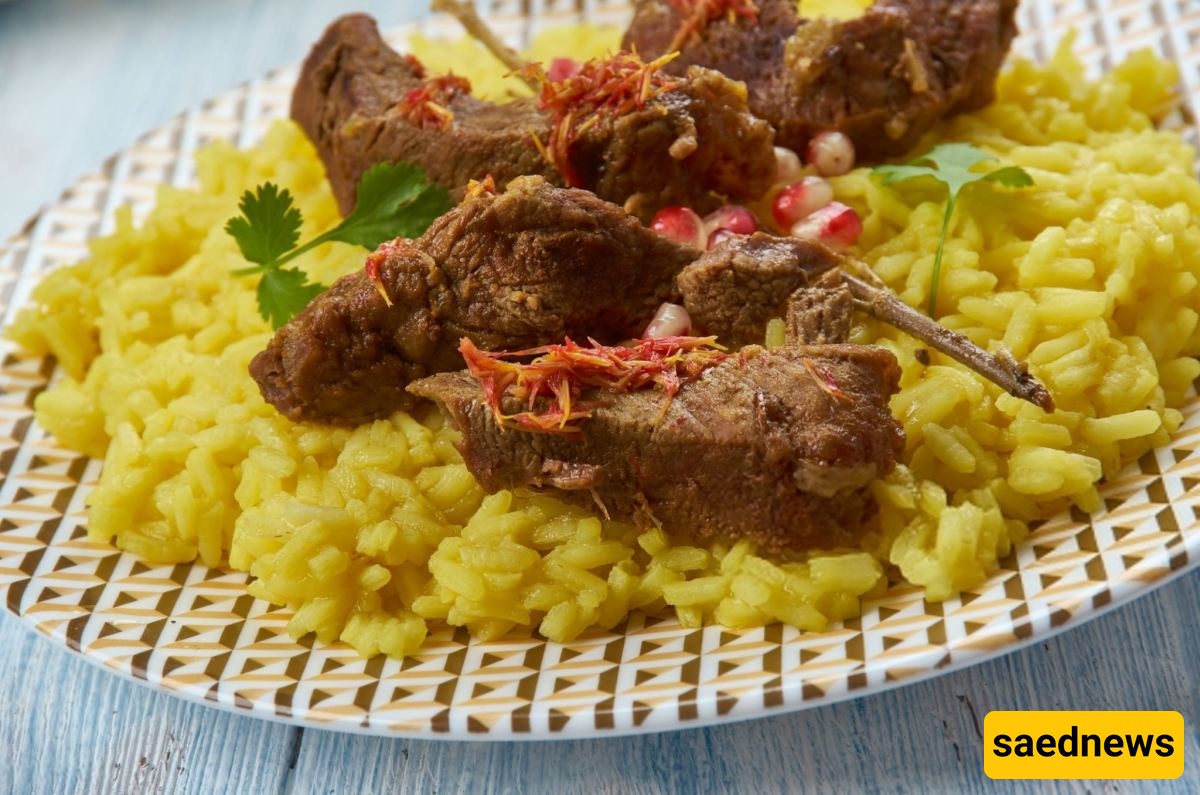
According to Saednews, Lamb stew is one of the most traditional and aromatic meat dishes in Persian and Middle Eastern cuisine. The tender texture of lamb, combined with the distinctive aroma of warm spices and fragrant saffron rice, creates a complete, elegant, and memorable meal.
If you are looking for a special recipe for formal dinners, family gatherings, or a delicious weekend lunch, lamb stew with saffron rice is an excellent choice.
In this comprehensive guide, we will walk you through the preparation of this impressive dish step by step, including all the essential details and cooking tips for a perfect result. From marinating the lamb to preparing perfectly steamed, long-grain saffron rice, every stage is covered.
Follow along to prepare an exceptional lamb stew that is sure to become one of the favorite dishes on your table.
How to Make Persian Lamb Stew with Saffron Rice
Lamb is one of the best choices for stews and kebabs because of its tender texture, rich flavor, and balanced fat content. Unlike beef, which often requires a longer cooking time, lamb—especially leg or shoulder—cooks relatively quickly and produces exceptionally juicy and tender meat.
Combining lamb with saffron rice creates a wonderful harmony of flavor and aroma.
Persian rice has a distinctive fragrance and flavor, and when paired with high-quality saffron, it develops an aroma and color that are difficult to replicate. Lamb stew is usually prepared with a rich, flavorful sauce that makes the dish even more satisfying.
This dish is also a good source of protein, iron, zinc, and B vitamins, providing plenty of energy. For these reasons, it is not only a comforting meal for cold winter evenings but also an impressive choice for serving guests.
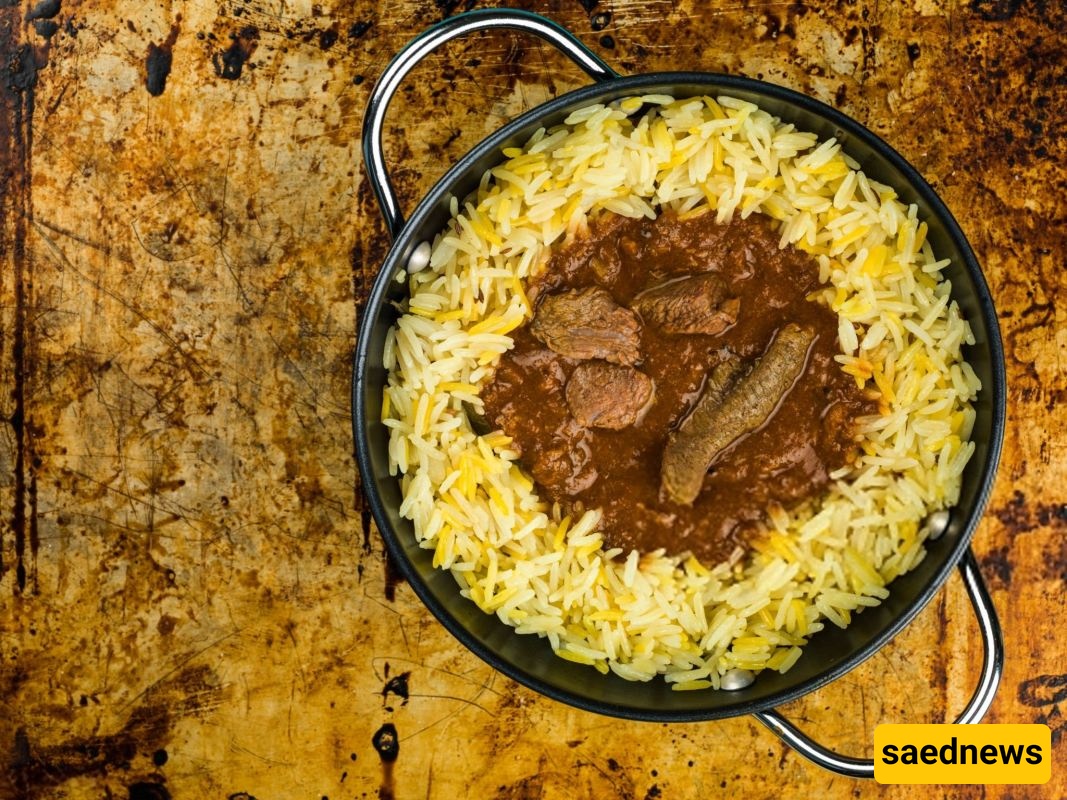
Ingredients for Lamb Stew and Saffron Rice
This recipe serves approximately four to five people. The quality of the ingredients plays an important role in achieving the best results.
Lamb, preferably leg or shoulder: 800 g, cut into medium-sized 3–4 cm cubes
Large onions: 2, finely diced
Garlic: 4 cloves, grated or crushed
Tomato paste: 2 heaping tablespoons
Water or meat/chicken stock: 3 cups
Turmeric, black pepper, and salt: as needed
Curry powder or meat seasoning: 1 teaspoon, optional
Ground cinnamon and cardamom: ½ teaspoon, for extra fragrance
Lemon juice or sour orange juice: 2 tablespoons, for a balanced tangy flavor
Strongly brewed saffron: 2–3 tablespoons
Butter or clarified butter: 3 tablespoons
Pomegranate molasses or sour plum paste: 1 tablespoon, optional, for a sweet-and-sour flavor
Persian rice, such as Hashemi, Sadri, or Anbarboo: 3 cups
Salt: as needed
Vegetable oil or clarified butter: as needed, for the crispy rice crust and cooking
Ground saffron: 1 teaspoon
Boiling water: 4 tablespoons
Butter: 50 g, optional, for the crispy rice crust
Yogurt or potato: for your preferred tahdig
Step-by-Step Lamb Stew
To reduce the natural aroma of lamb and make the meat more tender, it is best to marinate it several hours in advance, or at least one hour before cooking.
Place the cubed lamb in a bowl and combine it with 2 tablespoons of lemon juice, 1 teaspoon of turmeric, a little black pepper, and 1 tablespoon of olive oil.
Cover and refrigerate for at least two hours. This allows the spices to penetrate the meat and helps tenderize it.
Choose a suitable, preferably nonstick, pot. Melt the butter or clarified butter over medium-low heat. Add the diced onions and sauté until they become soft and golden.
Be careful not to burn the onions, as this can make the entire dish taste bitter. Add the grated garlic and sauté for only about 30 seconds, just until fragrant.
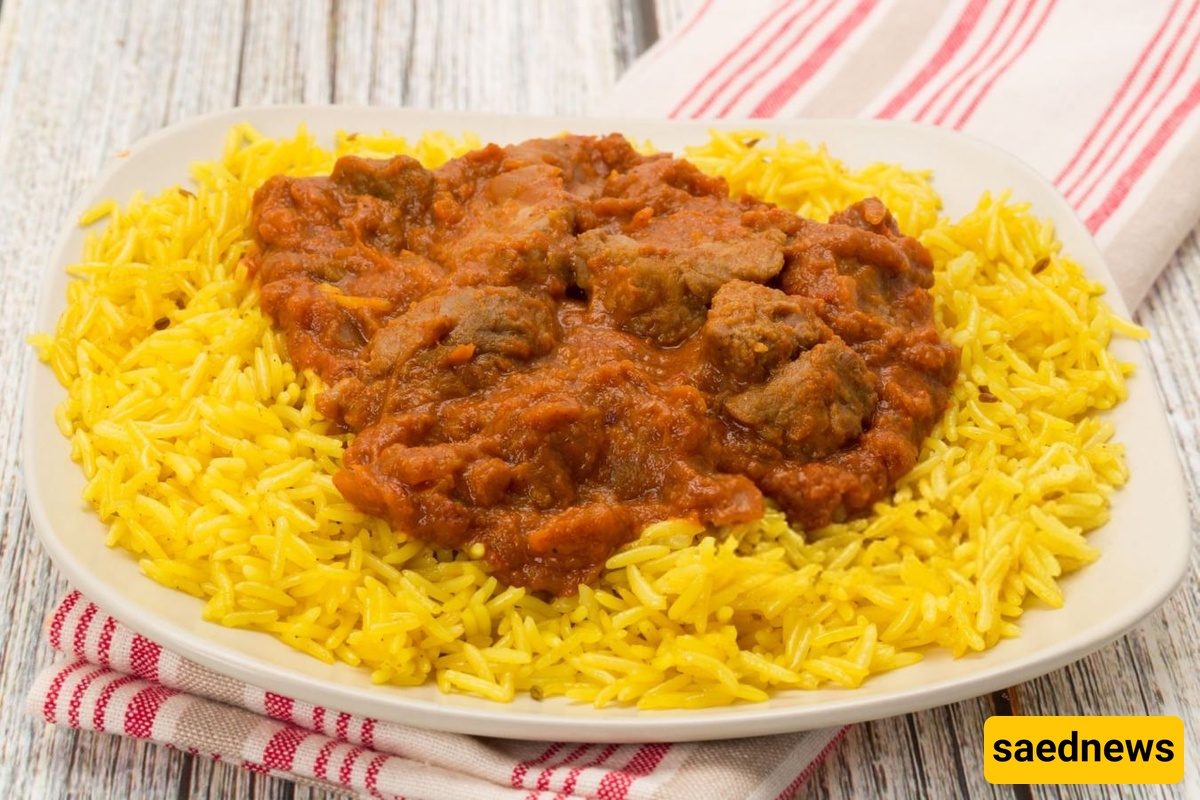
Add the marinated lamb to the pot. Increase the heat slightly and allow the meat to release its moisture. Once the liquid evaporates, sauté the meat thoroughly until all sides have changed color and developed a light brown surface.
This browning process helps develop a deeper flavor in the meat. Add the turmeric and sauté for another minute to remove its raw aroma.
Add the tomato paste and cook it with the meat for 2–3 minutes, allowing the paste to deepen in color and lose its raw taste. This creates a richer and more flavorful sauce.
Add the curry powder, if using, along with the cinnamon, ground cardamom, and black pepper. Stir briefly to release the fragrance of the spices.
Pour in enough boiling water or stock to completely cover the meat. Increase the heat and bring the liquid to a boil.
Reduce the heat to very low, cover the pot, and simmer for approximately 1½–2 hours, depending on the quality and tenderness of the lamb.
After about one hour of cooking, add the salt. Adding salt too early can sometimes make the meat take longer to become tender.
During the final 20 minutes of cooking, add the lemon juice or sour orange juice and the brewed saffron.
If the sauce is still too thin once the meat is fully cooked, increase the heat and allow the excess liquid to evaporate. The finished stew should have a thick, glossy, golden sauce that coats the lamb beautifully and pairs perfectly with the rice.
Important tip: Older lamb may require additional cooking time. In that case, you can use a pressure cooker or simply extend the cooking time. For an even richer flavor, a small amount of saffron can also be added earlier during the cooking process.
How to Make Persian Saffron Rice
While the lamb is cooking, prepare the Persian rice.
Place the ground saffron in a small glass or stainless-steel container. Add 4 tablespoons of boiling water. Cover the container and let the saffron steep for at least 15 minutes so that its color and aroma are fully released.
Never boil saffron directly. Steeping it in hot water is the preferred method.
Rinse the rice several times with cold water until the water runs mostly clear. This removes excess starch.
Transfer the rice to a bowl, cover it with lukewarm water, and add 2 tablespoons of salt. Let it soak for at least 2 hours, preferably 4–6 hours. Soaking helps the rice grains become longer and reduces the chance of them breaking during cooking.
Fill a large pot halfway with water, add salt, and bring it to a boil.
Add the soaked rice to the boiling water and gently stir once or twice so that it does not stick to the bottom.
Boil the rice for approximately 6–10 minutes, depending on the variety. The grains should be tender on the outside while remaining slightly firm in the center.
To test the rice, press a grain between your fingers. If the outside is soft but there is still a small firm white center, the rice is ready to drain.
Drain the rice in a colander and rinse it gently with lukewarm water to remove excess salt.
At this point, you can mix a portion of the rice with yogurt or saffron to prepare the tahdig.
Add a little oil to the bottom of the pot you will use for steaming. You can make tahdig with potatoes, bread, rice, or yogurt, depending on your preference.
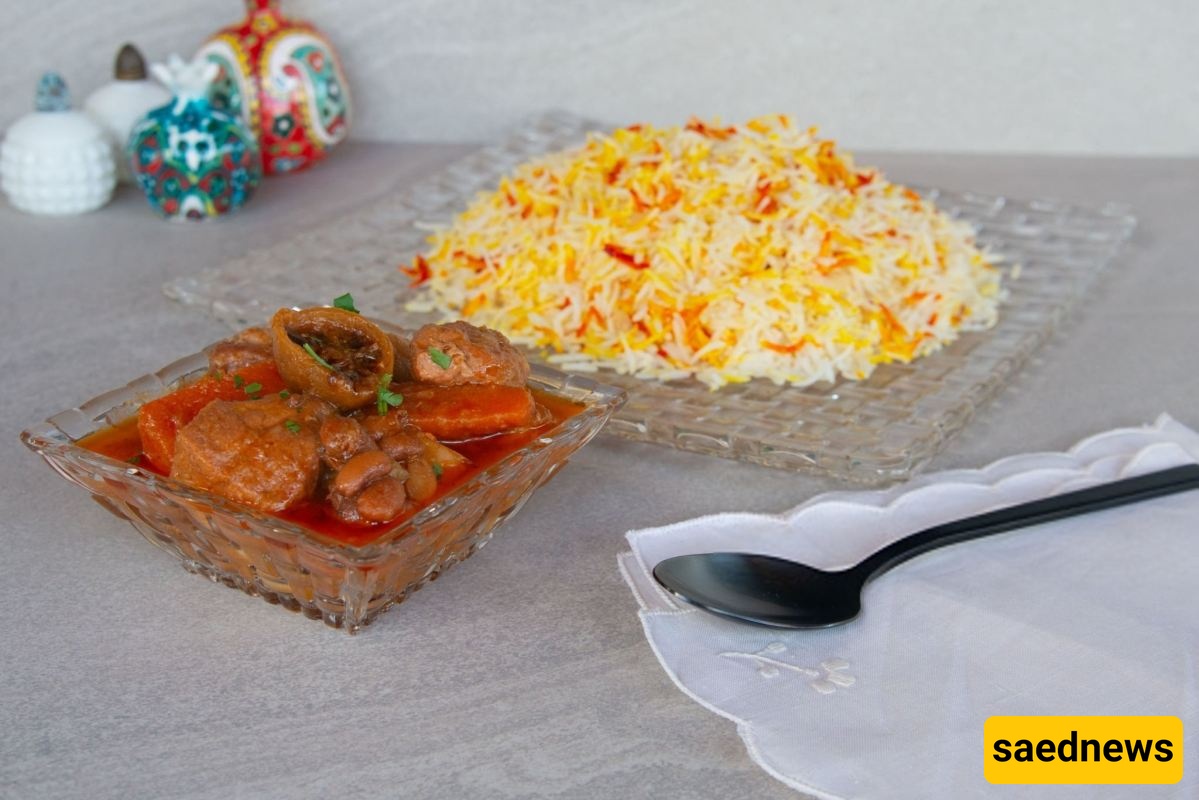
For rice tahdig, coat the bottom of the pot with oil and spread a thin layer of rice over it. You can mix this rice with yogurt or saffron if desired. Press it gently into place.
Add the remaining rice to the pot in a mound, placing it mainly toward the center rather than pressing it flat. This allows steam to circulate around the grains.
Pour the brewed saffron mixture, along with a little boiling water, over the rice.
Cover the lid with a clean cotton kitchen towel and place it over the pot. Steam the rice over low heat for approximately 40–50 minutes.
Keep the heat very low to prevent the rice from burning while allowing the tahdig to become golden, crisp, and fragrant.
Once the rice has finished steaming, remove the pot from the heat and let it rest for a few minutes.
Meanwhile, take some of the cooked rice and mix it with additional brewed saffron to create a vibrant saffron-colored topping.
Transfer the plain steamed rice to a serving platter, spoon the saffron rice over the top, and place the golden tahdig in the center or alongside the rice.
Serve the hot saffron rice with the tender lamb and its rich sauce.
Essential Tips for Perfect Lamb Stew and Saffron Rice
The best cuts for this dish are leg, shoulder, and neck. Young, tender lamb generally cooks more quickly and produces a softer result.
In addition to marinating the meat with lemon juice, you can add an onion, a little fresh ginger, or several pierced green cardamom pods to the cooking liquid. These ingredients can help balance the natural aroma of lamb.
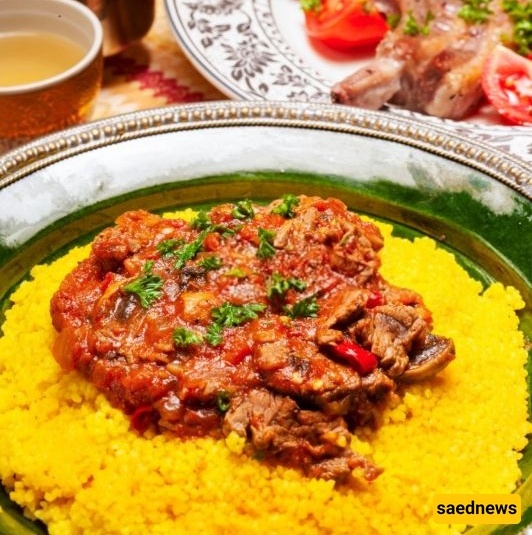
If you want an even thicker sauce, dissolve 1 teaspoon of wheat flour in a small amount of cold water and add it toward the end of cooking. Another option is to mash a few pieces of cooked lamb directly into the sauce to naturally increase its thickness.
Always steep saffron in boiling water inside a covered container to achieve the best color and aroma. Adding saffron at more than one stage—toward the end of cooking the stew and again when serving the rice—creates a deeper fragrance and flavor.
Choose good-quality Iranian rice whenever possible. Second-crop Persian rice and Hashemi rice are particularly good choices. Once the rice has been drained, avoid stirring it with a spoon, as this can break the delicate grains.
This combination of tender, aromatic lamb and fragrant saffron rice creates a classic Persian-style meal that is both comforting and elegant—perfect for family meals, celebrations, and special occasions.