SAEDNEWS: A rustic and simple French dessert, apple galette is made with flaky pastry, fresh apple slices, and cinnamon. No special pan is needed—its casually folded, imperfect appearance makes it both charming and perfect for autumn gatherings.
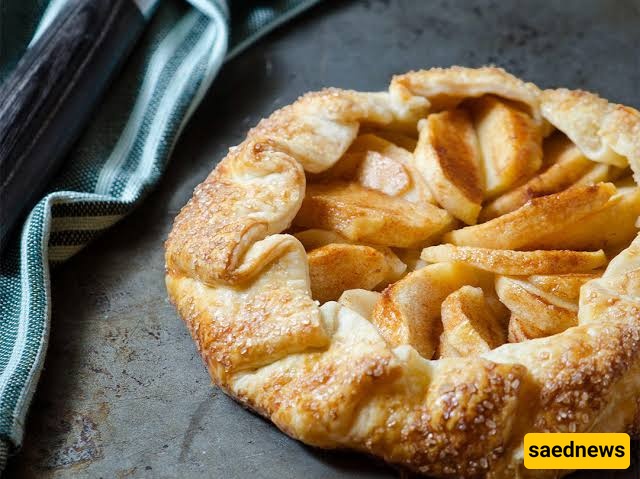
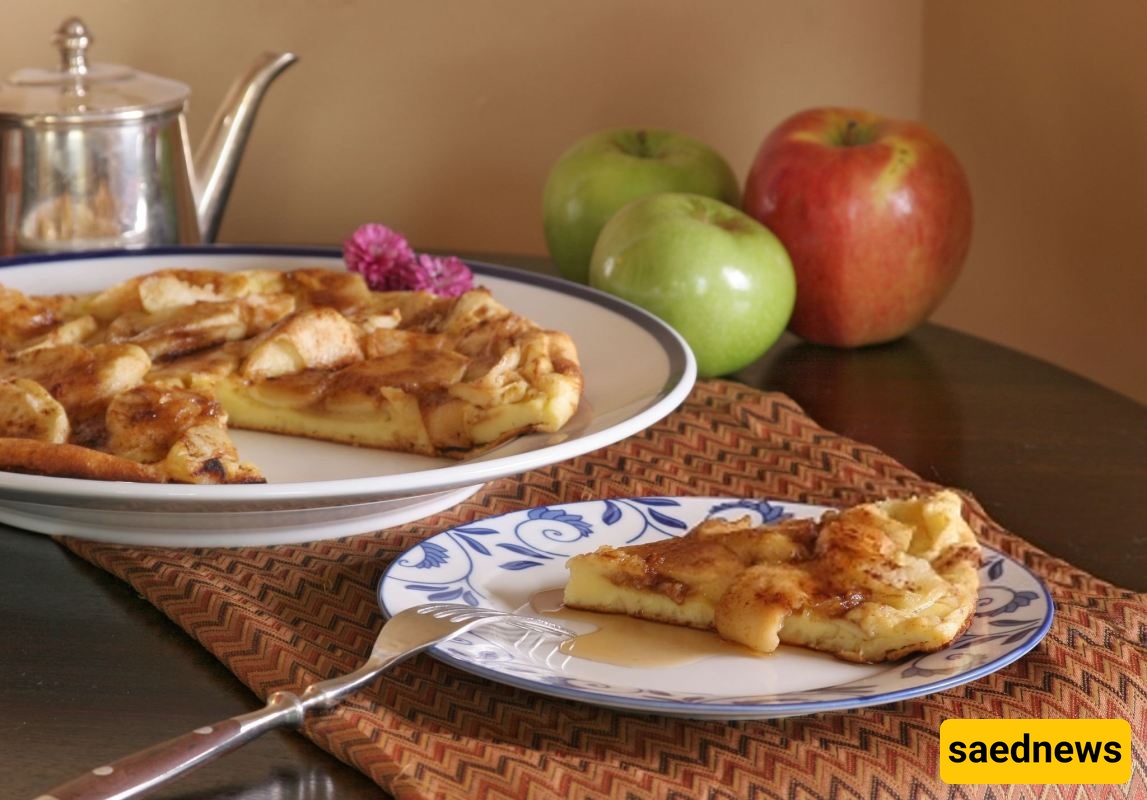
According to Saednews, Apple Galette is a rustic French dessert made by placing rolled-out pastry dough on a baking sheet, filling the center with sliced apples and aromatic spices, and folding the edges of the dough inward. Unlike an apple tart or pie, which typically requires a pan and a bottom and top crust, a galette needs no special mold. This makes it an excellent choice for beginners and busy home bakers alike.
The delicious combination of caramelized apples and cinnamon, the crisp and flaky pastry, and the irresistible aroma that fills the kitchen while it bakes make apple galette one of the most beloved desserts for fall and winter. Follow along to make a beautiful, crisp, and memorable homemade dessert.
To make an apple galette, you will need two main components: the pastry and the apple filling. The following quantities make one medium-sized galette, serving approximately 6 to 8 people.
200 g all-purpose flour
100 g cold butter
2 tablespoons sugar
½ teaspoon salt
4 to 6 tablespoons ice water
½ teaspoon vanilla extract
3 to 4 medium apples, preferably sweet and slightly crisp varieties such as Gala or Red Delicious
3 tablespoons brown or white sugar
1 teaspoon ground cinnamon
1 tablespoon lemon juice
1 tablespoon cornstarch
1 tablespoon melted butter
½ teaspoon vanilla extract
1 egg yolk
1 tablespoon milk
Granulated sugar, for sprinkling over the pastry edges
Ground almonds or crushed biscuits, optional, for the base of the pastry
How to Make Apple Galette Step by Step
Place the flour, sugar, and salt in a large bowl and mix well. Cut the cold butter into small cubes and add it to the dry ingredients.
Using your fingertips or a pastry cutter, work the butter into the flour until the mixture resembles coarse breadcrumbs. The butter does not need to disappear completely. Small pieces of butter remaining in the dough will help create a crispier and flakier pastry after baking.
Add the vanilla, then gradually add the ice water, one tablespoon at a time, gently mixing as you go. Stop adding water as soon as the dough comes together when pressed with your hands.
Do not overwork the dough, as this can make the pastry tough. Shape the dough into a round disk, wrap it in plastic wrap, and refrigerate for at least 1 hour.
If you are short on time, you can refrigerate it for 30 minutes, but a longer resting period makes the dough easier to roll and produces a crispier final result.
Wash the apples. If their skins are thin and in good condition, you can leave them unpeeled. Otherwise, peel them.
Cut the apples in half, remove the cores and tough central portions, then slice them into thin, even semicircles. The slices should be approximately 2 to 3 mm thick.
Evenly sliced apples cook at the same rate and create a more attractive finished galette.
Place the sliced apples in a bowl, add the lemon juice, and gently toss to prevent them from browning.
Add the sugar, cinnamon, cornstarch, melted butter, and vanilla to the sliced apples.
Gently toss everything together so the apples do not break and each slice becomes evenly coated with the seasonings.
Cornstarch plays an important role because it absorbs some of the apple juices released during baking and helps prevent the pastry base from becoming soggy.
If your apples are particularly juicy, you can slightly increase the amount of cornstarch. For extra flavor, you can also add a small pinch of ground nutmeg or cardamom, but use them sparingly so the apple and cinnamon remain the dominant flavors.
Remove the chilled dough from the refrigerator and let it sit at room temperature for about 5 minutes so it becomes slightly more flexible.
Lightly flour your work surface and roll the dough into a circle approximately 30 cm in diameter. The pastry should be around 3 mm thick.
Do not roll it too thin, as it may tear when folded.
Place the rolled-out dough on a sheet of parchment paper and transfer it, together with the parchment, to a baking sheet. This makes it much easier to move the galette later.
Leave approximately 4 to 5 cm of pastry uncovered around the edges.
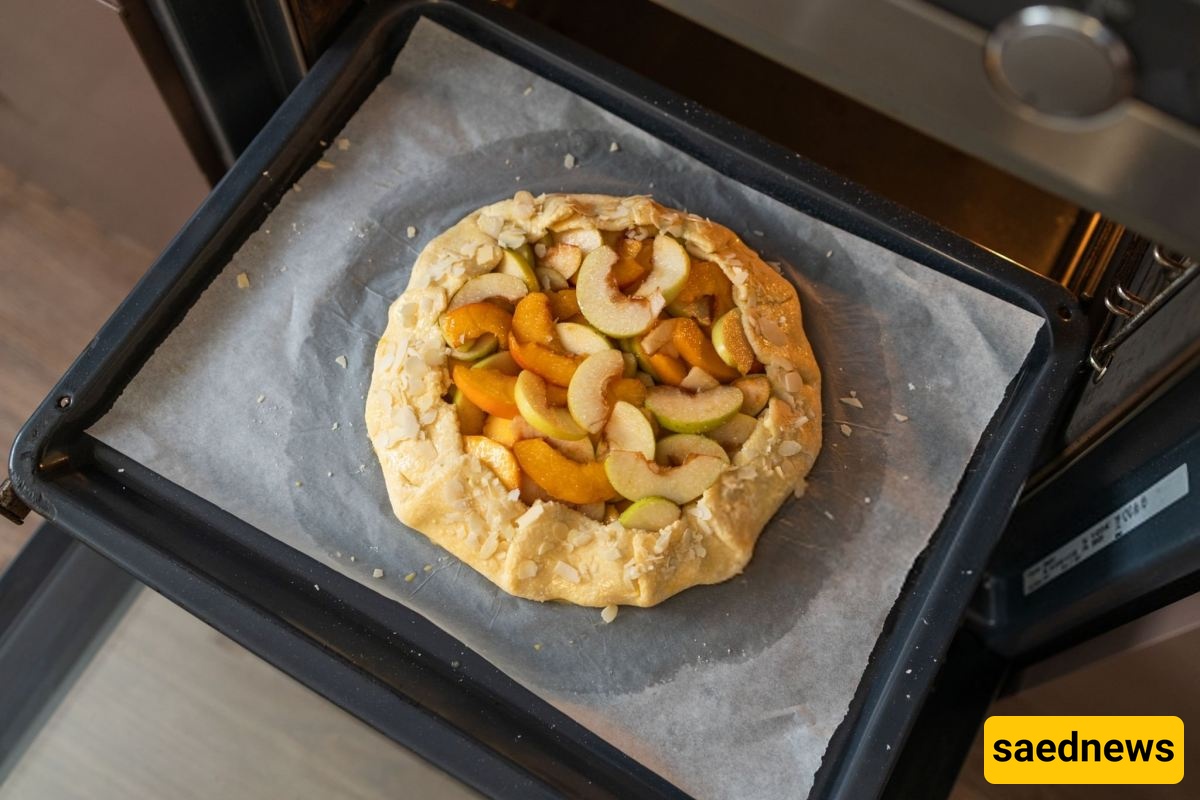
Place the prepared apples in the center of the dough and gently spread them out.
For a more elegant presentation, arrange the apple slices in overlapping circles. This gives the galette a beautiful, bakery-style appearance after baking.
If excess liquid has collected in the bowl, do not pour it over the pastry. Too much moisture can make the crust soggy.
For an even crispier base, sprinkle a thin layer of ground almonds or crushed biscuits over the center of the dough before adding the apples. This layer helps absorb excess moisture from the fruit.
Fold the edges of the pastry inward over the apples, working your way around the entire galette.
Slightly overlap each section of dough over the previous one and gently press with your fingers to create natural folds.
Leave the center of the galette open so the apples remain visible.
If the pastry cracks, simply use a little water and your fingers to gently seal the edges.
If the dough becomes too soft or sticky at this stage, place the baking sheet in the refrigerator for 10 to 15 minutes. This allows the butter in the dough to firm up again and helps the pastry become crisp and flaky in the oven.
Preheat the oven to 180°C (350°F).
Mix the egg yolk and milk in a small bowl until smooth. Using a pastry brush, apply the egg wash to the exposed pastry edges.
Sprinkle a little granulated sugar over the egg-washed edges. This helps create a glossy, golden, lightly caramelized crust.
Place the baking sheet on the middle rack of the oven and bake for approximately 35 to 40 minutes, or until the pastry edges are golden brown and crisp and the apples are tender and slightly caramelized.
If the pastry edges begin to brown too quickly, loosely cover them with aluminum foil and continue baking.
Once baked, do not slice the galette immediately. Let it rest on the baking sheet for 10 to 15 minutes. This allows the filling to set and makes it easier to cut clean, neat slices.
Essential Tips for a Perfect Apple Galette
One of the most important secrets to flaky galette pastry is using cold butter. If the butter becomes warm, the dough can turn soft and sticky and lose its flaky texture.
The water added to the dough should be very cold. Ice water helps prevent the butter from melting prematurely. During baking, the butter creates steam, which helps produce a crisp, flaky crust.
Refrigerating the dough allows the gluten to relax, preventing the pastry from shrinking too much when rolled out. Do not skip this step.
If your apples release a lot of juice, make sure to use cornstarch. It helps absorb excess moisture and prevents the pastry from becoming soggy.
Very thick apple slices take longer to cook and can create a problem where the pastry becomes overly browned before the apples are tender. Thin, evenly sized slices cook more consistently.
With its rustic appearance, flaky crust, tender cinnamon apples, and caramelized edges, apple galette is an easy yet impressive dessert. It requires no special pie dish, making it a practical choice when you want something homemade, comforting, and visually beautiful with minimal effort.