According to SAEDNEWS, Olives are highly nutritious and among the most delicious foods served with meals, but some olives are bitter. What can we do to remove the bitterness from olives?
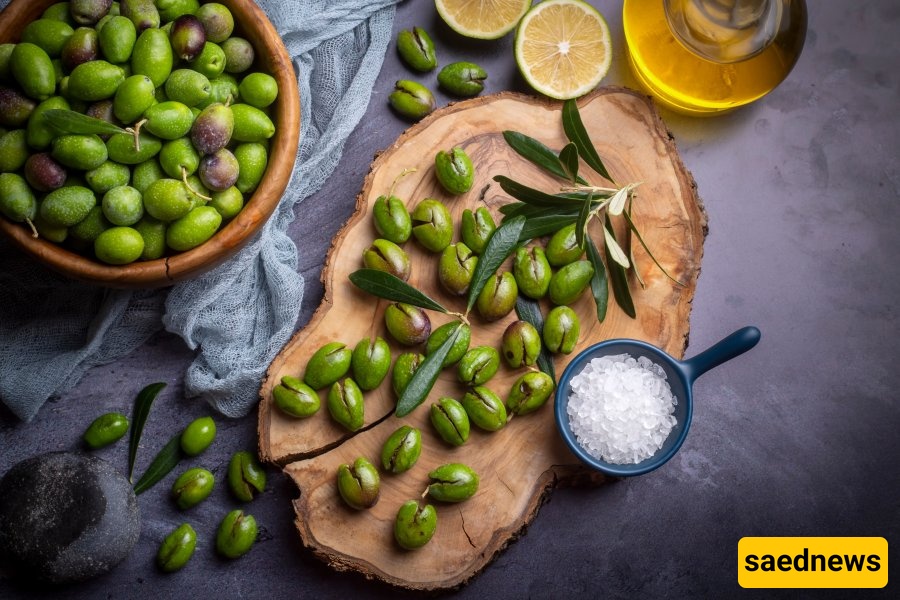
According to SAEDNEWS, Olive is one of the most delicious and nutritious foods served with meals, greatly enhancing the enjoyment of eating and offering high nutritional value. Sometimes, when buying olives, we don’t pay enough attention and end up with bitter ones; however, there are methods to remove the bitterness from olives. Stay with this home tips section to learn how to eliminate olive bitterness.
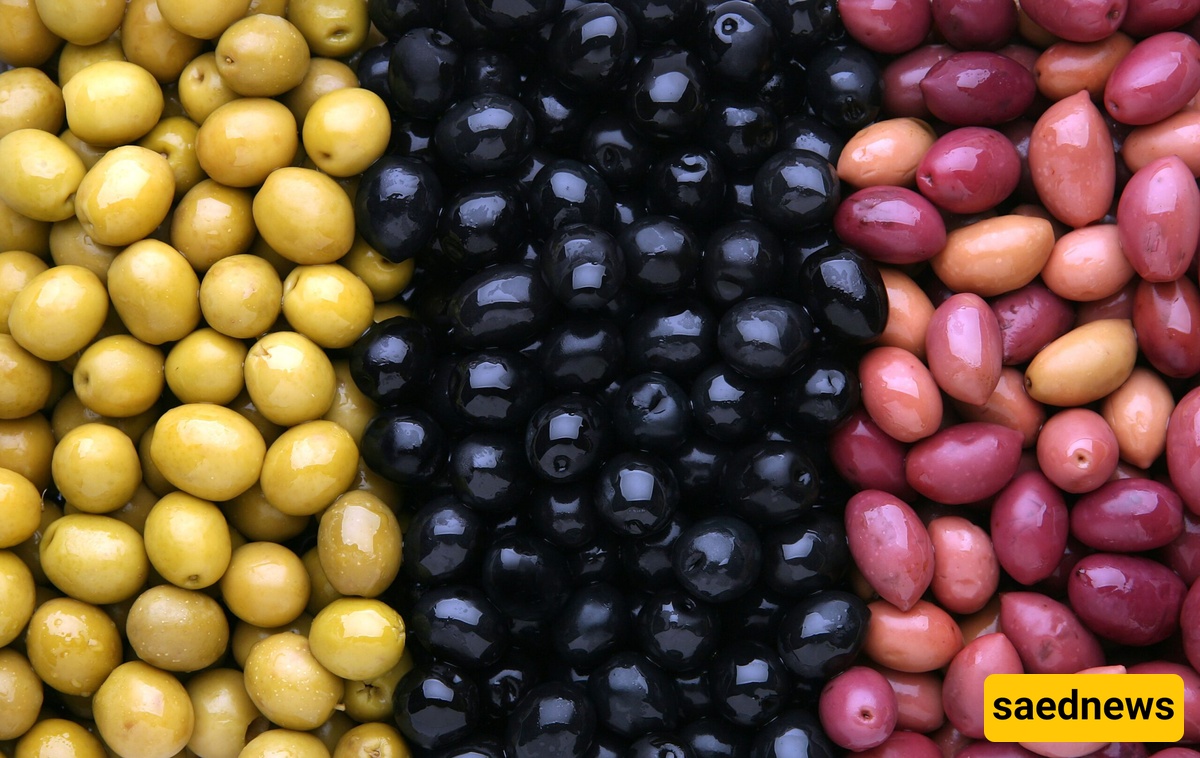
Olives usually begin to flower in early summer. Then the fruit gradually forms and reaches harvest time in late summer. At first, olives are light green and gradually darken, becoming deep green by late autumn. Interestingly, olives have long been a symbol of peace and wealth. Even in the United Nations flag, an olive branch is used as a symbol of peace. Olives come in three forms: canned, cracked, and pitted.
Canned olives are pitted olives that have not gone through the oil extraction process and are used for making olive-based dishes such as olive paste; they are also used for decoration.
Cracked olives are those that have not been used for oil extraction.
All types of olives are naturally bitter, and the way to remove their bitterness is to wash them several times with water. In other words, the olives should be washed three or four times, and after each wash they should be soaked in salted water to develop a better taste. Once the bitterness is removed, they should be placed again in brine with a salt level adjusted to your preference. Then, add 2 tablespoons of olive oil and 1 tablespoon of Persian hogweed (Golpar) on top of the olives and store them in a cool place, away from the refrigerator.
Green and unripe olives are usually soaked in an alkaline solution to remove their bitterness. After that, they are kept in water for a period of time and then placed in a mixture of water, salt, and vinegar, or their bitterness is removed using the brine method.
Olives can also be processed at home, but most consumers prefer ready-made olives because the process takes a lot of time. The color of olives depends on their type; however, if olives are exposed to air after being removed from the alkaline solution, they may turn black. Edible alkaline solutions include mixtures such as water with baking soda and lime.
Olives can be processed at home using this method, but due to the time-consuming nature of the process, most people prefer to buy prepared olives. Some olives become dark after processing; if they are left exposed to air for a while after being taken out of the lye solution, their color may turn black. However, the color of olives is mainly related to their variety. Regarding edible alkaline solutions, they are made from mixtures like water and bicarbonates such as baking soda and lime, which are also used in preparing certain preserves like citron jam.