SAEDNEWS: Carrot Juice: Benefits and Essential Tips for Proper Storage in the Refrigerator
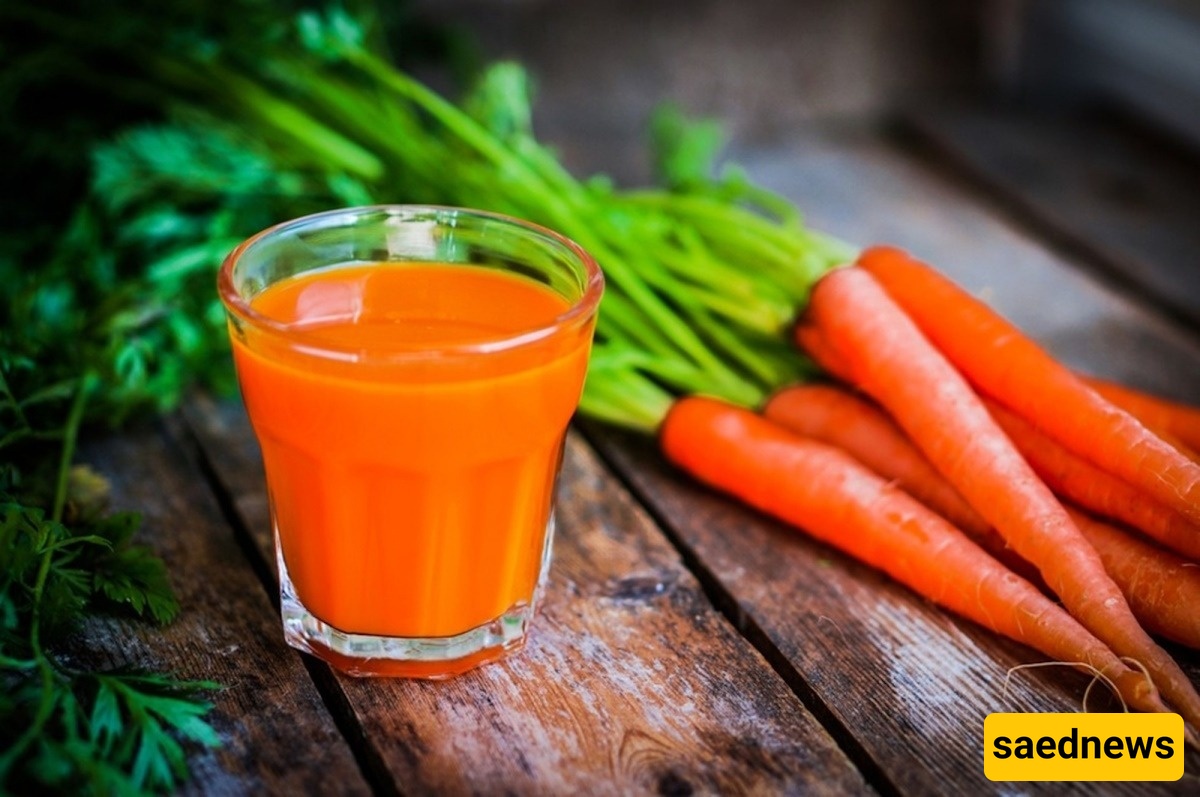
According to Saednews, Carrot juice is one of the vegetable juices rich in vitamins and essential nutrients for the body. With its bright orange color and naturally sweet taste, it can help meet the body’s daily vegetable needs. However, an important practical point about carrot juice is its storage, since improper or long-term storage—especially in the refrigerator—can reduce its health benefits. This section discusses the proper storage of carrot juice in more detail.
To get the most nutritional benefits from carrot juice, it is best to prepare it fresh at home and consume it immediately. Making only the amount needed for the day reduces storage time and helps preserve its nutritional value.

Half a cup of carrot juice contains about 52 calories per serving, 1.2 grams of protein, less than half a gram of fat, and more than 6 grams of sugar. Although carrots are naturally high in fiber, most of the fiber is lost during the juicing process.
Carrots are also a good source of essential vitamins, especially vitamins A, E, and K, and they contain minerals such as potassium and calcium.
Several vitamins in carrot juice are sensitive to air. When exposed for long periods, they gradually degrade. Vitamins A, E, and C are particularly vulnerable to oxidation. This means that the longer carrot juice is stored, the higher the likelihood that these vitamins will be lost.
The juicing process itself exposes nutrients to air, and even when stored in a sealed container in the refrigerator, oxygen still comes into contact with the juice each time the container is opened for drinking.
Exposure to light can also reduce certain vitamins in carrot juice. Vitamins A, E, K, and B6, as well as riboflavin, are sensitive to light in liquid foods such as juice.
Although the inside of a refrigerator is generally dark when closed, each time the door is opened, carrot juice stored in a transparent container is exposed to light, which can gradually reduce its vitamin content.

Freshly prepared carrot juice contains more nutrients than commercially processed juice. Industrial carrot juice is pasteurized, meaning it has been exposed to high heat, which can damage heat-sensitive vitamins.
Vitamins such as A, folate, thiamine, and vitamin C are all present in carrot juice and may be reduced when exposed to high temperatures. Homemade juice reduces heat exposure and preserves more nutrients. However, using a juicer for large quantities may also generate heat, which can reduce nutritional quality.
For optimal nutrient retention, it is best to prepare small amounts and consume the juice fresh to obtain the maximum vitamins and benefits.