SAEDNEWS: Researchers have found that simulating a chewing motion places greater stress on tooth enamel and leads to more damage overall. The study suggests that chewing food—due to continuous tooth-to-tooth abrasion—can cause more wear on teeth compared to the act of biting.
According to the university research service of Saed News Agency, cited by Sorya:
Researchers in a recent study specifically examined hydroxyapatite crystallites—chains of nanoparticles that form tooth enamel—and subjected them to scratching and pressure in order to observe the stability of these nanoparticles at a highly precise level.
Scientists from the United States and China hope that their findings could lead to improvements in dental care and also enhance the understanding of fossil hunters regarding ancient teeth discovered during excavations.
Peter Ungar, one of the researchers from the University of Arkansas, said:
“Hydroxyapatite crystallites are the fundamental building blocks of tooth enamel, each of which is about one-thousandth the thickness of a human hair.”
Hydroxyapatite crystallites are stacked on top of each other and bound together by proteins to form enamel.
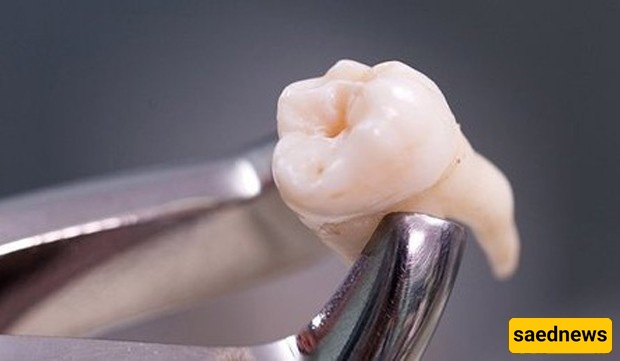
For their study, the team used powerful microscopes to examine real human molar teeth that had been extracted for orthodontic purposes.
Researchers used diamond-like tools to create scratches on these teeth and also applied pressure to simulate conditions similar to chewing and biting.
They found that chewing-like motion caused more damage to the enamel overall, and in general, grinding food leads to more dental wear than biting.
The reason for this is that during abrasion, the chemical compounds that bind hydroxyapatite crystallites together break down, causing these crystallites to separate, deform, and fracture.
Until now, there was limited precise information about how teeth respond to applied forces, but in this study, researchers were able to directly observe the real nanoscale chemical bonds between crystallites.
According to the team, the resulting images and measurements could be useful in various fields, including dentistry, evolutionary biology, and biomedical science.
Ultimately, these findings may help guide better dietary choices for maintaining dental health.
The study was published in the Journal of the Royal Society Interface.