SAEDNEWS: Comparing the free and paid versions of ChatGPT from an economic perspective shows when this cost becomes a profitable investment and when it can be considered unnecessary. This article explores those situations in detail.
According to Saednews, Paying $20 per month in the current economic conditions of a country may, at first glance, seem like an additional expense; however, if you work with ChatGPT for several hours a day, this amount is very small compared to the value you receive. According to OpenAI statistics, the intelligent coding tool Codex has reached 3 million weekly users, most of whom are paid users. This suggests that professionals have concluded that investing in the Plus version has a positive return. Comparing the free and paid versions of ChatGPT from an economic perspective shows when this cost becomes a profitable investment and when it can be avoided, which we will discuss in this article.
The current free version of ChatGPT is completely different from the one we knew two years ago. Free users have access to the GPT-5.5 Instant model, which provides acceptable performance for everyday questions. In addition, the Thinking capability with lighter models such as GPT-5.4 mini and nano is available, enabling basic reasoning responses.
However, this access comes with significant limitations:
Only 10 GPT-5.5 messages per 5 hours
Maximum of 3 file uploads per day
Context window limited to 27,000 tokens (about 12 pages of text)
No access to advanced reasoning (full Thinking mode)
No Agent Mode for automated task execution
No access to older models such as GPT-4o
Very limited Deep Research (about 5 lightweight tasks per month)
This version is sufficient for daily use and simple questions, but professional users quickly hit its limitations.
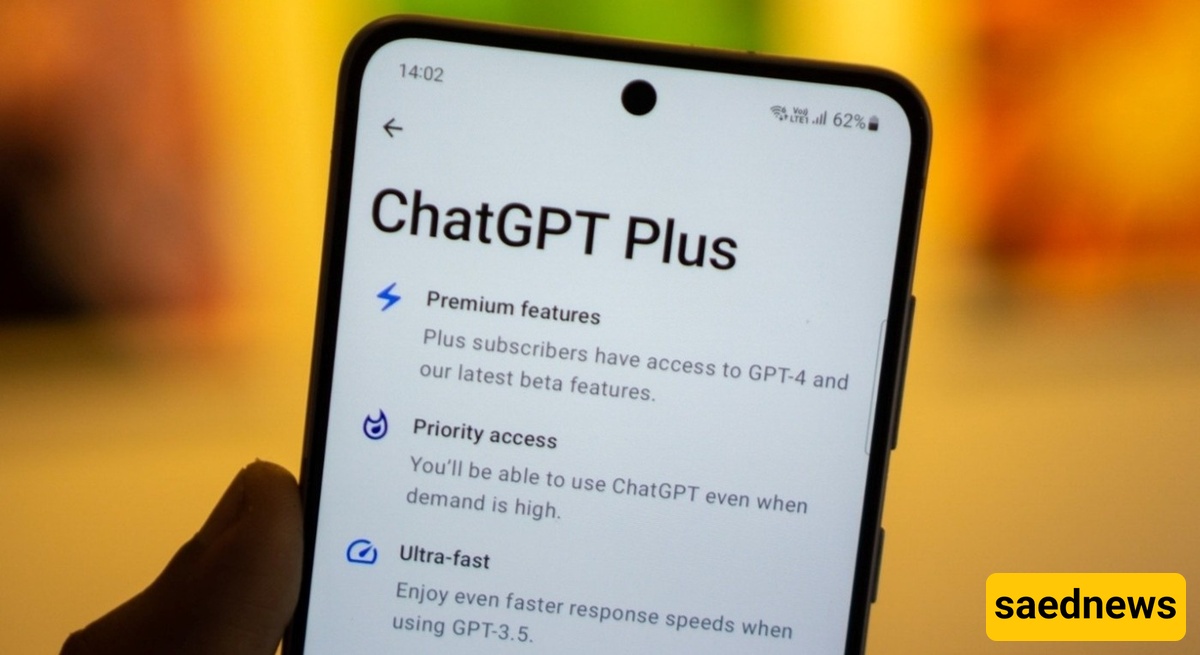
ChatGPT Plus is OpenAI’s standard paid plan priced at $20 per month. It is designed specifically for users who are limited by the restrictions of the free version.
Plus users gain access to more powerful models and significantly higher usage limits. The models are divided into two categories:
Instant model: fast responses for general tasks
Thinking model: performs step-by-step reasoning before answering, producing more accurate results
The Thinking model is the key advantage of the paid version. Plus users can send up to 3,000 Thinking messages per week.
Full access to Thinking models (3,000 weekly messages)
Agent Mode for task automation (40 times per month)
Codex with 5× higher capacity for programming tasks
Large context window of 196,000 tokens for document analysis
Up to 80 file uploads every 3 hours
Advanced image generation with GPT IMAGE 2
Video generation with Sora (5 seconds, 720p)
Nearly unlimited advanced voice mode
Screen and video sharing capabilities
Ability to create custom GPTs
Priority access during peak server times
Feature | Free Version | Plus Version ($20) |
|---|---|---|
GPT-5.5 messages | 10 per 5 hours | 160 per 3 hours |
Thinking models | Mini/nano only | Full (3,000 weekly messages) |
Agent Mode | Not available | 40 times per month |
Context window | 27K tokens | 196K tokens (Thinking) |
File uploads | 3/day | 80 every 3 hours |
Codex (coding) | Limited | 5× capacity |
Video generation (Sora) | Not available | Available (5s, 720p) |
Advanced voice mode | Limited | Nearly unlimited |
Screen/video sharing | Not available | Available |
Custom GPT creation | Not available | Available |
Memory | Limited | Extended |
Priority access | No | Yes |
The difference between the two versions is not just about message limits. Plus users enter a completely different ecosystem of capabilities that the free version does not offer.
The biggest advantage of Plus is access to full Thinking models. These models reason step by step before answering, producing more accurate and reliable outputs, especially for analytical and research tasks.
This feature allows ChatGPT not only to answer questions but also to perform tasks such as web browsing, filling out forms, finding tickets or hotels, and handling multi-step workflows.
Codex enables deeper programming assistance, including connecting to GitHub repositories, writing code, running tests, and managing dependencies. Plus users receive significantly higher usage limits.
Users can upload very large documents—such as a 400-page book—and ChatGPT can retain and analyze the entire content at once. This is essential for research and document-heavy work.
Plus users can generate short videos from text using Sora and create higher-quality images with GPT IMAGE 2.
The choice ultimately depends on usage:
If you use ChatGPT for a few hours daily, programming, or document analysis, Plus is likely worth the cost.
If your usage is occasional and limited to simple questions, the free version combined with other tools may be sufficient.
The free version is designed for general use, while Plus is built for heavy and professional workflows.
Plus provides full Thinking models, significantly higher message limits, a much larger context window, and exclusive tools such as Agent Mode and Codex.
Yes, but only through lighter models (mini and nano versions) with lower quality compared to the full version.
It is intended for advanced users and large teams requiring near-unlimited access to all models. Most individual users do not need it.
Yes, you can subscribe or cancel at any time.