SAEDNEWS: Siasak: A Hidden Gem Nestled at the Foot of Mount Dena

According to Saednews, Sisakht, a rugged and resilient town surrounded by the towering Zagros Mountains, rests peacefully along the slopes of this magnificent mountain range. Its people are known for their generosity, much like its abundant springs, and for their patience and endurance, reminiscent of its majestic peaks.
Located at an elevation of more than 2,000 meters above sea level, Sisakht experiences long and cold winters. In spring, its vast green vineyards create a breathtaking landscape, while in autumn, they become even more enchanting and dreamlike, captivating every traveler who passes through the region. Gushing springs, flower-covered green hills, and magnificent mountain ranges beneath the snow-capped peaks of Mount Dena have made Sisakht one of the most remarkable natural destinations in Iran.
Sisakht is a city in Kohgiluyeh and Boyer-Ahmad Province in southwestern Iran, approximately 35 kilometers from Yasuj, the provincial capital.
Sisakht had been a village for around 135 years before it officially became a city in 1983. The city has a population of approximately 8,500 people. Its inhabitants are traditionally associated with the Lower Boyer-Ahmad tribal group and are predominantly Lori in ethnicity. They speak Persian with a Lori dialect. Every year, Sisakht attracts numerous domestic and international visitors.
The city can be reached via the Yasuj–Sisakht road or through the Isfahan–Semirom–Sisakht route.
According to Eghtedari, in his book Khuzestan, Kohgiluyeh and Mamasani, the name Sisakht has appeared in geographical texts in several forms, including Sisakht, Sim Sakht, Sim Bakht, and similar variations.
The book Arjan and Kohgiluyeh offers an old local explanation for the origin of the name Sisakht. According to local tradition, thirty exceptionally strong and resilient men once decided to cross the famous Bijan Pass during a severe winter. However, the pass was blocked by heavy snow, and the extreme cold made the journey impossible. All thirty men reportedly died along the route. The region was therefore called “Sisakht,” meaning the land where thirty of the strongest men of their time perished.
Another tradition is associated with the legendary Iranian king Kay Khosrow. According to the people of Upper Boyer-Ahmad, Kay Khosrow chose Lohrasp as his successor at a place known as Tal-e Khosrow, located in the heart of Boyer-Ahmad. He then traveled toward present-day Sisakht with his cavalry. Kay Khosrow and his horsemen stopped at Cheshmeh Besho, where they washed themselves. When they attempted to cross Bijan Pass, they encountered such severe snow, wind, and blizzards that Kay Khosrow and all his riders were lost.
Sisakht has a remarkably ancient history, with evidence suggesting that human settlement in the area dates back to pre-Islamic times. Numerous pottery remains from ancient civilizations have been discovered during excavations in the city. More recently, human graves dating back approximately 3,000 years BCE were discovered in the area.
Archaeological remains at Tal-e Espid have been identified from the first millennium BCE through the Sasanian period and as far as the Safavid era. The hill has also been registered as a national historical site.
Tal-e Qalat, another nationally registered archaeological site, contains remains dating from the Seljuk period through the Qajar era.
Major Tourist Attractions of Sisakht
With an elevation of approximately 4,409 meters, Mount Dena is the natural landmark most closely associated with Sisakht in the eyes of international tourists and mountaineers. Its magnificent peaks can be seen from a great distance when approaching the city.
Sisakht lies at the foot of Dena, part of the Zagros mountain range. The surrounding landscape is filled with beautiful mountains, oak forests, and distinctive natural vegetation, creating an extraordinary setting for nature lovers and hikers.

Kuh Gol Lake, locally known as “Barm-e Kuh Gol,” is one of the most beautiful natural attractions around Sisakht. Surrounded by mountains and lush vegetation, the lake is particularly attractive during the warmer months.

Located at an elevation of approximately 3,200 meters and about six kilometers northeast of Sisakht, Bijan Pass is considered the highest motorable mountain pass in Iran.
The pass was named after Bijan, the legendary warrior of Kay Khosrow's army. During winter, heavy snowfall often makes the road inaccessible. In May, however, visitors can travel through corridors of snow between the mountain walls and experience the extraordinary scenery of the pass.

Dashtak is a small plain located about eight kilometers west of Sisakht, at the foot of the towering Dena mountain range. At the far end of the plain lies Mili Kashi, another notable attraction in the area.
One of Dashtak's most distinctive features is its dense oak woodland, which gives the landscape a remarkable natural character.
Mishi Spring is the largest and most abundant spring in the region. Located below Bijan Pass, its water supplies the drinking needs of Sisakht and also irrigates the agricultural lands of the village of Deh Bozorg in Sisakht.
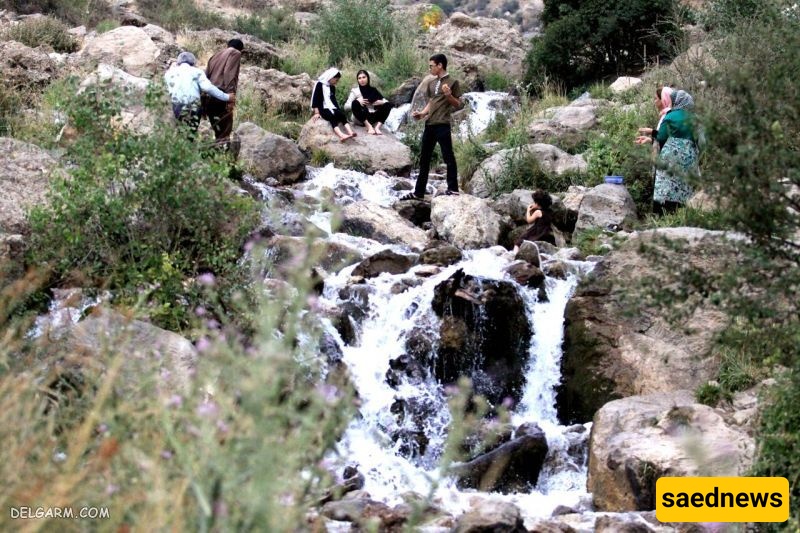
Overlooking the tourist town of Sisakht, Toof Spring lies along the route leading toward the Dena peaks. It provides clear, cool and refreshing water throughout the year and is a popular stop for hikers and mountaineers.

Tagi Spring is known for its cool and refreshing water and provides welcome relief for hikers. Its water is also used to irrigate the vineyards, apple orchards and walnut groves of the Kalanjeh area.

Sardo Spring is another natural attraction located in the Kuh Gol area of Sisakht. Like many of the region's springs, it contributes to the lush vegetation and scenic beauty of the surrounding mountains.
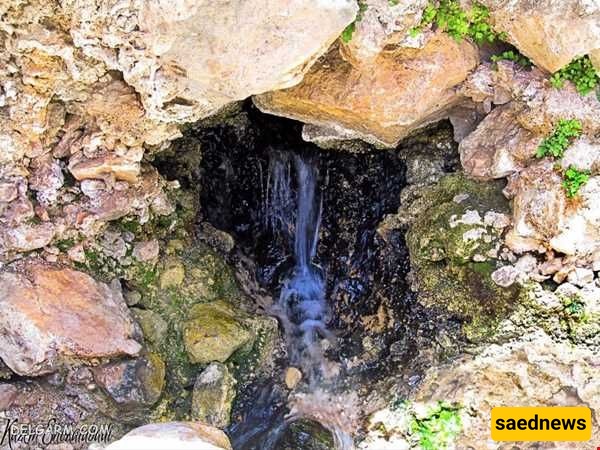
Nari Waterfall is located in the Sisakht region within the Dena Protected Area. Access to the waterfall is through the Kharidoun environmental station, followed by approximately three hours of hiking.
About eight kilometers northwest of Sisakht, at the foot of Mount Dena, visitors reach a lush plain offering views of four major Dena peaks: Qezel Qaleh, Borj-e Asemani, Morghal, and Qash Mastan.
The green meadows beneath oak and wild pistachio trees provide an ideal place to enjoy the beauty and grandeur of Dena's mountains.
Although the particular peak itself may not be visible from Sisakht, its steep slopes and foothills dominate the landscape here.
A beautiful area known as Ban Rud provides access to Nari Valley Waterfall and Toof Shah Waterfall. Nari Waterfall is located approximately six kilometers south of the protected area's core zone. With an estimated height of 40 to 70 meters and a substantial flow, especially in spring, it creates a spectacular natural scene.

Qalam Mountain is another notable mountain in the region. It is associated with a local legend involving the shape of a camel's body visible on the mountain.
According to the legend, a large and powerful camel died in the area, and its distinctive form was supposedly preserved forever as a natural mark on Qalam Mountain.

Toof Shah Waterfall is located in the southern highlands of the Dena Protected Area, approximately ten kilometers from the area's secure zone and about five kilometers from Nari Valley Waterfall.
Situated in rugged and difficult-to-access terrain southwest of the Morod Kal Dena peak, the waterfall has an approximate height of 100 meters and is one of the region's more distinctive natural attractions.

This beautiful area is located approximately eight kilometers east of Sisakht and 44 kilometers from the provincial capital.
At an elevation of around 3,500 meters above sea level, the distinctive gorge-like entrance of Kuh Gol offers spectacular views of the surrounding mountains and valleys.

Nool Cave is located in the Kuh Gol area, approximately 20 kilometers from Sisakht in Dena County.
The cave is about 80 meters long and contains several stepped chambers and various passages. From a geological perspective, it is considered an important natural feature of the region.

Tangeh Namak Waterfall is located approximately 8.5 kilometers east of Sisakht, at the end of the Kuh Gol area.
The waterfall flows down through a gorge bearing the same name and becomes especially attractive when water levels rise during the wetter seasons.
Sisakht combines ancient history, legendary traditions, high mountain peaks, lush valleys, springs, waterfalls, forests and alpine landscapes. Its location at the foot of Mount Dena makes it an especially appealing destination for hiking, mountaineering, nature photography and exploring the natural landscapes of southwestern Iran.
From the snow-covered heights of Dena to the vineyards, oak forests, springs and waterfalls scattered throughout the surrounding valleys, Sisakht offers travelers a remarkable combination of natural beauty and cultural heritage.