SAEDNEWS: Swiss University of Neuchâtel Researchers Find Orangutans and Gorillas Can Make Rational Economic Decisions Like Humans
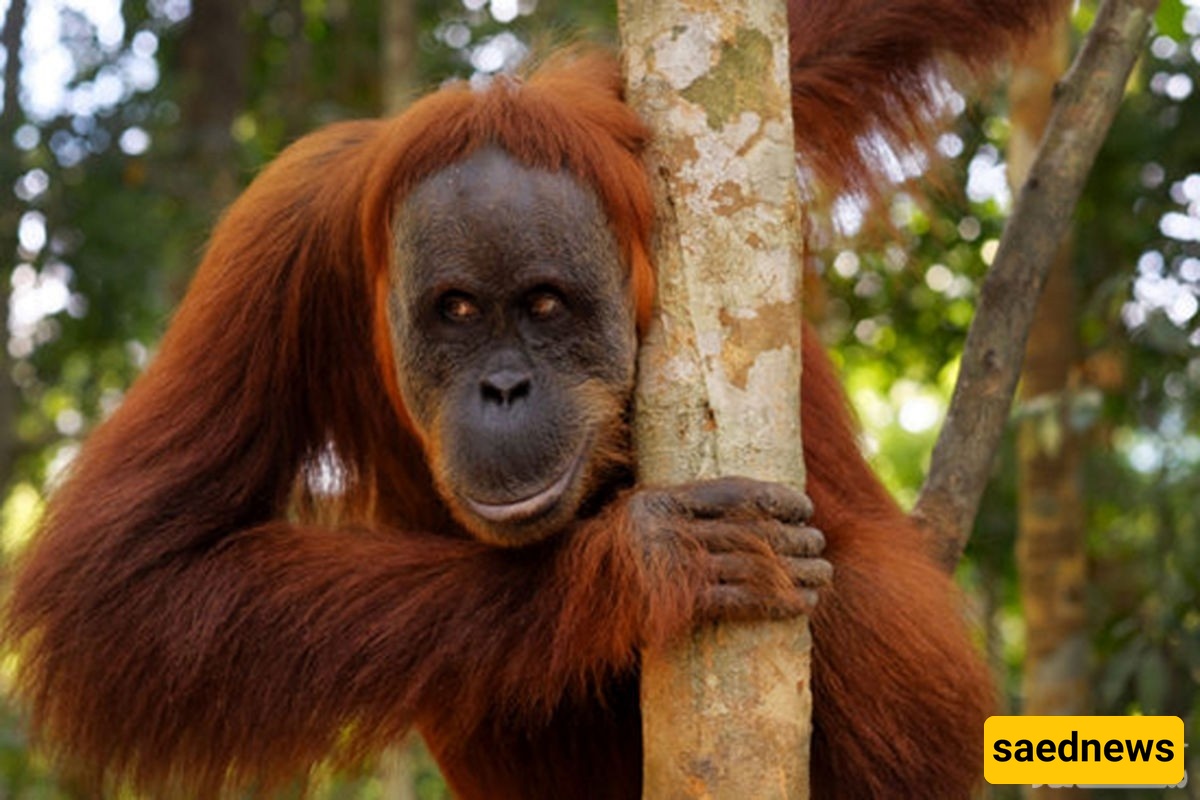
According to Saed News Agency, citing Bitoteh, a scientific study whose results were published in the journal PLOS ONE was conducted on orangutans and gorillas kept at the Basel Zoo in Switzerland. In their study, the researchers explain that scientists from the Institute of Biology at the University of Neuchâtel (UniNE) in Switzerland discovered that orangutans and gorillas are capable of making rational economic decisions. According to this new study, great apes are similar to humans in terms of choice behavior.
The study, published in PLOS ONE, was conducted on orangutans and gorillas housed at the Basel Zoo in Switzerland. The researchers state:
“Orangutans and gorillas prefer to gamble on a larger reward, even if they are not certain of receiving it, rather than settling for something they are guaranteed to get.”
According to the researchers, these animals, like humans, are prone to risk-taking, a trait that has attracted the attention of Basel Zoo staff.
In the first experiment, researchers gave each ape two cups, one containing a safe option and the other a riskier one. By choosing the safe option, the animals always received a fixed reward. Choosing the risky option sometimes resulted in receiving a larger reward and sometimes resulted in receiving nothing.
Both orangutans and gorillas understood how the experiment worked and tended to prefer the riskier reward option, suggesting a tendency toward risk-taking behavior.
Penelope Lacombe, a PhD student at UniNE and the first author of the paper, explains:
“We showed that orangutans and gorillas can understand changes in the number of rewards and changes in their probability of winning, and based on these changes, they make rational choices. For example, if they know their chances of winning are higher or they can obtain a larger reward, they prefer to bet and choose the ‘risky option.’”
In one of the experiments, scientists found that apes were 78% more likely to choose “risky” solutions compared to other available probabilities.
Ultimately, the study concludes that although gorillas and orangutans rely on logical cues when making betting decisions, they are still subject to underlying cognitive biases that influence their choices.