SAEDNEWS: Humans and many members of the primate family have distinctive lines on the skin of their hands and feet. These lines appear as intertwined circles and curved patterns, forming complex, unique designs.

According to the SaedNews Society Service, human skin on the palms of the hands and fingertips contains unique patterns of ridges that are specific to each individual. Finding two people with identical fingerprints is nearly impossible. However, many people wonder—beyond their use in biometric identification—what is the overall purpose of these curved lines on human hands and feet?
These skin ridges help increase friction in the hands and feet, allowing humans to grip, touch, and move objects more easily. Animals and creatures that do not have such patterns on their hands and feet tend to slip more often and have less ability to grasp objects compared to those that do.
Humans are not the only primates with fingerprints; most members of the monkey family also have them, using these ridges to make better and more efficient use of their hands and feet. Around six million years ago, early human ancestors lived in trees, and the absence of such skin patterns would have increased the risk of falling and dying. As a result, during human evolution, these ridges and patterns appeared on the skin of their hands and feet. Later, as early humans began using tools more extensively, these patterns became more developed and complex.
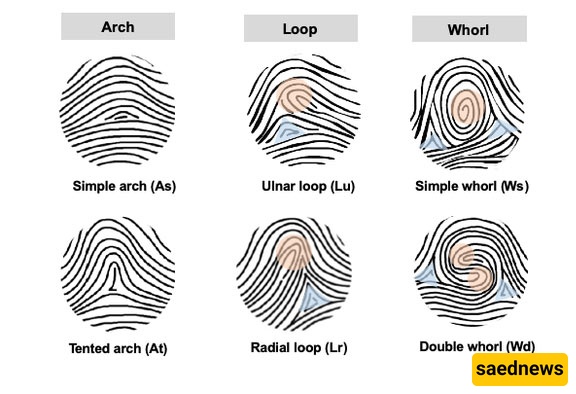
Another question may arise: in the modern world, where humans have access to shoes, gloves, and similar tools, why do we still need these unusual skin ridges on our hands and feet? Scientists argue that although modern humans do have access to such protective equipment, for most of their evolutionary history they did not, and relied entirely on these seemingly simple skin patterns.
It may sound surprising, but this feature of human skin has contributed to survival and reduced the risk of death over time. In fact, these ridges can be seen as an evolutionary gift that, while perhaps less critical today than in the past, still help humans grip objects and prevent them from slipping out of their hands.