SAEDNEWS: Giving gifts to officials of the host country during diplomatic visits by diplomats, politicians, or presidents is a long-standing tradition. It is regarded as a meaningful gesture of goodwill and a symbol of the friendly relations and mutual respect shared between the two nations.
According to Saednews, Throughout history, political leaders have exchanged gifts as symbols of friendship, diplomacy, and mutual respect. This centuries-old tradition dates back to ancient civilizations. For example, during the Middle Ages, the Byzantine Empire presented luxurious silk to Western rulers. Diplomatic gifts often reflect a nation's culture, traditions, history, and national pride.
Over time, these gifts evolved from valuable treasures into increasingly unusual and memorable items. While many serve as goodwill gestures, they often become part of national archives or museum collections after official ceremonies, state banquets, or diplomatic meetings. Here are some of the most remarkable and unusual diplomatic gifts ever exchanged between world leaders.
In 2018, North Korean leader Kim Jong Un presented South Korean President Moon Jae-in with two white Pungsan dogs as a symbol of improving relations between the two countries. The Pungsan breed is renowned for its loyalty and hunting abilities and is considered a national treasure in North Korea. The dogs, each about one year old, arrived with three kilograms of food to help them adapt to their new environment.
This was not the first time South Korea received such a gift. In 2000, former South Korean President Kim Dae-jung also received a pair of Pungsan dogs after visiting Pyongyang. Those dogs later produced 21 puppies before eventually dying of natural causes in 2013.
During another summit in Pyongyang, Kim Jong Un also gave President Moon two tons of highly prized pine mushrooms, famous for their distinctive aroma and high market value. According to Seoul, the mushrooms were distributed among approximately 4,000 elderly South Koreans who had been separated from their families during the Korean War.
Although English inventor John Kemp Starley is recognized as the father of the modern bicycle, bicycles have long been a symbol of old Beijing. China was once known as the "Kingdom of Bicycles" because millions of its citizens relied on them for transportation.
Before becoming U.S. president, George H. W. Bush served as head of the U.S. Liaison Office in Beijing, where he and his wife Barbara frequently explored the city by bicycle. During Bush's presidential visit to China in 1989, Chinese Premier Li Peng chose to present the couple with two bicycles rather than expensive luxury gifts, allowing them to relive fond memories of their time in Beijing.
Other recipients of Chinese diplomatic bicycles include former U.S. President Barack Obama in 2009, former Indonesian President Susilo Bambang Yudhoyono in 2013, and former British Prime Minister David Cameron in 2014.
During President Barack Obama's visit to Australia in November 2011, he received one of the most unusual diplomatic gifts ever presented to a head of state—a crocodile insurance policy worth $50,000.
The policy guaranteed that if Obama were attacked by a crocodile during his visit, approximately $50,000 would be paid to his wife. Given Australia's reputation for its crocodile population, the humorous gift reflected local wildlife while expressing concern for the president's safety.
Obama accepted the gift with a smile, joking:
"I have to admit, when we were reviewing America's healthcare legislation, crocodile insurance somehow slipped through the cracks."
To thank France for its military intervention in Mali, the country's president presented French President François Hollande with a camel.
The camel was initially intended for a French zoo but first needed vaccinations and quarantine. Rather than dealing with the logistical requirements, French officials entrusted the animal to a local Malian family for temporary care.
Instead, the family slaughtered the camel and prepared a traditional tagine meal from its meat.
When French officials learned what had happened, the Malian government apologized and replaced the gift with an even larger and more beautiful camel.
In 2010, Zimbabwean leader Robert Mugabe planned an extraordinary gift for North Korean leader Kim Jong Il.
The proposal involved sending a handmade ship carrying pairs of Zimbabwe's rare wildlife, including elephants, giraffes, rhinoceroses, zebras, and monkeys.
International protests from wildlife conservation organizations forced Mugabe to abandon the plan before the shipment could take place.
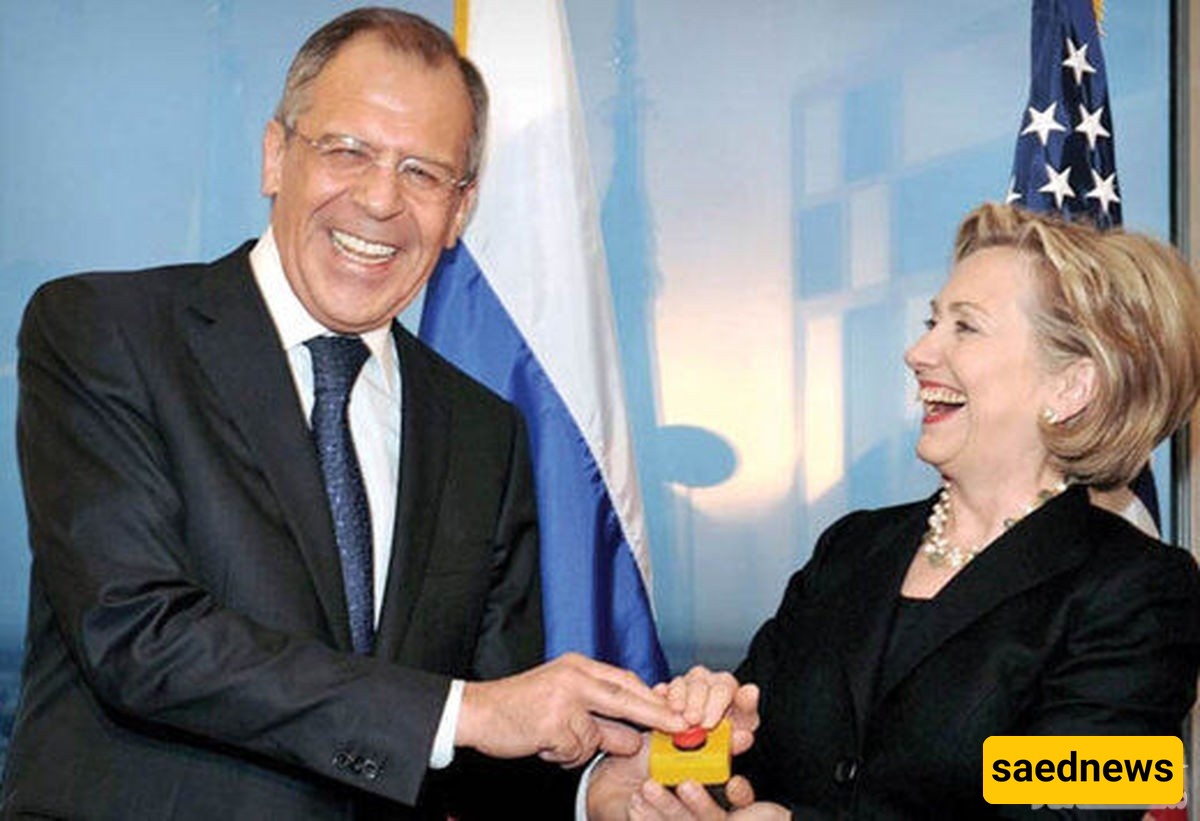
In 2009, U.S. Secretary of State Hillary Clinton presented Russian Foreign Minister Sergey Lavrov with a large red button labeled "Reset" to symbolize a fresh beginning in U.S.–Russia relations.
However, the Russian translation contained an embarrassing mistake.
Instead of using the correct Russian word for "reset" ("perezagruzka"), the button displayed "peregruzka," which means "overloaded."
Lavrov immediately noticed the error and politely remarked:
"You've got it wrong."
The incident quickly became one of the most memorable moments in modern diplomacy.
When British Foreign Secretary William Hague visited Australia in 2011, he surprised his Australian counterpart Kevin Rudd with an unusual remedy instead of a conventional diplomatic gift.
The present consisted of a container holding 750 grams of goose fat.
At the time, Rudd was suffering from a severe cold, and Hague suggested mixing goose fat with honey and warm water as a traditional treatment for chest coughs.
Hague later joked on social media:
"Goose fat for Kevin. Excellent for chesty coughs."
During a visit to Caracas by American actor and martial artist Steven Seagal, who was serving as Russia's special envoy, Venezuelan President Nicolás Maduro exchanged unusual gifts with him.
Maduro presented Seagal with a guitar, while Seagal gave Maduro a traditional samurai sword.
North Korea possesses one of the world's largest collections of diplomatic gifts in the International Friendship Exhibition in Pyongyang.
Among its most famous exhibits is a bulletproof limousine presented by Soviet leader Joseph Stalin to Kim Il Sung.
Other remarkable gifts include:
A sword and several chess sets from Libyan leader Muammar Gaddafi
An entire railway carriage from Mao Zedong
A crocodile-skin briefcase from Fidel Castro
A basketball signed by NBA legend Michael Jordan
Together, these items showcase decades of diplomatic relationships with leaders from around the world.
In 1990, former U.S. President George H. W. Bush received a Komodo dragon from the Indonesian government.
At the time, it was considered the largest Komodo dragon in the Western Hemisphere.
Unable to keep the rare reptile personally, Bush donated it to the Cincinnati Zoo, where it eventually weighed more than 300 pounds and successfully reproduced over 30 times. Many of its offspring were later sent to zoos across the United States.
The Komodo dragon remains one of Indonesia's greatest national treasures and is capable of hunting prey twice its own size, including deer and water buffalo.
Russian President Vladimir Putin has received numerous unusual diplomatic gifts over the years.
One of the most memorable came in 2010 when Bulgarian Prime Minister Boyko Borisov surprised him during a joint press conference by presenting him with a 10-week-old Bulgarian Shepherd puppy.
Borisov told Putin:
"I present this Bulgarian dog to Vladimir Putin and hope it brings you happiness."
It was far from the first dog Putin had received from foreign leaders.
China has practiced "panda diplomacy" for over a thousand years.
During the Tang Dynasty (625–705), giant pandas were presented to foreign rulers as prestigious diplomatic gifts. The practice ended after the founding of the People's Republic of China but resumed in 1958.
Between 1958 and 1982, China gifted 23 pandas to nine different countries.
One of the most famous examples occurred in 1972 when U.S. President Richard Nixon visited China and received two pandas, Ling-Ling and Hsing-Hsing.
In return, Nixon presented China with two musk oxen.
The pandas were sent to the National Zoo in Washington, D.C., where more than one million visitors came to see them during their first year.
In 2002, Queen Elizabeth II publicly displayed many of the diplomatic gifts she had received throughout her reign.
Among the collection was one particularly unusual object—a giant grasshopper-shaped drink cooler.
The whimsical item had been presented by French President Georges Pompidou in 1972 and quickly became one of the exhibition's most talked-about displays.