Saed News: Cabarets that sprang up like mushrooms during the Pahlavi era in Tehran were generally places of entertainment and leisure for wealthy people who usually drove the latest model cars and gathered in such places to make important decisions.
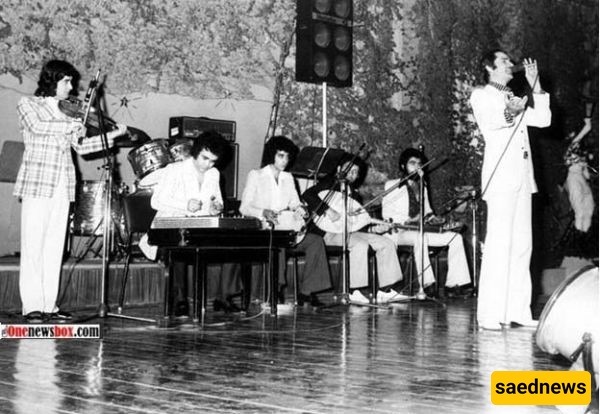
According to SAEDNEWS, citing Hamshahri, historian and Tehran researcher Dariush Shahbazi says: “The customers of cabarets were so wealthy that they could easily pay the cost of a several-hundred-toman table and dinner for a group, an amount that was higher than a monthly salary of office workers and laborers. These people went to cabarets to watch performances by famous domestic and foreign singers or dancers. The wealthy also made important business decisions in such environments.”
In such circumstances, the Shokufeh No cabaret was astonishingly formed and in a relatively short period became a meeting place for the most important political and economic figures of the country. Shahbazi describes the birth of one of the most notorious cabarets before the revolution: “A man named Hamid Hejazi bought a small café in one of the dusty southern streets of the city and gradually expanded it. After some time, that modest café, formed by merging two small shops at Mazal Sultan crossroads, was renamed Shokufeh No café, and later became one of the most famous cabarets of the Pahlavi era.”
The Shokufeh No cabaret, inspired by American and European cabarets, began operating in the east of Gheiz Castle and the western side of Kargar Street. It became so famous that after a short time, booking a table there was not easy. As the number of customers increased, Sabet Atashin and his daughter Faeqe Atashin performed comedy shows there. At the same time, Tehran cabarets entered a fierce competition to hire foreign dancers in order to attract wealthy customers. Shokufeh No led this competition and held a monopoly on hiring Italian and American dancers.
What took place in Shokufeh No was nothing but the promotion of nudity and alcohol consumption. For this reason, it was considered one of the most notorious entertainment venues in Tehran during the Pahlavi era, and it was immediately shut down after the victory of the revolution. Later, its land was allocated for the construction of part of Farabi Hospital, the largest specialized eye hospital in the Middle East. After the establishment of Farabi Hospital, no patient needed to travel abroad for major eye surgeries, and the memories of the dark days of Shokufeh No cabaret faded from the minds of Tehran residents.