SAEDNEWS:The United States currently has more than 50,000 military personnel and around 20 warships in the Middle East, some of which are involved in enforcing a naval blockade in the Arabian Sea.
According to Saednews, As diplomatic negotiations between Tehran and Washington remain deadlocked, reports indicate that the United States is preparing military options for renewed strikes against Iran following the US midterm elections. President Donald Trump has not ruled out resuming military operations.
Iranian officials, meanwhile, have warned that any new US or Israeli attack would trigger a broader and different response than in the past. Rising oil prices and an increased US military presence in the region have further heightened concerns about a renewed conflict.
According to Philip Timmojia, writing in The Hill, US Central Command (CENTCOM) has prepared options for additional strikes against Iran. Any operation would require approval from the White House. A source familiar with US military planning said several strike options had been presented to the Pentagon and Defense Secretary Pete Hegseth.
According to the report, Trump intends to keep his options open until a final decision is made. Gregory Brew, an Iran analyst at the Eurasia Group, has also suggested that Washington could resume military strikes against Iran after the November midterm elections.
Harrison Mann, a former official at the Middle East and Africa Regional Center of the US Defense Intelligence Agency, outlined two possible scenarios for escalating the conflict. The first would involve renewed attacks on military and political targets inside Iran. The second would involve strikes on civilian and energy infrastructure, particularly if Israel participated in a new operation.
The article claims that since April, the United States has largely limited its attacks to targets along Iran’s coastline. This approach was likely intended to reduce the risk of escalation and prevent further aircraft losses.
Asked by The Hill about possible attack plans, a Pentagon official said the department’s responsibility was to develop and present military options to the president. However, the official declined to comment on hypothetical or future operations.
The military preparations come as the Trump administration seeks broader concessions from Tehran, while diplomatic negotiations have failed to achieve tangible progress. Trump has previously raised the possibility of attacking Iran after the midterm elections. Republicans face competitive races in both chambers of Congress as they seek to retain their majorities.
According to the article, the US administration believes that sanctions combined with a naval blockade are increasing pressure on Iran’s economy. Washington may have concluded that adding military pressure to economic measures could force Tehran to accept an agreement and provide the United States with a way to exit the war.
Another factor behind the renewed consideration of military action is frustration with the diplomatic process. In recent weeks, Tehran has maintained its previous positions and has not demonstrated the flexibility Washington expected.
However, some regional analysts doubt that repeated US and Israeli attacks would force Iran’s leaders to back down. Previous strikes failed to completely eliminate Iran’s military capabilities or collapse its political leadership structure.
During the active phase of the war, US and Israeli forces destroyed or damaged some of Iran’s missile launchers and stockpiles. Last month, the Pentagon claimed that the US military had destroyed more than 90% of Iran’s ballistic missiles, naval military industry, and drones.
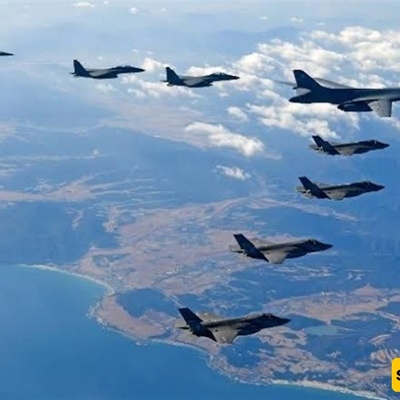
The United States currently has more than 50,000 military personnel and approximately 20 warships in the Middle East, some of which are participating in the naval blockade in the Arabian Sea. Two carrier strike groups are also deployed in the region, while the aircraft carrier USS Theodore Roosevelt is en route to join CENTCOM’s area of operations, reportedly to replace the USS George Washington.
The Pentagon has also deployed approximately 4,000 Marines and sailors to the region as part of an amphibious ready group comprising three vessels and led by the USS Makin Island. These forces and assets could provide the US president with additional options for amphibious operations and other missions.
Trump has also threatened to target the Pickaxe Mountain facility near Iran’s Natanz uranium enrichment complex. However, some experts believe that the facility’s depth—reportedly around 2,000 feet beneath layers of granite—could limit the effectiveness of even the most powerful US bunker-busting bombs.
In another development, the US State Department on Wednesday ordered nonessential government personnel and their family members to leave Saudi Arabia. The decision came as Yemen’s Houthi movement continued its attacks against the country.
Iranian officials have warned, both privately and publicly, that any renewed US or Israeli attack would prompt a response that is broader, more aggressive, and different from previous reactions.
Tehran has threatened to target US bases, warships, oil pipelines, refineries, and Washington’s regional allies in the Persian Gulf if an attack occurs. Iran continues to possess missile and drone capabilities.
Regional officials have also identified potential targets including undersea cables in the Persian Gulf, artificial intelligence data centers, and technology facilities.
The possibility of renewed hostilities has emerged as oil prices have climbed to their highest levels since May. Brent crude rose above $117 per barrel on Friday, while the US benchmark, West Texas Intermediate, traded at around $102 per barrel.
Tom Barrack, the US ambassador to Turkey and Trump’s special envoy for Syria and Iraq, did not rule out a military strike over the weekend. In an interview on Friday, he said the president remained open to an agreement, but negotiations had continued for months without producing the outcome Washington wanted.
In response to Barrack’s remarks, Trump said he was unaware of any specific plan for an attack at that time. However, during a speech in Fort Myers, Florida, on Friday, he again raised the possibility of military action. He said the United States might launch another operation under the name “Epic Fury,” or the other side might agree to a deal.
On Wednesday, the US president also said Washington was not negotiating with Iran and added that something would happen soon in the matter, although many observers believe any major development may come after the midterm elections.
The preparation of military options, the growing US military presence in the region, and reciprocal threats from Tehran and Washington indicate that diplomacy continues to face significant obstacles.
Nevertheless, the availability of military options does not mean a final decision has been made to carry them out. Such a decision could have consequences extending well beyond the battlefield, affecting regional security, energy infrastructure, and global oil markets.