SAEDNEWS: The United States, having failed to achieve its objectives through military means, has now turned to an all-out economic war. The goal is not merely to restrict Iran’s financial resources, but to shift the balance of power and force Tehran to accept terms dictated by Washington.
According to the political news service SaedNews, the Iranian newspaper Javan wrote:
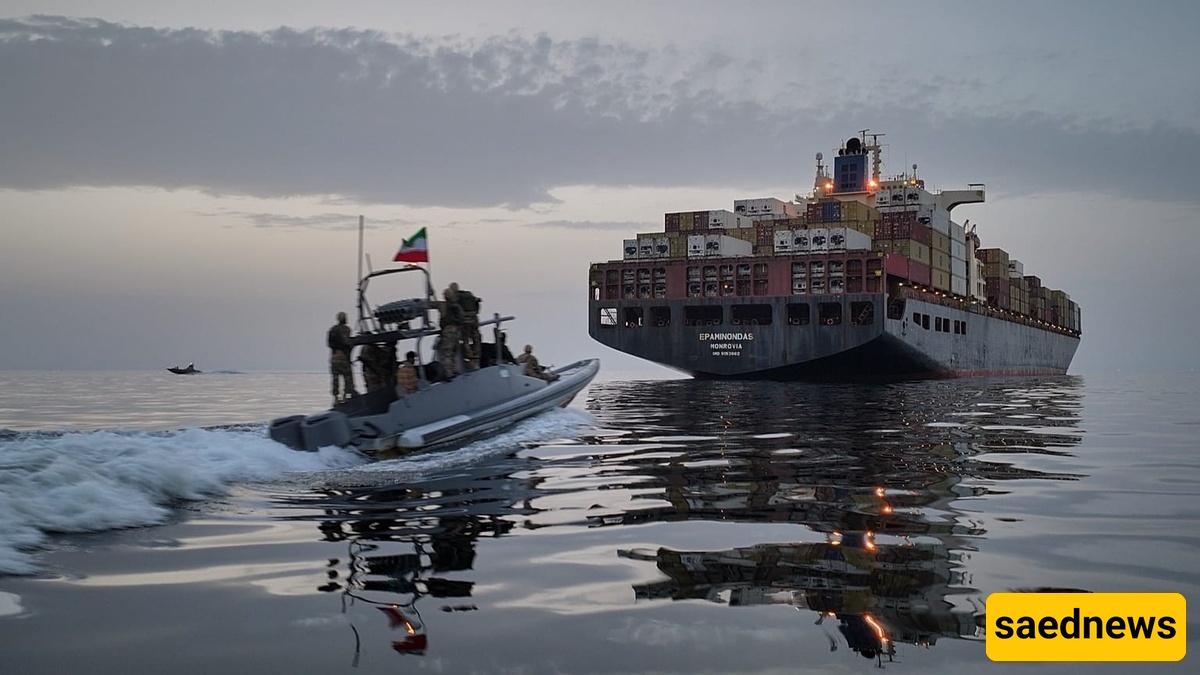
At this stage, the U.S. strategy can be summarized in one objective: reducing Iran’s bargaining power, restricting its oil exports, increasing economic costs, and seeking ways to bypass Iran in the Strait of Hormuz. These are all pieces of a single puzzle designed to gradually neutralize Tehran’s most important levers of pressure and resistance.
For Iran, the Strait of Hormuz is part of its deterrence and bargaining-power equation. As long as Tehran can, in a crisis, influence the security and flow of energy through this route, it retains at least one important lever for changing the calculations of the opposing side.
Therefore, efforts to neutralize this leverage should not be viewed as merely an economic or technical issue. If Iran concludes that even its most important means of applying reciprocal pressure is being neutralized, it is natural for its strategic calculations to change. Signs of such a shift can be seen in the rhetoric of Iranian officials. Tehran is no longer speaking only about enduring sanctions or economic difficulties; rather, it is highlighting a specific contradiction: Iran cannot be expected to lose its oil exports while neighboring countries continue exporting oil and, at the same time, cooperate with the U.S. economic pressure mechanism.
This rhetoric carries a clear message: Iran does not want economic pressure to become a one-sided game. From Tehran’s perspective, any country’s cooperation with the U.S. economic pressure mechanism will not be viewed merely as an economic decision; it could instead be regarded as part of a hostile action and a factor altering the region’s security equation.
The increasingly aggressive tone and approach adopted by Iran appear to have made regional mediators more sensitive to the fragility of the current situation. The visit by Pakistan’s army chief and the intensive diplomatic consultations across the region cannot be seen solely as attempts to open a new negotiating channel. Some of these efforts appear aimed at preventing the crisis from reaching a point beyond which returning to diplomacy would become difficult.
The main problem, however, is that the White House either does not want to—or cannot—accommodate even some of Tehran’s demands and conditions. Therefore, the central issue is no longer simply which side is applying greater pressure. The more important question is which side will conclude sooner that continuing the current game is more costly than changing its rules.
In this context, the Strait of Hormuz could become the point where economic warfare and military deterrence converge—a point where, if diplomacy fails to manage the situation, the crisis could move from the economic arena into the security domain. Perhaps the most significant miscalculation by the United States is precisely this: assuming that Iran’s power levers can be neutralized one by one while Tehran simply stands by and watches.