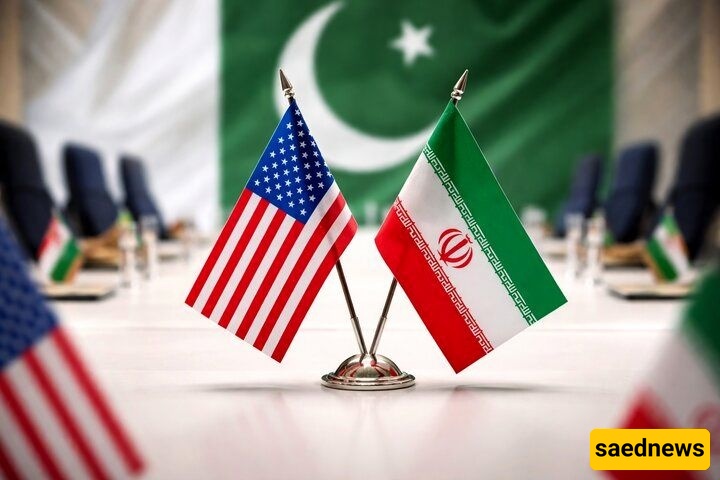
SAEDNEWS: A member of parliament sharply criticized Iran’s state broadcaster, saying its coverage of Iran–US negotiations and its reported large hidden budget are fueling divisions and deliberately undermining public trust.
According to the political service of Saed News, Mostafa Pordehkhan, the representative of the people of Ardakan and a member of the Industry Committee’s executive board in Parliament, reacted to the performance of the national broadcaster (IRIB) regarding the negotiations, saying:
In a situation where greater unity and solidarity are expected, the fact that IRIB amplifies certain statements made by individuals with particular track records—whose attitudes and views are already known to the public—leads to discouraging the people, weakening the country, undermining national security, and dragging the country into political games. Sometimes, due to lack of information and the confidential nature of the negotiations, it results in the raising of issues that act like fuel on the fire of disagreements.
Referring to a journalist’s question about biased criticism of the president by IRIB and presenters criticizing the president—despite such an atmosphere not existing in the past—he said: in the field of criticism, the space must be open, and we also believe in that. As supporters of the government, we ourselves sometimes issue very strong criticisms of the government. However, if criticism becomes one-sided and only targets a specific government, institution, or president whose views differ from IRIB’s line, and if certain commentators are selectively invited while claiming that the space for criticism is open, then in my view this is somewhat intentional and amounts to playing with public trust in the government. This is especially problematic in a context where greater cohesion is needed.
Pordehkhan added that individuals should not prioritize superficial, factional, or intra-group issues over the broader public interest and the real psychological security of society. They must be aware of the harmful effects of blackening or undermining the government and exaggerating its weaknesses with the narrative that only the current government is responsible for all problems. He warned that such negative actions ultimately harm the entire system, noting that, as the martyred leader said, the failure of the government is the failure of the system, and the success of the government is the success of the system.
In response to a question about IRIB’s dedicated revenue, the Ardakan representative said that this year around 40 trillion tomans in budget has been allocated to IRIB, separate from its own independent revenues from advertising and other sources. He added that these figures have never been transparent and have existed in “opaque conditions,” but estimates and statements by some managers suggest the number may exceed 100 trillion tomans. He emphasized that these are very large sums allocated to the organization.
Pordehkhan stressed that IRIB needs a fundamental overhaul in its perspectives, content, communication style with the public, and engagement with different ideological groups. Given changing public tastes over time, he said IRIB needs a shift in approach. In his view, people no longer primarily receive their news from IRIB; other platforms with better appeal—even if sometimes with poorer content—have replaced it because IRIB has failed to attract audiences.
He added that in the entertainment sector, IRIB has also lost ground to many platforms, and the same is true in political and analytical programming. Overall, IRIB is far from its ideal and former golden days because it does not produce content based on current public preferences, creating a wide gap between the broadcaster and public opinion.
He concluded by expressing hope that IRIB, which belongs to all people, would move away from a one-sided environment that serves only a minority set of views, and once again return to a position where people obtain their news and entertainment from it.