Saed News: The Director General of the International Atomic Energy Agency, who has so far not condemned illegal attacks on Iran’s nuclear facilities, once again called for access to Iran’s damaged nuclear sites in his latest report to the Board of Governors.
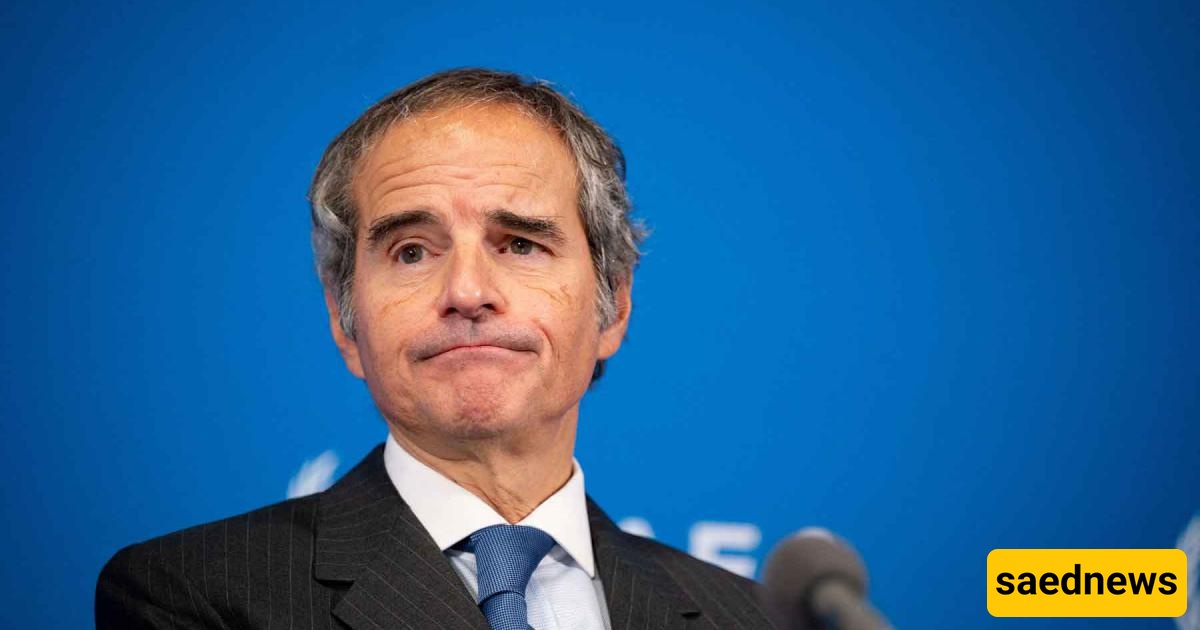
According to SAEDNEWS, Rafael Grossi, in this report—parts of which were leaked on Thursday in Western media—claimed that the IAEA has neither received information from Iran regarding the status of declared nuclear materials, facilities, and off-site locations for safeguards purposes, nor has it had access to any of these sites and locations, except for the Bushehr nuclear power plant, to conduct field verification activities. Therefore, the IAEA has not been able to carry out its safeguards responsibilities under Iran’s Nuclear Non-Proliferation Treaty (NPT) obligations and is consequently unable to verify the status of these facilities and related nuclear materials.
The IAEA Director General, while acknowledging that “military attacks on Iran’s nuclear facilities and sites have created an unprecedented situation,” avoided condemning these illegal actions and claimed that the immediate implementation of IAEA verification activities in Iran, in accordance with the NPT safeguards agreement and, if necessary, relevant provisions of UN Security Council and Board of Governors resolutions, is essential.
The report also claims: “The IAEA cannot provide or confirm any information about the current size, composition, or location of Iran’s enriched uranium stockpiles, nor whether Iran has suspended all enrichment-related activities, including research and development.”
It is worth noting that cooperation between Iran and the IAEA has faced restrictions following illegal attacks by the United States and the Israeli regime on Iran’s peaceful nuclear facilities, as well as legislation passed by the Iranian parliament requiring the suspension of cooperation if other parties fail to meet their obligations.
Following this, negotiations between Iran and the IAEA were held regarding the continuation of interactions within the existing legal framework, resulting in a technical understanding in September of last year. However, continued Western politicization against Iran’s peaceful nuclear program led to the suspension of this agreement’s implementation.
The Islamic Republic of Iran emphasizes that the basis for cooperation with the IAEA is the law passed by parliament. Foreign Ministry spokesman Esmail Baghaei previously stated: “We remain a member of the Non-Proliferation Treaty and committed to the safeguards agreement. In implementing these safeguards obligations, and considering the parliamentary law that designates the Supreme National Security Council as the authority on this matter, we continue our interactions with the IAEA accordingly.”