Saed News: An American publication has written that even if Tehran and Washington reach an agreement to end the war, the global energy market will not return to pre-conflict conditions anytime soon.
According to SAEDNEWS, the American magazine Foreign Policy, in a report titled “The Energy Crisis Will Last Much Longer Than the Iran War,” wrote:
Regardless of how close the United States and Iran may be to reaching a lasting peace agreement—or what the exact terms of such an agreement might be—the disruptions caused by the war in global energy markets will almost certainly continue for months and are likely to persist into next year.
The enduring challenges facing oil and natural gas markets—as well as a range of other commodities from helium to fertilizers—can be summarized in three main areas: supply flows, inventories, and production. The region will no longer produce energy at pre-war levels. Restoring oil and gas to normal export routes and delivering them to global markets will take considerable time. Moreover, the scale of accumulated disruptions in energy markets is such that even if a short-term agreement is reached, months of pressure and difficulties will be unavoidable.
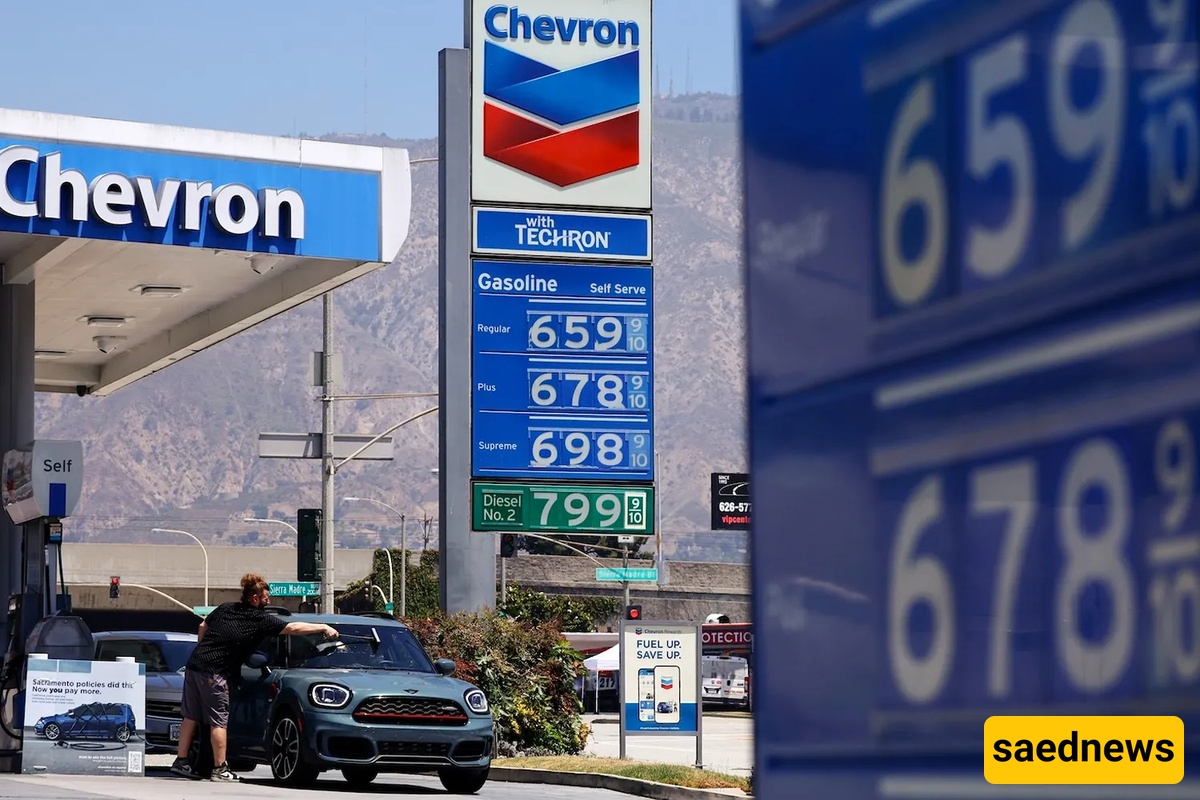
In practice, this will likely mean continued increases in oil and gas prices throughout the summer, rather than the sharp decline predicted by the Trump administration. The CEO of Chevron warned this week that shrinking spare capacity and reduced buffers in the global energy system would push prices higher during the peak travel season. This assessment contrasts with the relative optimism of oil traders, who have gradually lowered benchmark crude prices in anticipation of an agreement between Washington and Tehran.
Matthew Reed, Vice President of the Middle East-focused energy consultancy Foreign Reports, said:
“If everything goes well, reopening the Strait of Hormuz will take months. A temporary agreement may help transform exports from a trickle into a more stable flow, but until then, energy transit through the strait will remain severely constrained. The world will be forced to draw on rapidly declining reserves, and prices will rise as a result.”
Reopening the Strait of Hormuz—which had been fully open before the Iran conflict began under policies introduced by Donald Trump in late February—is the United States’ primary motivation for pursuing a temporary agreement. Broader disputes over issues such as Iran’s enriched uranium stockpiles and Tehran’s support for regional proxy groups remain unresolved. Even reaching an agreement on the strait itself appears highly challenging.
The first and perhaps most important question is whether Iran will seek to retain some degree of control over shipping through the strait. Since the conflict began, Tehran has exercised considerable influence over maritime traffic through mechanisms such as collecting fees and coordinating the passage of certain vessels. Iran insists that the post-war regime governing the strait will differ from the past, while the United States and reports about the draft agreement claim that the waterway will return to its previously unrestricted status.
Many experts, including former U.S. officials, believe a full return to the previous open-access system is unlikely because Iran has now recognized the value of its most powerful leverage. If the post-war framework includes any form of discrimination through fees, additional charges, or differential treatment of ships, many major regional exporters may reduce the volume of oil and gas they send through this narrow waterway.
A report from the Oxford Institute for Energy Studies stated:
“Under such a multi-tiered system, trade flows would likely become more unstable, and volatility in oil markets would increase significantly.”
The head of the national oil company of the United Arab Emirates also stated earlier this month that a full restoration of traffic through the Strait of Hormuz—which handled more than 100 ships per day before the war—would probably not be achieved until early 2027.
In addition, physical risks remain. It is still unclear how many naval mines Iran may have deployed in the strait and how long their removal would take. According to reports, the latest draft agreement requires Iran to remove all mines within 30 days, but neither side has accepted the proposal and its provisions may still change. Meanwhile, some elements within Iran’s power structure have signaled a willingness to target vessels that pass through the strait outside Tehran’s preferred framework. This situation is expected to increase marine insurance costs, raise shipping rates, and encourage greater caution among shipping companies.
Reed added:
“To return, companies need confidence that the strait will remain open. When a voyage can take several weeks, is a temporary agreement really enough? Every company will have to decide for itself how much risk it is willing to accept.”
Another key question is how much oil and gas will actually be available to load onto tankers once shipping resumes.
During the war, approximately 13 million barrels per day of oil production were taken offline because export routes were effectively closed. Even under the most favorable scenario, restoring oil fields to pre-war production levels will take time. Prolonged production shutdowns have also raised concerns about long-term damage to reservoirs, particularly in Iraq and Kuwait. When direct damage to oil and gas facilities—estimated by some at up to $50 billion—is also considered, a full production recovery could take at least several months.
At the same time, another limitation exists that is less related to war damage and more connected to future security concerns. After observing Saudi Arabia’s success in redirecting part of its oil exports through overland pipelines and bypassing the Persian Gulf, many countries in the region are now considering long-term investments in alternative export infrastructure to reduce dependence on a route over which Iran holds significant influence.
While such measures would improve long-term resilience, they require substantial investment and time. During this transition period, some producers may prefer to maintain lower production levels than before the war and send fewer oil shipments past Iran’s coastline.
The Oxford Institute for Energy Studies wrote:
“Given the long timelines required to develop new infrastructure, some major producers in the Gulf Cooperation Council may limit their exports through the Strait of Hormuz during the transition period.”
The prolonged recovery of production and exports becomes even more significant when considering the scale of supply shortages accumulated during the three months of war. Many experts estimate that at least one billion barrels of oil have been removed from global markets.
Under normal circumstances, spare production capacity among major oil producers could ease concerns. However, nearly all of that spare capacity is located in the same region that suffered the greatest damage during the war. Meanwhile, global commercial and strategic reserves—except for those of China—are very small compared to the scale of the shortage, and much of them has already been consumed.
As a result, the two primary shock absorbers of the global energy market have effectively been depleted. Consequently, declining inventories are expected to continue falling in the latter part of the year, suggesting that elevated prices may persist even after the conflict ends.
Overall, what many observers of the oil market—especially investment banks and energy traders—initially viewed as a short-term and manageable disruption has now evolved into a crisis whose effects are likely to last well into next year. This applies not only to oil but also to natural gas and refined products such as diesel and jet fuel.
The energy consultancy ClearView Energy Partners summarized the situation in a research note:
“Clearing mines from the Strait of Hormuz, freeing trapped tankers, and restarting production may take from several weeks to several months. However, repairing damaged facilities, restoring production to pre-war levels, and rebuilding depleted inventories could require anywhere from several quarters to several years.”
Accordingly, regardless of what kind of agreement Washington and Tehran eventually reach, consumers are unlikely to see a significant reduction in energy prices in the short term.