SAEDNEWS: Iran’s Ambassador to France Mohammad Aminnejad says Iran, as the party that has been attacked, still welcomes an end to violence and instability in the region, although this depends on ending the aggressors’ attacks under Iran’s desired conditions.
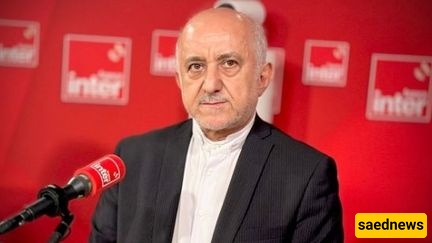
According to Saednews, Speaking to French media TF1, Aminnejad stated that Tehran did not initiate the war and described Iran as a victim of what he called brutal military aggression by the United States and Israel.
He emphasized that as long as threats persist, Iran’s Armed Forces and its people will continue to legitimately defend their territory. Referring to Article 51 of the United Nations Charter, he reiterated that Iran reserves the right to protect its territorial integrity under any circumstances.
Addressing concerns about the Strait of Hormuz, Aminnejad rejected accusations that Iran had blocked the strategic waterway. He argued that current insecurity in the region stems from the military presence of the United States and Israel, their actions against Iran, and the perception among shipping companies that the area is unstable.
He further noted that Iran, which has the longest coastline along the Persian Gulf, has historically played a key role in maintaining maritime stability and security in the region.
Aminnejad stressed that Iran does not consider any country an enemy and does not pose a threat to others, including France.
Meanwhile, Donald Trump announced a shift in his stance, agreeing to a two-week pause in what he described as a war of aggression involving Iran. Previously, Trump had threatened strikes on Iranian infrastructure such as power plants and bridges—actions that many legal experts warned could constitute war crimes.
In a statement posted on his Truth Social platform, Trump said the decision followed discussions with Shehbaz Sharif and Asim Munir. He also claimed that Iran had agreed to the “complete, immediate, and safe opening” of the Strait of Hormuz, suggesting this could lead to a mutual ceasefire.
According to the report, the conflict began on February 28 with an attack that allegedly resulted in the assassination of Ayatollah Seyyed Ali Khamenei and a strike on a school in Minab, southern Iran, where approximately 170 students and staff were killed.
At the time, indirect negotiations between Iran and the United States were ongoing, facilitated by several regional countries.