SAEDNEWS: A war designed to weaken Iran's regional standing ultimately elevated Iran's role and weight in the region's strategic equation.
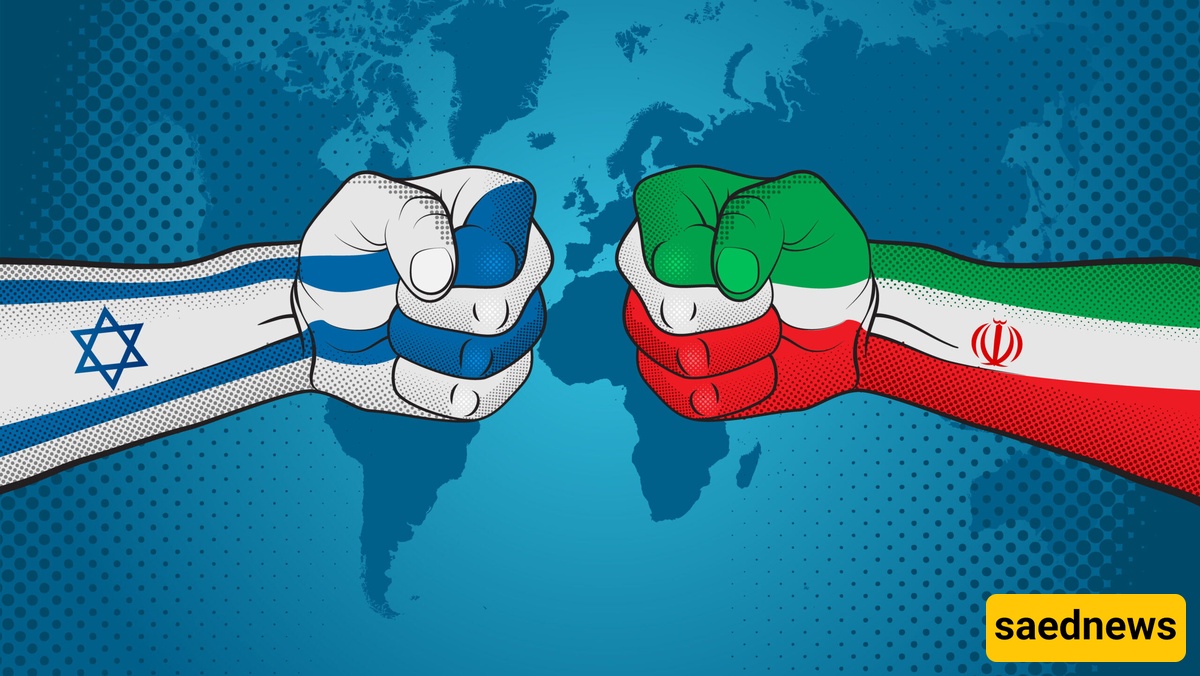
According to Saednews, Nearly three months have passed since the United States and Israel launched their attack on Iran — an operation that reportedly lasted forty days and was based on the assumption that coordinated military pressure, psychological operations, and media influence could push the Islamic Republic into retreat and political submission. However, as time has passed, these expectations appear not to have been met. On the contrary, various Western and Israeli media outlets and analysts have increasingly acknowledged that the outcomes diverged significantly from the original objectives.
In one analysis cited from The Jerusalem Post, it was argued that the conflict did not weaken Iran. Instead, it allegedly reinforced Iran’s control over the Strait of Hormuz, strengthened its regional alliances, and consolidated domestic institutions that were among the intended targets of pressure.
This assessment reflects a broader argument that the strategic calculations behind the war were based on a misreading of Iran’s political structure, social dynamics, and military capabilities. The expectation that combined economic, military, and information pressure would generate internal instability and force political concessions did not materialize as anticipated.
On the military and security level, the conflict is described as having failed to achieve its deterrence objectives. Rather than collapsing, Iran’s internal political and security structures reportedly remained intact, while its regional ties were strengthened. Early narratives in Western media suggesting an imminent strategic retreat gradually gave way to recognition that Iran had absorbed the pressure and, in some areas, maintained operational initiative.
A key element highlighted in this interpretation is the erosion of perceived deterrence power by the United States and Israel. The inability to secure rapid and decisive outcomes reportedly undermined the long-held assumption that direct confrontation would quickly force compliance.
The Strait of Hormuz emerged as a central strategic focus. One of the implicit aims attributed to the campaign was limiting Iran’s influence over this critical energy corridor. However, according to this view, the outcome was the opposite: Iran’s role in regional security discussions reportedly became more prominent, with analysts increasingly acknowledging that long-term arrangements in the Persian Gulf cannot be formed without considering its position.
Regionally, the conflict is also said to have influenced the behavior of neighboring states. Countries that previously aligned closely with maximum-pressure strategies are described as having adopted more cautious positions after witnessing the risks of escalation. This shift reportedly contributed to renewed diplomatic activity and adjustments in regional alignments.
Domestically, the narrative suggests that Iranian society did not fragment under pressure as some analysts had predicted. Despite economic and psychological strain, the population is portrayed as having experienced a degree of internal cohesion in response to external pressure. Historical experience and national identity are presented as factors that reduced internal divisions during the conflict period.
The war is further described as challenging assumptions about the effectiveness of rapid, high-intensity military strikes intended to disrupt command structures and force political concessions. Instead, the continuity of Iran’s operational capacity is cited as evidence that such strategies may carry higher risks and lower predictability than previously assumed.
In terms of global perception, the conflict is said to have contributed to a diversification of narratives. Outside traditional Western media frameworks, particularly in non-aligned regions, alternative interpretations of the war reportedly gained more visibility. This shift is described as weakening the dominance of earlier narratives predicting a quick and decisive outcome.
Three months after the beginning of the conflict, the overall argument concludes that the intended strategic objectives — weakening Iran, creating internal division, and reinforcing deterrence credibility — were not achieved as planned. Instead, the outcome is framed as a strengthening of Iran’s regional role, a consolidation of internal cohesion, and a broader questioning of established assumptions about military power in the region.
Ultimately, the developments are presented as evidence of a shifting geopolitical reality in which unilateral military strategies are increasingly unable to determine regional outcomes on their own.