SAEDNEWS: Tarom County, located in the northern part of Zanjan Province, lies at the end of a winding road adorned with stunning and charming landscapes. The county’s center is called Ab Bar. Due to its climate, which closely resembles that of northern Iran, Tarom boasts some of the most beautiful and unique natural attractions in the region.
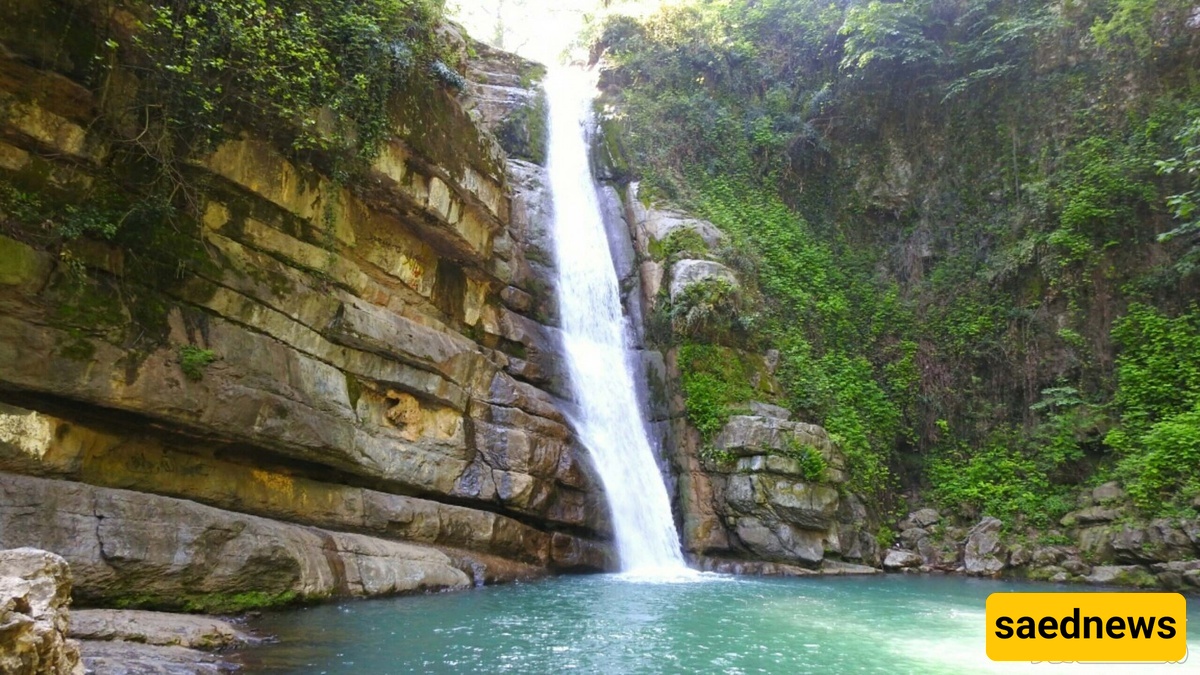
According to the Family Magazine section of Saed News, Tarom County is one of Iran’s most beautiful and picturesque regions. Renowned for its agricultural and livestock potential, fertile lands, and favorable climate, it is often called the “India of Iran.” Its stunning and diverse natural landscapes—including waterfalls, springs, highland pastures, natural glaciers, and remarkable caves—combined with lush and towering mountains, make Tarom a top destination for travelers.
Tarom County holds numerous historical sites. The caves in this region indicate human settlement dating back to the Paleolithic era, thousands of years before Christ. These remains, along with Sassanid-era structures such as fire temples, suggest that this region experienced less conflict and warfare compared to other parts of Iran.
The county is enriched by numerous religious sites, including the shrines of Imamzadeh Hashem and Ouf, Jafar in Abbar, Seyed Ahmad in Vazneh Sar, Mohammad Ali Mahoori in Zajkan, Heydar in Gilvan, Abdollah in Someh Bar, Mohammad Baqer in Kalleh Siran, Mohammad Hashem in Sorkhe Mishe, Ghasem in Klooyim, Ali in Sorkhabad, Abdollah in Balakuh, Ismail in Qohijan, Ibrahim and Khadijeh in Bandar Gah, Ibrahim, Taher, and Marjan in Chamleh, Mahmoud in Arsht, Hasan Ghaeb in Chorzagh, Abdolrahman and Narges Khatoon in Qalat, and Sultan Seyed Ali Al-Ghazi in Jeysh Abad. These sites highlight the county’s rich religious and cultural tapestry.
Vazneh Sar, a village in Tarom, features two waterfalls of the same name, creating a breathtaking landscape. Reaching the first waterfall requires about an hour of walking from the village, while the second waterfall is a 30-minute walk further. Hazelnut, walnut, raspberry, and grape trees enhance the area’s natural beauty.
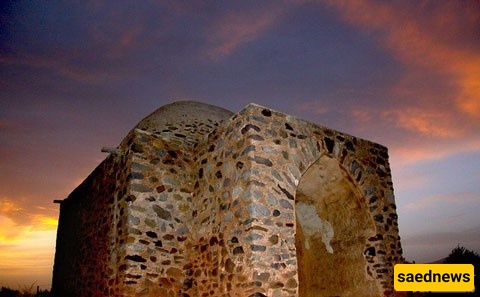
Numerous Sassanid-era fire temples remain in Tarom, evidence of the region’s historical distance from warfare and the presence of a substantial Zoroastrian community. Five of these temples are registered as national heritage sites, including the Gilan Kesheh Fire Temple, located on high ground overlooking the Gilan Kesheh River. This four-arched domed structure features a southern vaulted veranda and is constructed from cobblestones mixed with lime and plaster.
Another significant site, Alzin Char-Taq, locally known as a fire temple, is surrounded by village houses to the east, an old cemetery to the north and west, and hills beyond. The shrine is located at coordinates 4076853, UTM 39S 32026.
Shomiran Castle, located in Upper Tarom, is a historic site dating back to pre-Islamic times.
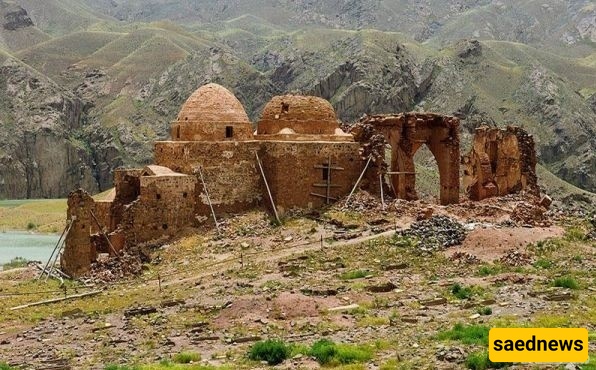
Shahneshin is a historic and mountainous village situated between the Qezel Ozan River to the south and the Shahneshin River to the west. Surrounding mountains such as Fooshon and Kharman Goleh play a crucial role in the village’s pleasant climate. The village also features the historic Kharmaneh Sar Cave and an old mosque, adding to its historical significance.
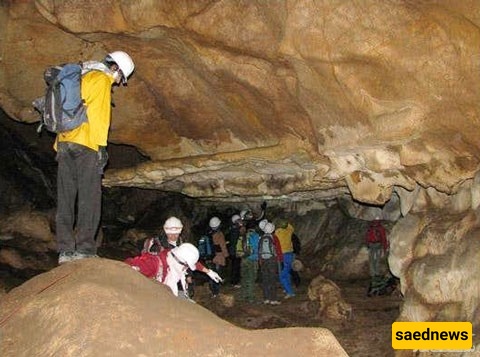
Located at 1,600 meters above sea level in northern Shahneshin, Kharmaneh Sar Cave is one of Zanjan Province’s most famous caves. Visitors pass through a river and dense olive and fig groves to reach the cave entrance. Archaeological studies on pottery found within its corridors reveal human habitation from prehistory to the 4th century AH, though no significant ancient civilization remains have been discovered. Stalactite and stalagmite formations create stunning interior visuals. A shaft-like cavity near the entrance requires crawling to access, revealing a mysterious world reminiscent of ancient market structures, with a deep well in its floor.
The Valovar forests, located in the upper regions of Cherzeh, Cheshmeh Sar, Balootestan, and Zershki villages, appear as misty, cotton-like expanses with massive tree canopies. The northern peaks’ pervasive fog creates a dramatic drop in temperature. With steep, scenic slopes and diverse heights, these forests are prime destinations for tourists, hikers, and outdoor enthusiasts.