SAEDNEWS: Praising Pakistan’s efforts to broker a temporary ceasefire in the US-Israeli war of aggression against Iran, the Iranian vice president said Tehran will actively participate in the upcoming Islamabad negotiations with profound skepticism regarding the deceptive nature of the US.
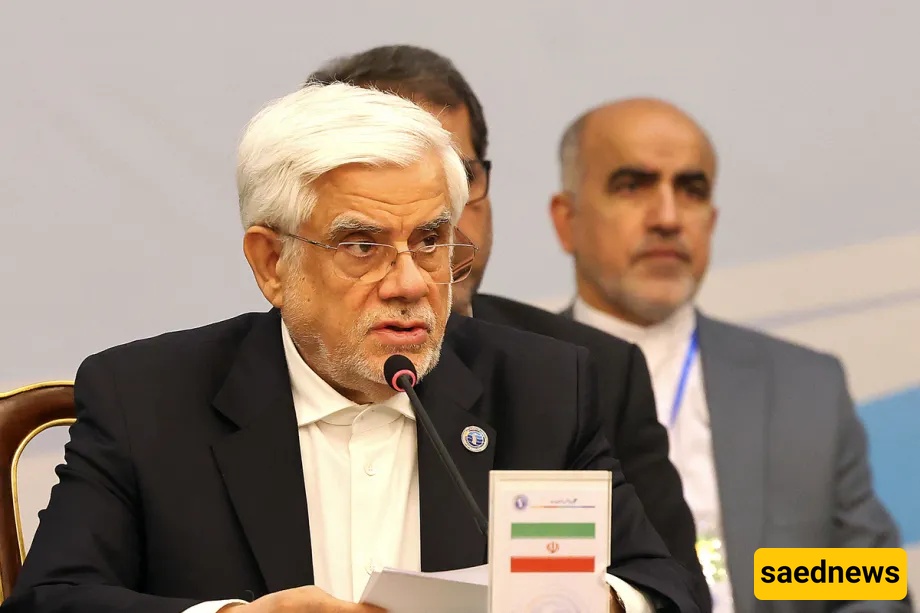
According to Saednews, In a statement released on Wednesday, Mohammad Reza Aref emphasized that the enduring stability and formidable power seen in Iran today are rooted in the teachings of the late Leader of the Islamic Revolution, Ayatollah Seyed Ali Khamenei.
The vice president highlighted that this ideological framework places the essence of power beyond individuals, grounding it instead in the nation’s will and the divine structure of the ruling system.
Marking the 40th day since the start of Iran’s intensified conflict against the so-called “front of evil,” Aref stressed the country’s ability to navigate a comprehensive war against multiple adversaries. He noted that, over the past forty days, Iran not only disrupted its enemies’ calculations but also demonstrated national resolve that opened new avenues of understanding for its allies. The conflict, he said, represents not just a military victory but a strategic turning point affecting regional and global power dynamics.
Aref criticized Iran’s “barbaric and uncivilized enemies” for miscalculating the impact of losing a major Leader, asserting that the nation’s steadfast stance inflicted a historic defeat on the political and security structures of imperialist forces. He noted that, guided by Khamenei’s ideological legacy, Iran has re-engineered power dynamics, and today’s victory serves as a decisive rebuttal to destabilization theories.
The vice president acknowledged the Iranian public’s enthusiastic participation in demonstrations, describing these acts as expressions of the state’s soft power, alongside the Armed Forces’ courageous efforts on the battlefield. He proclaimed that the balance of power has shifted in favor of righteousness, with some of the world’s most oppressive regimes yielding to this determined will. Aref declared that the post-war world will be fundamentally altered and called on freedom-loving people worldwide to recognize Iran’s rising influence as a symbol of liberation from imperialist oppression.
Expressing gratitude for Pakistan’s supportive role, Aref stated that Iran would fully participate in Islamabad-led negotiations, maintaining complete authority, yet he emphasized deep skepticism regarding U.S. intentions. The objective of these talks, he said, is to diplomatically solidify Iran’s military gains.
Acknowledging the courageous forces defending the nation, Aref stressed the importance of ongoing vigilance and readiness in Iran’s defense apparatus. He assured that government representatives would continue to collaborate with front-line defenders to ensure economic stability, prosperity, and the rebuilding of national infrastructure.
The statement comes after the U.S. and Israeli regimes launched a large-scale military campaign against Iran following the assassination of then Leader of the Islamic Revolution Ayatollah Seyed Ali Khamenei on February 28, along with several senior commanders and civilians. In response, Iranian Armed Forces struck U.S. and Israeli positions, demonstrating both retaliatory capability and national unity. Despite expectations of a swift defeat by the attackers, Iran’s counterstrikes inflicted heavy damage on military assets while bolstering domestic resilience.
Although the U.S. had issued an ultimatum, Pakistani mediation led to a two-week ceasefire and negotiations in Islamabad. Iran presented a ten-point proposal as the basis for discussions, including the withdrawal of U.S. forces, lifting of sanctions, and establishing control over the Strait of Hormuz.
On April 8, Iran’s Supreme National Security Council affirmed that the aggression resulted in a historic victory, compelling the U.S. to accept negotiation terms that include guaranteed non-aggression and cessation of hostilities. Tehran emphasized that these negotiations represent an extension of the battlefield into diplomacy, rather than an end to the conflict, maintaining a clear stance of distrust toward the U.S.