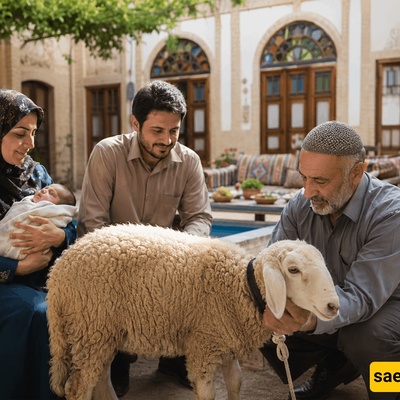
SAEDNEWS: Aqiqah is an Islamic tradition of thanking Allah for a newborn through animal sacrifice. Learn about its timing, requirements, slaughtering rules, meat distribution, and guidelines for baby boys and girls.
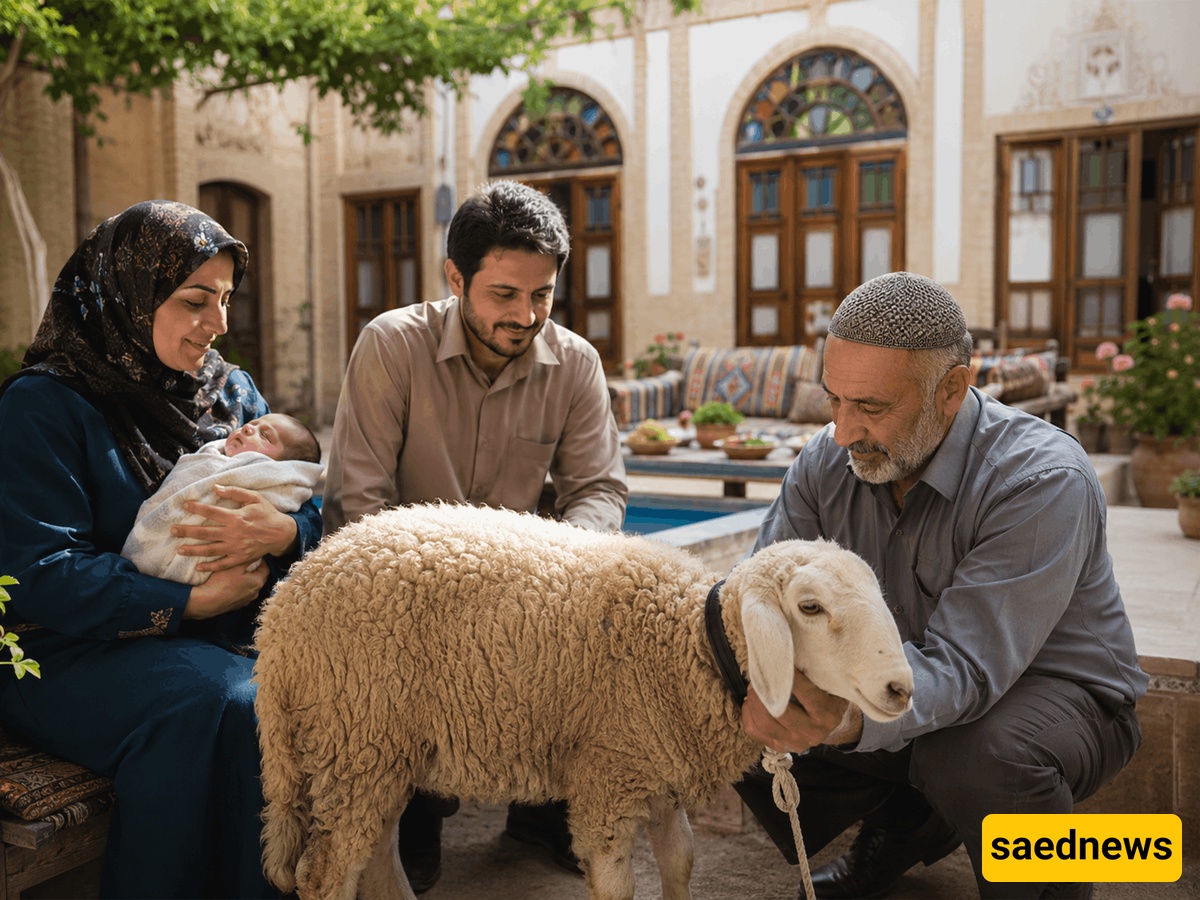
According to Saednews, Understanding the Islamic rulings on Aqiqah and its significance helps families observe this highly recommended religious tradition in accordance with the teachings of Prophet Muhammad (peace be upon him and his family) and the Ahl al-Bayt (peace be upon them).
In Islamic jurisprudence, Aqiqah refers to the prescribed slaughter of one of three types of livestock—camel, cow, or sheep (including ewes and goats)—with the intention of seeking protection and good health for a newborn or adult, expressing gratitude to Allah, and providing food for believers and those in need.
The preferred time for performing Aqiqah is the seventh day after a child's birth, alongside choosing a good name, shaving the baby's hair, and giving silver in charity equivalent to the weight of the hair. However, if Aqiqah is not performed during childhood, its recommended status does not expire.
Regarding the religious ruling on Aqiqah, Imam Khomeini (may Allah have mercy on him) states in Tahrir al-Wasilah (Vol. 2, p. 331, Issue 9):
"One of the highly recommended acts is performing Aqiqah for a newborn, whether male or female. It is recommended that Aqiqah be performed on the seventh day after birth. If it is delayed, the recommendation does not lapse until the child reaches adulthood. If Aqiqah has not been performed by then, the individual may perform it for themselves. Even if a person has not performed Aqiqah during their lifetime, there is no objection to performing it on their behalf after their death."
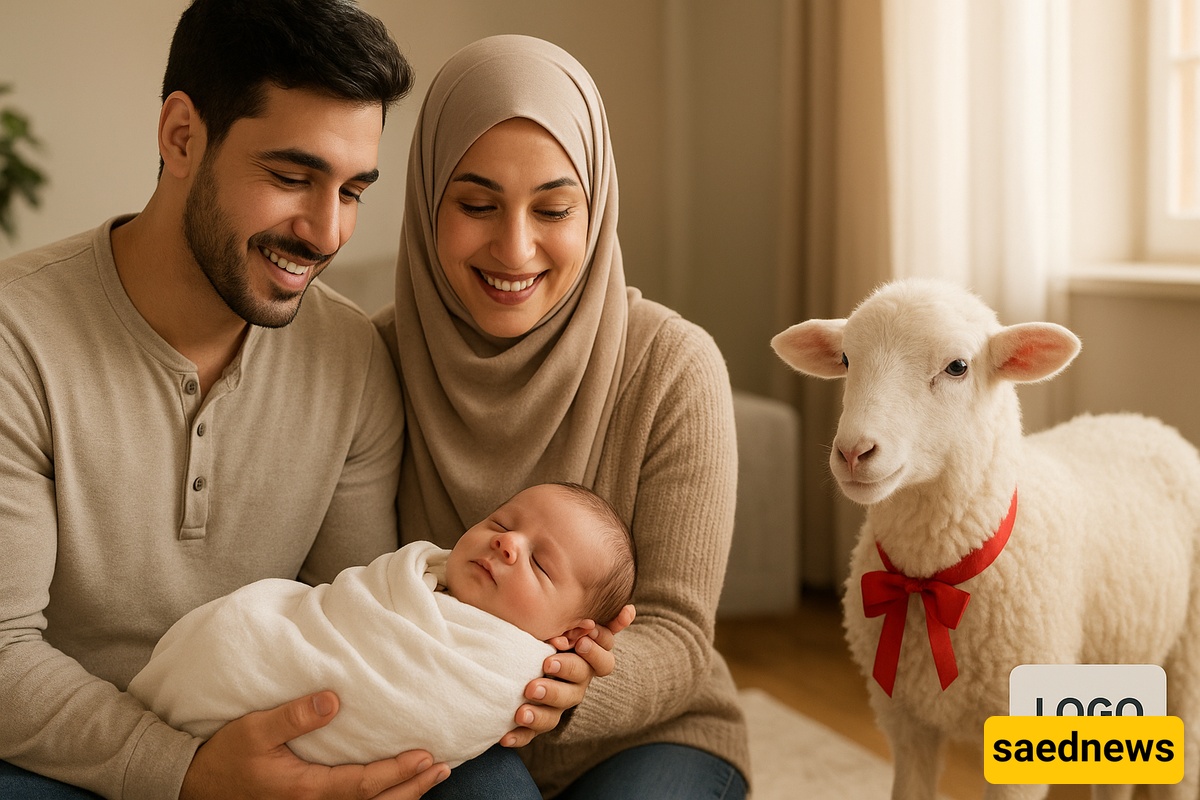
A narration supporting Aqiqah in adulthood is reported from Umar ibn Yazid in Al-Kafi (Vol. 6, p. 25, Hadith 3), where he states:
"Imam Abu Abdullah (Imam Ja'far al-Sadiq, peace be upon him) instructed me, and I performed Aqiqah for myself when I was already an elderly man."
Similarly, a reliable narration from Ammar al-Sabati in Man La Yahduruhu al-Faqih (Vol. 3, Hadith 4714) quotes Imam al-Sadiq (peace be upon him):
"Aqiqah is required of the financially capable person. A poor person should perform it when their financial circumstances improve. If they are unable to do so, nothing is required of them."
For those who can afford it, giving the monetary value of the animal in charity does not replace the actual slaughter. Imam Muhammad al-Baqir (peace be upon him), as reported in Al-Kafi (Vol. 6, p. 25, Hadith 8), instructed that two separate animals be prepared for the birth of twins. The late Ayatollah Sayyid Ali Khamenei also emphasized that each child should have a separate Aqiqah.
According to the established position of Imami Shi'a jurists, the animal selected for Aqiqah must belong to one of the three categories of livestock: camels, cattle, or sheep (including ewes and goats). Slaughtering a chicken or rooster does not qualify as Aqiqah.
Imam Ja'far al-Sadiq (peace be upon him) states in Al-Kafi (Vol. 6, p. 31, Hadith 2):
"Aqiqah is not subject to the same strict requirements as the sacrificial animal of Hajj. The best Aqiqah animal is the fattest one."
During slaughter, the animal should face the Qiblah, and the following Quranic verse should be recited:
"Indeed, my prayer, my sacrifice, my life, and my death are for Allah, Lord of the worlds." (Surah Al-An'am, 6:162).
Allameh Tabataba'i (may Allah have mercy on him) discusses this verse in Al-Mizan, Vol. 7, as an expression of sincere devotion and submission to Allah.
For further guidance, see the Comprehensive Guide to the Aqiqah Supplication and Its Proper Recitation.
[Aqiqah Animal Requirements and Islamic Rulings on Bones and Blood]
Regarding practices following the slaughter, Al-Kafi (Vol. 6, p. 33, Hadith 3) reports that Imam Ja'far al-Sadiq (peace be upon him), quoting Imam Muhammad al-Baqir (peace be upon him), condemned the practice of applying the sacrificial animal's blood to a newborn's head:
"That is an act of associating partners with Allah. It was practiced during the pre-Islamic era of ignorance and was prohibited in Islam."
Furthermore, a reliable narration in Al-Kafi (Vol. 6, p. 28, Hadith 11) quotes Imam al-Sadiq (peace be upon him):
"Aqiqah is performed on the seventh day. The midwife should be given the leg and hip, and the bones should not be broken."
The author of Jawahir al-Kalam (Vol. 31) explains that leaving the bones unbroken is recommended. However, there is no reliable hadith-based evidence establishing the burial of Aqiqah bones in the ground as a religious requirement.
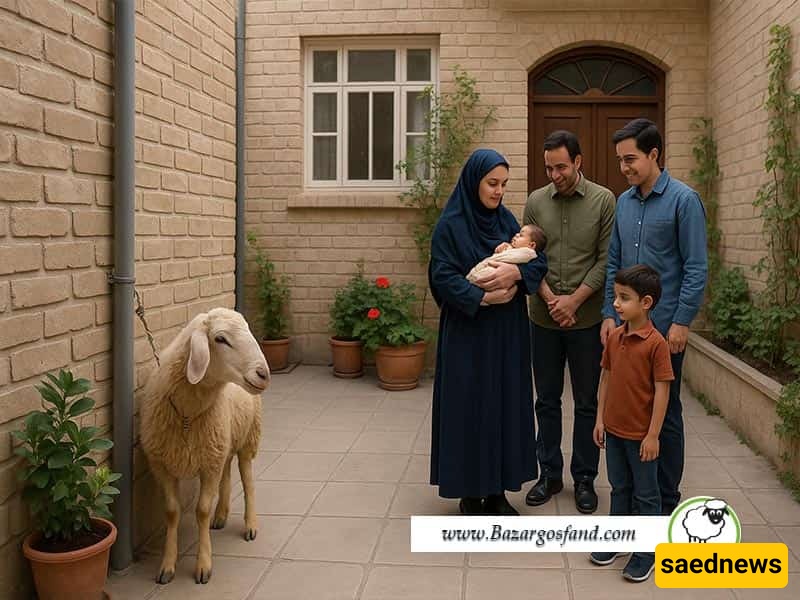
Regarding the distribution of Aqiqah meat, Man La Yahduruhu al-Faqih (Vol. 3, Hadith 4718) narrates from Imam Ja'far al-Sadiq (peace be upon him):
"Feed ten Muslims from it, and if you feed more, that is even better."
Grand Ayatollah Mohammad-Taqi Bahjat (may Allah have mercy on him), in Jami' al-Masa'il (Vol. 3, p. 581), explains that cooking the meat and inviting at least ten believers to share the meal is recommended. It is also considered disliked, though not forbidden, for the child's parents to eat from the Aqiqah meat.
Martyr Morteza Motahhari, in his book Divine Justice, also discusses charity and feeding others as means of seeking protection from calamities.
For additional information, see Islamic Rules for the Distribution and Consumption of Aqiqah Meat.
[Aqiqah Meat Distribution and Ordering Services Through Zabih]
Selecting a healthy lamb, correctly reciting the Aqiqah supplication with the name of the person for whom Aqiqah is being performed and their father's name, ensuring Islamic slaughter while facing the Qiblah, and separating the meat at the joints without breaking the bones all require care and expertise.
Zabih provides both proxy and in-person Aqiqah services to help families observe this Islamic tradition.