SAEDNEWS: Azerbaijan’s Historic Babak Castle: Stunning Views, Traditional Azerbaijani Dance, and Photos of Qaleh Jomhur in Kaleybar
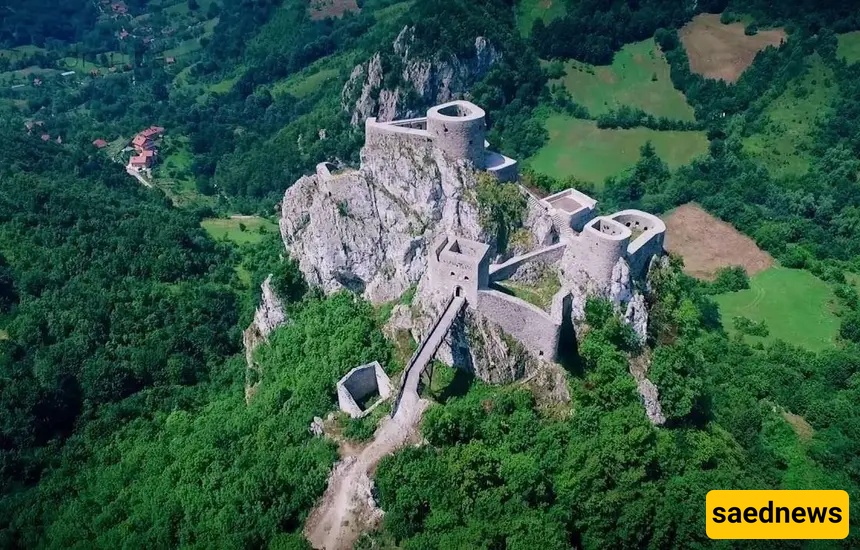
According to Saednews, Babak Castle, also known as Babak Fortress, Ghoomour Castle, and Baz Fortress, is located approximately 50 kilometres north of Ahar County, on the western heights overlooking the great Qara-Su River, in the region known as Kaleybar, East Azerbaijan Province, Iran.
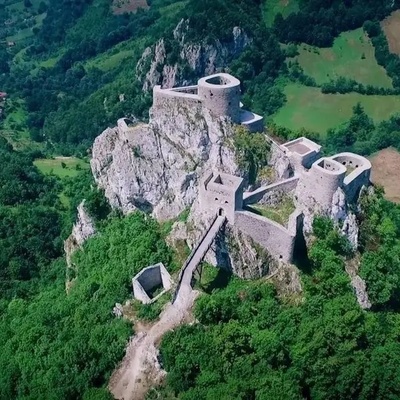
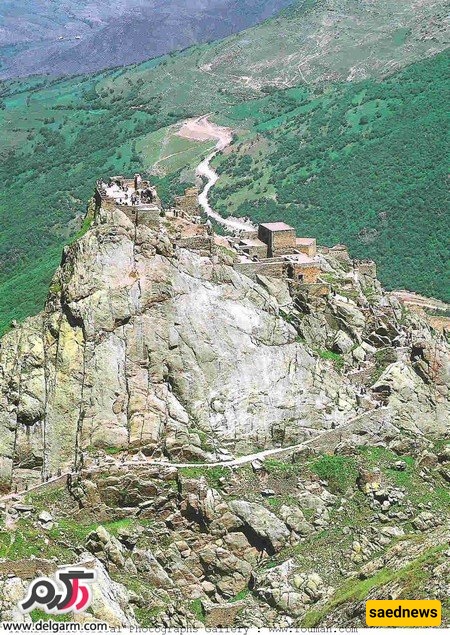
The fortress of Babak Khorramdin stands atop a mountainous peak at an elevation of approximately 2,300 to 2,700 metres above sea level. Also known as Babak Castle, Babak Fortress, Baz, and Ghoomour Castle, it served as the stronghold and headquarters of Babak Khorramdin, a prominent Iranian military leader who led an uprising against the Abbasid Caliphate in the 9th century AD (3rd century AH).
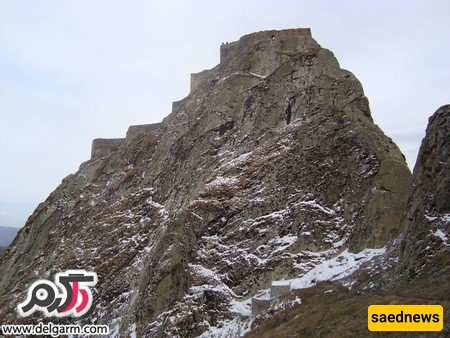
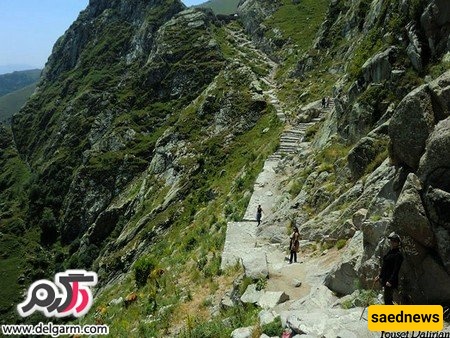
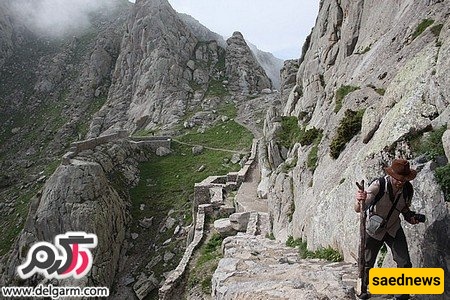
The distance from Kaleybar to the castle is approximately 3 kilometres. The journey involves crossing steep mountain passes and dangerous pathways. Before reaching the castle gate and entering the fortified structure, visitors must pass through a narrow corridor formed naturally by regularly shaped rocks. This passage is so narrow that only one person can pass through comfortably, while two people can barely pass side by side.
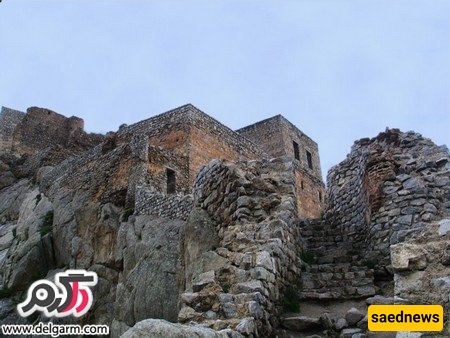
This passage is approximately 200 metres from the castle's outer defensive wall and faces directly towards it. From this point, the challenging terrain, imposing appearance of the elevated fortress, and its breathtaking strategic location inspire a sense of wonder. The passage leads directly towards the castle entrance, allowing guards stationed in the two watchtowers on either side of the gate to observe the arrival of any visitors, soldiers, or approaching forces.
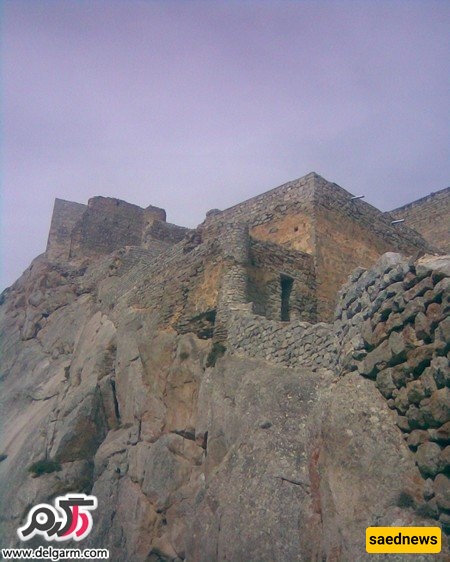
The main entrance is the only accessible route into the fortress, as entering from the surrounding mountains is virtually impossible. After passing through the entrance gate and the outer defensive wall, visitors must follow a narrow pathway that involves climbing approximately 100 metres in elevation to reach the entrance of the main fortress. This difficult route overlooks a deep valley on one side.
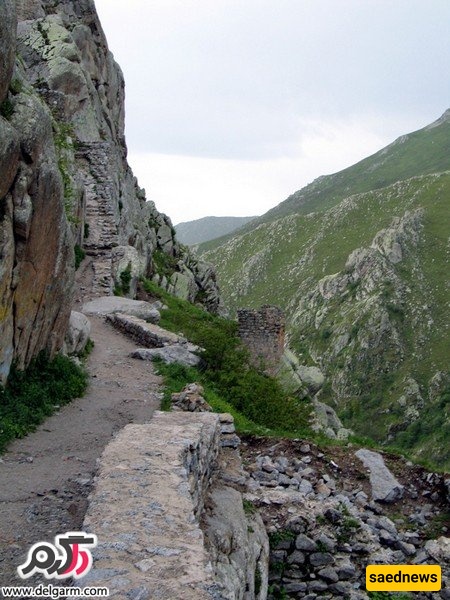
The valley is covered with sparse forests and reaches a depth of approximately 400 metres, with steep rocky cliffs extending down to its bottom. Four semi-cylindrical lookout positions were constructed at natural points along these cliffs and around the four sides of the fortress. These served as observation posts for guards and soldiers, who monitored any movement across the surrounding valleys, mountainsides, and distant landscapes.
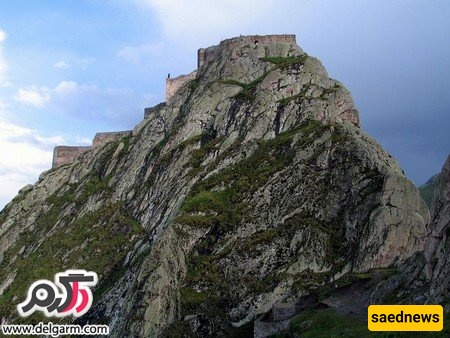
After completing the climb, visitors must pass through another entrance with irregular stone steps to reach the main fortress. Two decorative columns mark either side of this entrance. The main structure consists of two- and three-storey sections. Beyond the entrance lies the principal hall, surrounded by seven rooms, all of which open towards the central hall.
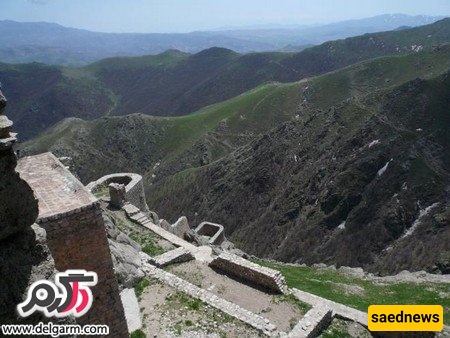
Additional facilities, consisting of rooms and water reservoirs, were constructed in the eastern section of the fortress. The reservoirs feature pointed and barrel-vaulted ceilings. Their interiors were waterproofed using a traditional mortar known as Sarooj. During winter, the reservoirs collected rainwater and melted snow, which was then used during summer and periods of shortage or military siege.
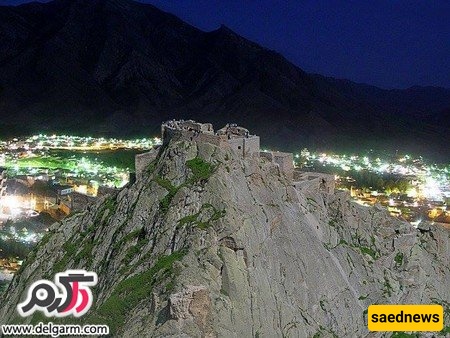
On the northwestern side of the fortress, there was once a continuous flight of stairs, which has now largely collapsed, leaving only a few sections visible above the ground. These stairs provided the only means of reaching the higher sections of the structure.
Architectural remains, roughly cut stone blocks, stone-jointing techniques, traditional Sarooj mortar, and plaster made from a mixture of gypsum and earth suggest that the original construction of the fortress dates back to the Parthian period, particularly the Sassanian era.
The fortress underwent several periods of repair and restoration during the 2nd and 3rd centuries AH and the centuries that followed. Structural modifications and additional architectural features were also introduced.
Objects and tools discovered at Babak Castle include decorated and glazed pottery, indicating that the site remained occupied until the early 7th century AH (13th century AD). Several copper coins were also discovered, although some were too worn and corroded to be identified.
Among the discovered coins were examples belonging to the Atabegs of Azerbaijan and the Hazaraspids, dating from the 6th and 7th centuries AH (12th and 13th centuries AD).
From a military and strategic perspective, the fortress's position atop the mountain made it exceptionally difficult to capture. According to historical accounts, as few as 20 soldiers could defend it against an attacking army of up to 100,000 troops without suffering casualties. This defensive advantage was largely due to the considerable elevation and distance, which made the arrows, bows, and conventional weapons of the time ineffective against defenders positioned high above the surrounding terrain.
Babak Castle was officially registered as one of Iran's national historical and cultural monuments in 1966 (1345 in the Iranian calendar), under registration number 623. Restoration work began in 1997 (1376 in the Iranian calendar), under the supervision of the Cultural Heritage Department of East Azerbaijan Province.