SAEDNEWS: One of the most important periods of the day is the time between dawn and sunrise. In some passages of the Qur’an, this blessed period is described as being associated with Paradise and is accompanied by certain recommended acts of worship.
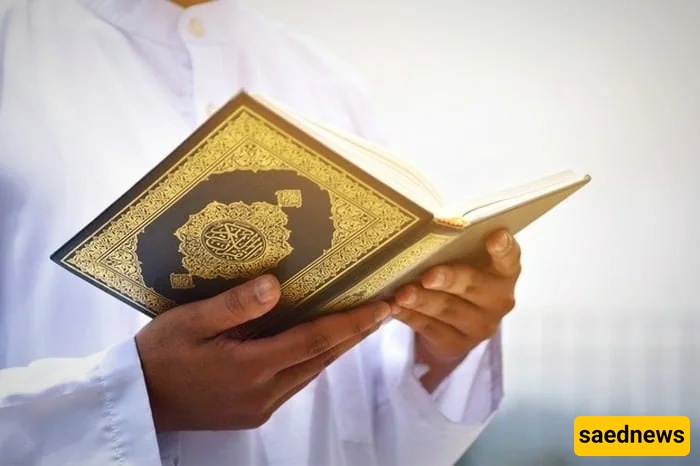
According to Saednews, The period known as Bayn al-Tulu‘ayn refers to the time between the appearance of true dawn (Fajr al-Sadiq) and sunrise. During this interval, the sky gradually becomes illuminated, creating the familiar twilight period before the sun rises.
The Qur’an encourages believers to glorify and remember God during the early hours of the day. Allah says:
“So be patient with what they say, and glorify your Lord with His praise before the rising of the sun and before its setting, and during some hours of the night and at the ends of the day, so that you may be pleased.”
— Qur’an 20:130
A similar instruction appears in Qur’an 50:39:
“So be patient with what they say and glorify your Lord with His praise before sunrise and before sunset.”
Commentary traditions associated with Qur’an 51:4 also describe the period between dawn and sunrise as a time when the angels distribute the sustenance of human beings. One reported narration states that those who sleep during this period may miss their allotted share of provision.
The exact time depends on the location and the date. It begins at the time of true dawn (Fajr) and ends at sunrise.
For example, if Fajr begins at 5:10 a.m. and sunrise occurs at 6:44 a.m., then the period between 5:10 and 6:44 a.m. is considered Bayn al-Tulu‘ayn.
According to Islamic narrations, the period between dawn and sunrise is considered especially significant, with particular emphasis placed on Friday morning.
Reported virtues and practices associated with this time include:
It is regarded as a time of increased hope for the acceptance of supplications.
Some narrations associate this period with the distribution of daily sustenance.
Sleeping during this time is strongly discouraged in certain narrations.
It is associated with remembrance, supplication, and other acts of worship.
Standing at Muzdalifah during the period between dawn and sunrise on Eid al-Adha is also connected with an important stage of Hajj.
Various Islamic sources mention several devotional practices for this period.
Reciting Surah Al-Ikhlas and Ayat al-Kursi
A narration attributed to Imam Ali states that whoever recites Surah Al-Ikhlas, Surah Al-Qadr, and Ayat al-Kursi eleven times before sunrise will be protected from financial losses.
Seeking Forgiveness
Imam Muhammad al-Baqir is reported to have said that whoever seeks forgiveness seventy times after the morning prayer will be forgiven by God.
Remaining Engaged in Prayer and Remembrance
A narration attributed to the Prophet Muhammad states that whoever remains seated in his place of prayer from dawn until sunrise and occupies himself with the devotional practices following the prayer will be protected from the Fire.
Reciting Surah Al-Qadr
According to a narration attributed to Imam al-Baqir, whoever recites Surah Al-Qadr seven times after dawn will receive the prayers and blessings of seventy ranks of angels, who will seek mercy for that person seventy times.
A message circulating online claims that Ayatollah Muhammad-Taqi Bahjat recommended a particular supplication during the period surrounding dawn. The message says that a person should recite:
Salawat 14 times
“Ya Mawla, Ya Sahib al-Zaman, Adrikni” 40 times
Salawat 14 times
It further claims that this practice would fulfill any request, including the desire to meet Imam al-Mahdi.
However, when the authenticity of this claim was investigated, the response stated that the attribution was not authentic. According to the cited response, Ayatollah Bahjat's personal Qur’an was examined and the claim was rejected.
In summary: Bayn al-Tulu‘ayn is the interval from true dawn until sunrise. In Islamic tradition, it is regarded as a spiritually significant time, particularly for prayer, Qur’an recitation, remembrance of Allah, and seeking forgiveness.