SAEDNEWS: Angels (al-Malāʾikah) are among God’s creations. God created them from light, and they are entirely obedient and submissive to Him. Angels are honored servants who never disobey God’s commands and carry out precisely what they are instructed to do.
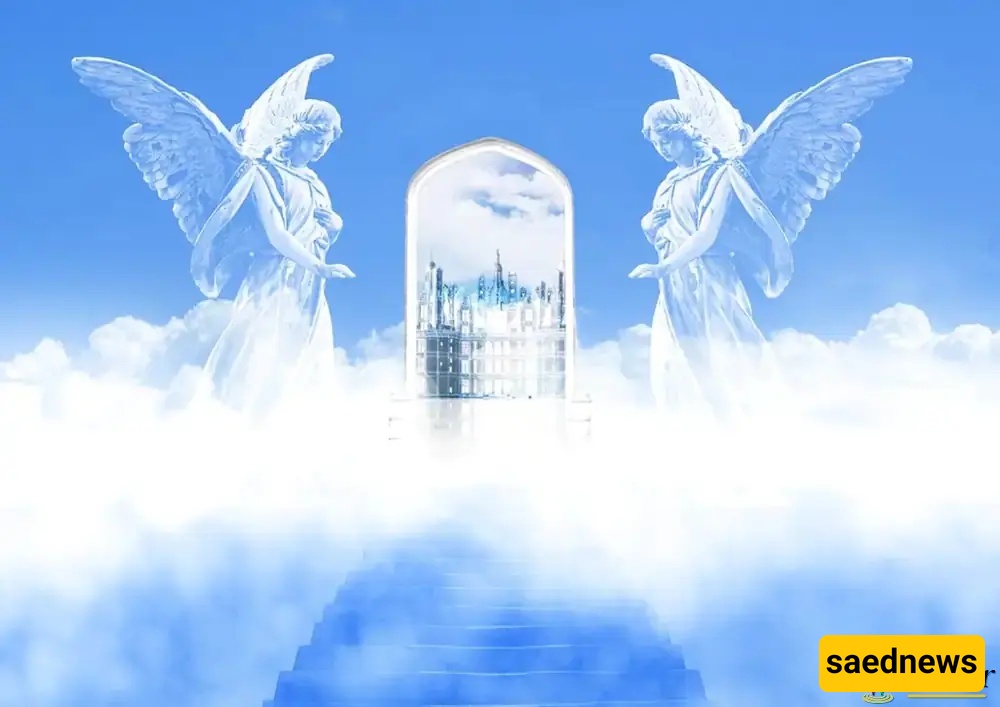
According to Saednews, Archangels are a term used to describe angels of a higher rank or status; the word itself refers to beings who are considered “close” or highly elevated. The concept appears in the Abrahamic religions. Michael and Gabriel are identified as archangels in Jewish and Christian traditions, while some sources also include Raphael and Uriel. Certain Jewish sources also mention Samael as an archangel.
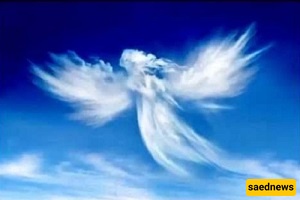
Although angels—referred to in the Qur’an as mala'ika (angels)—are considered non-material beings, they are often described through imagery and symbolism. In the Qur’an (Surah Fatir, 35:1), angels are described as having two, three, or four pairs of wings, symbolizing their different abilities and functions.
Angels are believed to have specific roles and duties and never disobey God. They may appear to prophets and certain holy individuals in human form, conveying divine messages or carrying out God's commands. According to Islamic belief, angels may also assist believers during difficult times. When God appointed Adam as His vicegerent on Earth, all the angels bowed before him except Iblis.
Iblis, who was from the jinn and had attained a high spiritual position through extensive worship, was cast out because of his pride and disobedience. Islamic tradition also teaches that two angels accompany every person and record their good and bad deeds. The angel recording deeds is traditionally associated with the right side, while the other is associated with the left. The Qur’an refers to these recording angels as Kiraman Katibin, meaning “noble scribes.”
In the Roman Catholic tradition, Michael, Gabriel, and Raphael are commemorated together on September 29. Historically, separate feast days were associated with Gabriel and Raphael.
The following list reflects the beliefs and descriptions presented in the source material:
Michael — Associated with protection, provision, and defense against negative influences. He is described as a tall man carrying a powerful luminous sword, wearing white clothing with a violet aura.
Gabriel — Associated with communication, revelation, messages, and positive thinking. He is described as a man dressed in white with a white aura.
Raphael (sometimes identified with Israfil in the source) — Associated with healing and health. He is described as a tall man surrounded by a green aura.
Azrael — Associated with death, patience, endurance, and metaphysical teachings. His color is described as light gray.
Ariel — Associated with nature, peace, animals, natural resources, prosperity, security, and beauty. Ariel is described as tall and surrounded by a pale pink aura.
Asranjail — Described in the source as an angel of love, relationships, and affection. She is portrayed as a beautiful woman appearing in human form, surrounded by pink, red, and violet light.
Sandalphon — Associated with artists, musicians, and creative people. He is described as a man wearing distinctive and creative clothing, with a turquoise-colored aura.
Zadkiel — Described as a male archangel associated with improving the mind and memory, with a dark-blue or navy aura.
Jeremiel — Described as a female archangel associated with emotional healing, human relationships, and emotional well-being. She is portrayed wearing elegant historical clothing with a dark reddish-purple color.
Haniel — Associated with women's health and clairvoyance. The source portrays her as several energetic, smiling women with blue hair and white clothing, surrounded by pale blue light.
Raguel — Described as a leader among angels associated with creating and improving relationships. He is portrayed as a man surrounded by sky-blue or sea-blue light.
Samael — Described in the source as a male protective angel associated with guarding against evil spirits and ruling over the fifth heaven, accompanied by a large number of servants and guardians. He is associated with white and violet.
Chamuel — Described as a male archangel associated with finding, searching, and peace, wearing light-green clothing and surrounded by a very pale green aura.
Metatron — Described as a divine guardian of children. The source associates him with green and dark-pink light and identifies him with Enoch, who is said in this tradition to have become an angel after living a righteous life.
Raziel — Associated with healing spiritual and psychological difficulties and teaching inner mysteries. The source describes Raziel as female and associated with rainbow colors.
Lucifer — Described in the source as Satan and a fallen angel.
The source also mentions three additional figures: Armin, described as an angel associated with Lucifer; Karna, described as a beautiful and kind angel; and Kiarash, described as a proud and rejected angel.
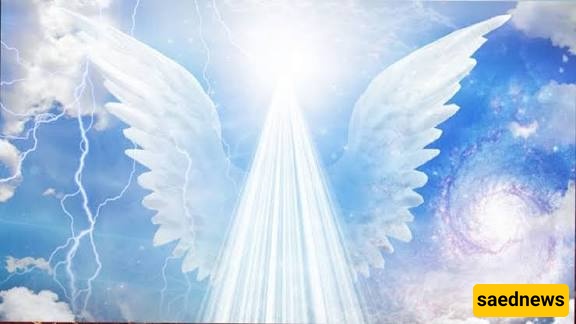
A narration attributed to Imam Ja'far al-Sadiq states that God created the angels from light.
Another narration attributed to Imam al-Sadiq says that angels do not eat or drink and do not marry. They remain alive through the “breath of the Throne” and include angels who remain continuously bowing or prostrating until the Day of Judgment.
The source attributes several characteristics to angels, including:
Ability to appear in different forms
Purity and chastity
Speed and agility
Order and organization
Knowledge
Among the angels and angelic beings mentioned in Islamic tradition are:
Gabriel (Jibril / the Holy Spirit)
Michael (Mikail)
Israfil
The Angel of Death
Malik
Ridwan
Munkar and Nakir
Harut and Marut
The bearers of the Divine Throne
The angel associated with thunder
The angels associated with the mountains
The source specifically describes the following figures as female:
Asranjail — Love, affection, and relationships
Jeremiel — Emotional healing and human relationships
Haniel — Women's health and clairvoyance
Raziel — Healing emotional and psychological difficulties and revealing inner mysteries
The source suggests that people who wish to establish a close spiritual connection with angels should first believe that even the smallest particles of the air around us, although invisible, represent supernatural forces contributing to the wonder and greatness of the universe.
It recommends spending several nights meditating at exactly 10:00 p.m. in a quiet place. The person is instructed to mentally detach from their surroundings and sense of time, attempt to clear their thoughts, remain in complete silence, and surrender themselves entirely to the Creator.
After experiencing a sense of satisfaction from this spiritual practice, the source recommends bringing the palms together and raising them above the head, then attempting to communicate with the angels believed to have different responsibilities and asking them for what is desired.
Note: The material above combines Islamic teachings with Jewish, Christian, esoteric, and modern spiritual traditions. Several of the names, roles, visual descriptions, and classifications in the list are not established teachings of mainstream Islam or Roman Catholic Christianity, and some appear to come from modern angelology or occult traditions.