SAEDNEWS: Gabbeh, also known as a bear-rug style carpet, is a type of handwoven rug traditionally made by the nomadic tribes and clans of the Lur and Qashqai peoples. It is usually woven in a small rug format and is characterized by its long, thick pile.
Accoridng to Saednews,
Unlike many other types of carpet weaving, Gabbeh weavers traditionally do not work from prepared patterns or design charts. Instead, each weaver creates designs from memory—motifs inherited from previous generations or ideas developed through personal creativity. Gabbehs produced in different regions of Iran generally feature light-colored backgrounds, such as white, cream, or ivory. Despite regional differences, a shared characteristic of Iranian Gabbehs is their distinctive traditional style of decoration.
At first glance, Gabbeh does not look very different from other handwoven pile rugs, particularly Persian carpets. In fact, it is a type of rug made using a technique similar to carpet weaving and is usually produced in a smaller, rug-like format. Its most noticeable differences are its unusually long pile and the greater number of weft threads used in its construction. These characteristics give Gabbeh its characteristic softness and thick texture.
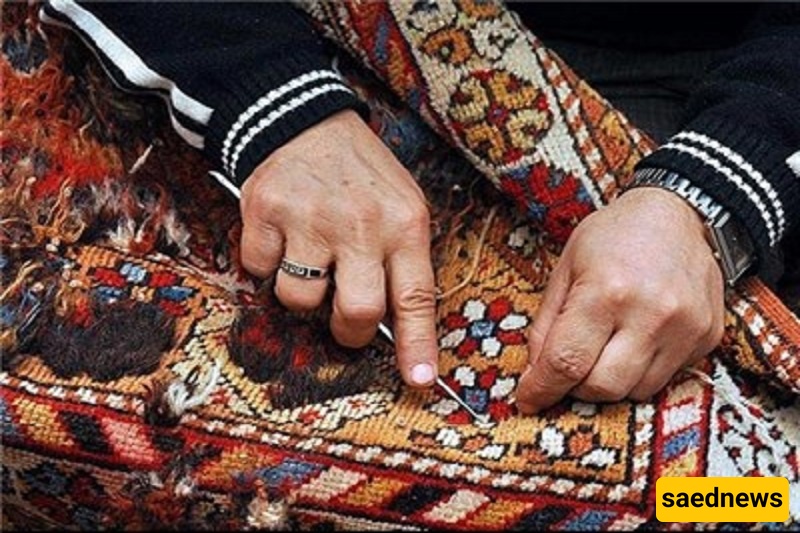
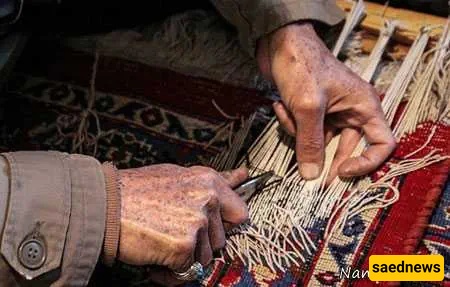
The tools used by women who weave Gabbeh are generally the same as those used by other traditional weavers. They mainly include horizontal looms, beaters, weaving needles, scissors, and sometimes a hook.
Despite the simplicity of the tools, Gabbeh itself is highly individual and can be considered a unique form of folk art. Even if millions of Gabbehs were compared, it would be extremely unlikely to find two with exactly the same characteristics.
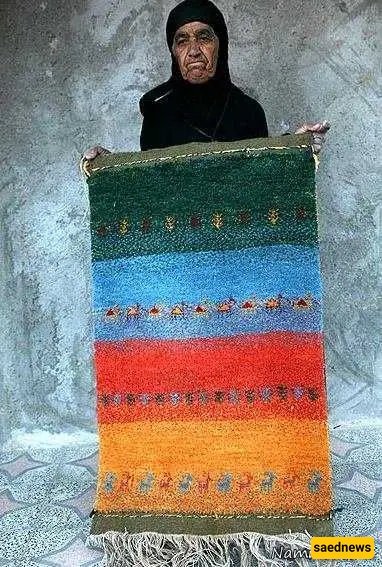
This uniqueness is largely because Gabbeh weavers do not normally follow a fixed design. Each weaver creates motifs based on designs remembered from earlier generations or developed from her own imagination. Even when a customer provides a particular design and asks for something similar, the weaver may alter the motifs and select different colors according to her own taste and personality.
Consequently, even if a weaver attempts to reproduce one of her own earlier Gabbehs, the new piece is unlikely to be an exact copy. Differences may appear in the motifs, colors, dimensions, placement of designs, pile length, number of weft threads, and other details.
The selection and separation of wool is an important stage in Gabbeh production. Gabbehs are traditionally woven from naturally colored wool, sometimes blended with goat hair. The first step is therefore to sort the wool according to its natural color.
The wool is usually obtained from the weavers' own livestock or purchased from other livestock owners, pastoralists, and nomadic communities. After washing, women and girls spin and twist the wool using small, portable spindles.
In some cases, goat hair—particularly hair from goats originating in regions such as Aden and Pakistan, which offers a wide range of natural colors—is mixed with sheep's wool. This material may be used for the warp or for finishing and sewing the edges of the rug.
Gabbehs made in various parts of Iran generally have light-colored backgrounds, particularly white, cream, and ivory. Their decorative motifs may appear in black, brown, reddish-brown, and other darker shades.
Gabbeh is woven on horizontal carpet looms using a technique similar to traditional carpet weaving. Rather than following a pre-drawn pattern, the weaver creates the motifs directly during the weaving process from memory and imagination.
Most Gabbeh weavers have one or several designs memorized and develop considerable skill in reproducing them. Nevertheless, the central composition of many traditional Iranian Gabbehs consists of a rectangular field containing a row of interconnected diamond shapes. The points of the diamonds are often joined together, forming a characteristic local motif.
Other common decorations include boteh jegheh motifs and various stylized flowers rendered in geometric forms. These designs are particularly common among Gabbeh produced by nomadic groups, villagers, and urban weavers.
Overall, the common thread running through Iranian Gabbehs is a form of traditional ornamentation that has evolved over thousands of years. Geometric shapes, stylized birds and animals, rows of geometric motifs, and floral patterns are frequently incorporated into the composition. Some designs resemble Turkmen carpet motifs, while others feature striped arrangements similar to Qashqai textiles. Some Gabbehs may also include one to three central medallions.
Gabbeh weaving has traditionally been practiced in many rural and nomadic communities. The principal centers of production are located in central and southern Iran.
Important Gabbeh-weaving areas include Dogonbadan, Basht, and Aro in Gachsaran County; Tel Ger, Cheshmeh-ye Belqeys, Deh Sheikh, and Charam in Kohgiluyeh County; and areas extending from Sarab to Deh Olya, Deh Sofla, and Mordaraz-e Olya and Sofla in Boyer-Ahmad County. Other important centers include Borazjan and the rural areas of Shul and Deh Kohneh in Bushehr Province.
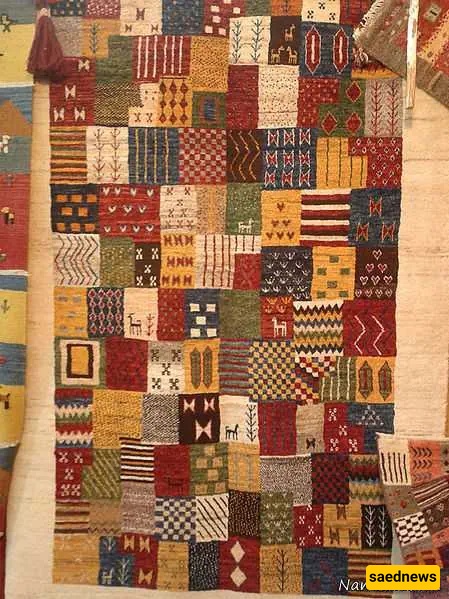
Fars Province has been one of Iran's most important centers of nomadic life since ancient times. The Qashqai, Khamseh, Mamasani, and Bakhtiari tribes have traditionally been involved in Gabbeh weaving. Among them, Gabbehs produced by the Qashqai people of Fars are particularly renowned and have gained a strong reputation internationally.
Qashqai Gabbehs are traditionally made entirely from wool, including their warps. They are known for their varied colors and distinctive geometric designs.
The Qashqai people have a rich tradition of highly acclaimed handwoven textiles. Their Gabbehs are woven in a style associated with their Turkic heritage, and their designs commonly feature repeated, simplified geometric forms. Many Gabbehs from the tribes of Fars are characterized by exceptionally vivid and clear colors. Both the warp and weft are made from wool, and the wool used for these rugs is locally sourced from Fars, a region renowned for producing high-quality wool suitable for both carpets and Gabbehs.
Unlike Gabbehs from many other parts of Iran, which often emphasize naturally colored wool, Qashqai weavers make extensive use of different colors and motifs. Simple Gabbehs with a single-colored background or a limited palette are also produced.
One of the most popular Qashqai motifs is the lion. In addition to its ancient cultural significance, the lion symbolizes bravery and chivalry. Its presence in Qashqai designs may also be associated with the historical presence of lions in areas such as Kamfiruz and Dasht-e Arjan in Fars.
Other motifs found in Qashqai Gabbeh include corner-and-medallion compositions, stars, stepped or compartmentalized patterns, and various animal figures.
Qashqai Gabbehs are traditionally made entirely of wool, with woolen warps as well. Their dimensions vary, but sizes of approximately 100 × 200 cm and 115 × 200 cm are among the more common formats.