SAEDNEWS: In this article, we aim to introduce you to the customs and traditions of Khoy County, a land known as the cradle of a civilization that spans thousands of years. Stay with Saednews.
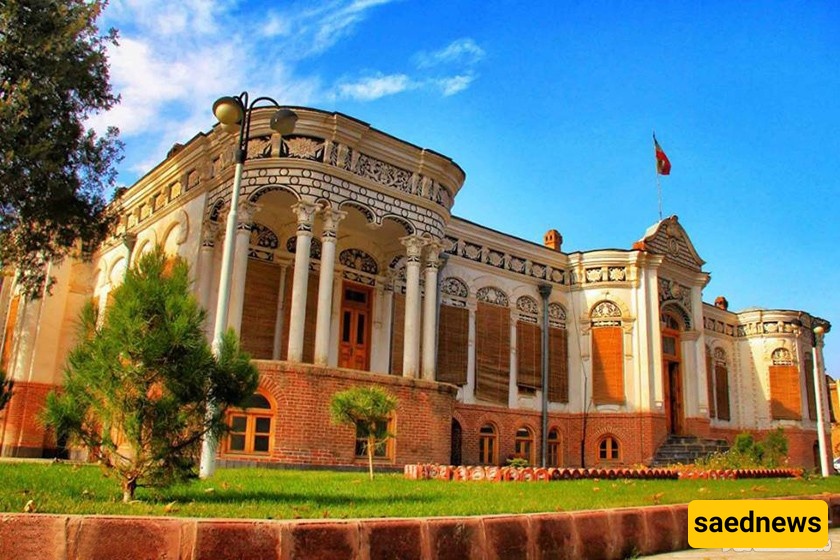
West Azerbaijan Province has always been home to a diverse set of ethnic groups and cultures. Each of these groups has influenced the others and has, in turn, been influenced by them. The presence of mosques, churches, and the ruins of fire temples reflects part of its religious history. Shiism is predominant in Urmia and the northern cities, while Sunnism is more common in the southern regions of the province. Other minorities, such as Assyrians and Armenians, are affiliated with Christian churches.
Khoy County is one of the counties of West Azerbaijan Province, with an area of approximately 5,548 square kilometers. It is located in the northwesternmost part of Iran and Azerbaijan, on the border with Turkey. The center of this county is the city of Khoy, which covers an area of about 30 square kilometers and is situated in the northern part of the province.
Khoy lies in a vast plain surrounded by towering mountains, which is why it is also known as “Khoy Choghoro” (the Khoy Basin).
How can we improve a scientific CV?
Khoy is the largest city in West Azerbaijan Province in terms of area and the second largest in terms of population.
According to the 2011 census, the population of the county was 354,309 people, of whom 226,760 lived in urban areas and 127,549 in rural areas. It is located 780 kilometers from Tehran and 165 kilometers from Tabriz. The Iran–Europe transit route passes 30 kilometers from the city.
Archaeological findings suggest that human settlement in the Khoy plain dates back around 10,000 years. However, the earliest written references to the region are found in Sumerian, Assyrian, and Urartian inscriptions and clay tablets. Many researchers believe that the land of “Aratta” mentioned in Sumerian texts corresponds to the same region later referred to in Assyrian inscriptions as “Sangi Butu” (covering Khoy, Marand, and Gunei regions).
The history of Khoy dates back more than 3,000 years. In ancient times, the region was under the rule of the Medes and later the Sassanids. Before the Medes, it was inhabited by the Urartians. Due to its location along the Silk Road, Khoy was considered an important city in ancient Iranian history.
One of the beautiful Nowruz traditions in Khoy was the “Takamchi” ritual, which has now largely faded into obscurity. In the not-so-distant past, the arrival of Takamchi and the sound of their songs in streets and villages signaled the approaching Nowruz.
A few days before the New Year, the Takamchi would symbolically move a “Takam” (a wooden goat figure) through the streets while singing Turkish poems, announcing the arrival of spring and receiving gifts from people.
Unfortunately, today this tradition survives mostly in the memories of older rural generations.
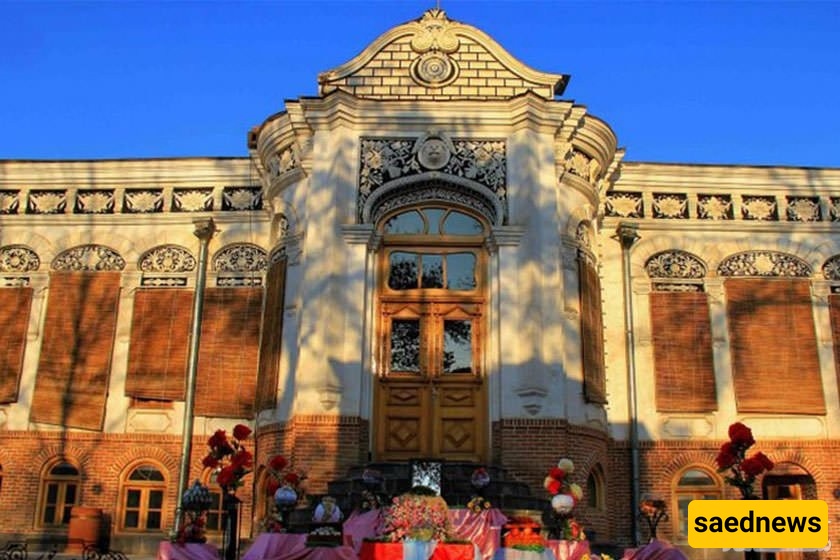
The anticipation of Nowruz is reflected in the enthusiasm of the women of Khoy, who prepare their homes through a deep cleaning ritual.
Like other parts of Iran, from mid-March households begin cleaning their homes in a tradition known locally as “Hiss Almaq,” removing the dust of the year and renewing the house for the new year.
Among the remaining ancient traditions, Chaharshanbe Suri is still widely celebrated in Khoy and its villages, although modern influences have changed its nature.
This ritual was originally meant to ward off evil and negativity and symbolizes friendship, harmony, and the four seasons and elements of nature. However, in recent years, the use of explosives has turned it into a dangerous event, resulting in injuries and even deaths.
In Khoy, as in other parts of Azerbaijan, it is called “Ilin Akhir Charshanbasi” (the last Wednesday of the year).
People recite traditional phrases while jumping over fire, such as:
“Atıl batıl charshanba, bakhtım açıl charshanba” (Leap away, misfortune, may my luck open)
“Derdim, belam bu odda galsın” (May my pain and troubles remain in this fire)
Common customs also include purchasing symbolic items such as mirrors (symbol of purity), jars (symbol of water and cleanliness), and rue (to ward off the evil eye).
Another tradition in Azerbaijan is egg-breaking games. In the past, eggs were boiled with onion skins to color them and were given to children as Nowruz gifts.
This tradition, though fading in urban areas, is still practiced in rural regions. After lighting the Chaharshanbe Suri fire, young people go to rooftops and lower a scarf into neighbors’ homes to request holiday gifts. The household fills the scarf with nuts and sweets and blesses the sender.
Preparing the Haft-Seen table and growing Nowruz sprouts are still common traditions in Khoy. In rural areas, instead of a formal Haft-Seen table, a festive spread is laid out where guests are seated and hosted.
After the New Year begins, visiting elders and relatives is an important tradition. The first days of the holiday are dedicated to strengthening family ties through visits and gatherings.
The Nowruz celebrations conclude with “Sizdah Bedar,” during which people spend the day outdoors in nature.
Cultural researchers believe that by introducing traditional customs to students and young people, social harmony and happiness can be promoted.
They also suggest organizing safe and cultural versions of Chaharshanbe Suri in cultural centers to revive authentic traditions and reduce dangerous practices involving firecrackers.
Khoy is the closest border city to Turkey and lies along the Silk Road. It is the only city in Iran with a travel time of about one hour to the Turkish city of Van via the Razi border market.
Khoy Airport was inaugurated in 2004 and currently serves as an important gateway for the development of northern West Azerbaijan Province, recognized as one of the most beautiful airports in the country.