Saed News: A multi-billion-dollar biotechnology company claims that it is close to bringing back to life one of the largest extinct birds in Earth’s history using a groundbreaking scientific tool.
According to SAEDNEWS, based on a Guardian report, the American startup Colossal Biosciences has developed a shell-less artificial incubation system and has successfully hatched 26 healthy chicks through this method.
Bird eggs are considered one of nature’s engineering masterpieces—a complete chamber that provides conditions for breathing, humidity, and embryo development without any external system. Creating an artificial version of this system has been a 40-year ambition that challenged both physics and biology.
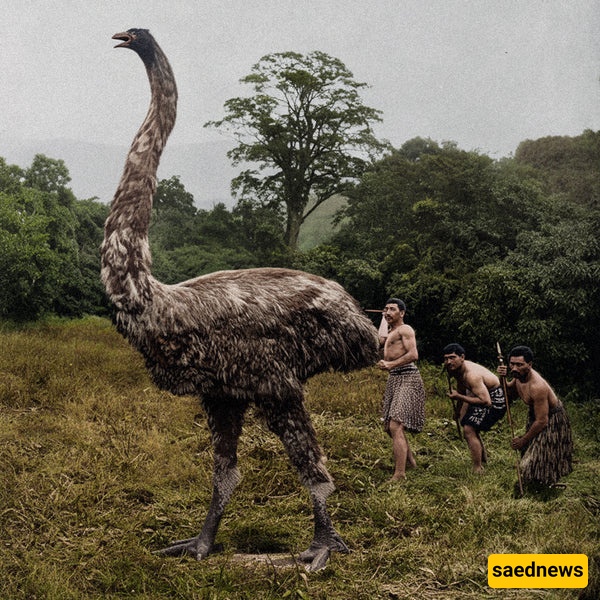
The ultimate goal of this titanium-and-silicon structure is not to raise domestic chickens. Scientists aim to use this technology to revive the moa, a giant flightless bird from New Zealand that went extinct about 600 years ago after human arrival.
For decades, scientists have tried to grow bird embryos outside natural eggshells, but most attempts failed due to oxygen supply issues, leading to embryo death. Natural eggshells contain thousands of microscopic pores that regulate gas exchange.
Colossal designed an engineered silicone membrane with a network platform that allows oxygen to enter and carbon dioxide to exit at a level comparable to real eggshells.
Andrew Pask, Chief Biology Officer at Colossal, said: “We have built a novel shell-less culture system that is fully flexible and biologically precise. This technology is designed with a focus on producing healthy animals that not only hatch but also survive and grow.”
The moa was an extraordinary creature. Weighing over 200 kg and standing more than 3 meters tall, it laid eggs about 80 times larger than a chicken egg.
In mammals, edited embryos (such as mammoths) can be implanted into a surrogate womb like an elephant’s. But in birds, no living species exists large enough to host or produce an egg comparable to a moa’s. Therefore, a scalable artificial egg system is considered the only possible way for its revival.
Despite this engineering breakthrough, the announcement has sparked skepticism among independent scientists. Critics say the company released the claim only through a press statement without providing raw data or peer-reviewed research.
1. Fragmented DNA problem:
Since the moa went extinct 600 years ago, its remaining DNA from bones and feathers is highly degraded. Fully reconstructing its genome is virtually impossible. Colossal’s approach is to modify genes of a related living bird to create a “moa-like appearance.” A museum director commented that this is more of a superficial engineered copy than a true revival.
2. Lack of nutrient yolk:
The artificial egg only replaces the shell. Embryos still need nutrients such as yolk and albumen. Since no modern bird is large enough to match the moa’s requirements, scientists do not yet know how to produce such a large artificial nutrient system.
Although the idea of a living moa remains far-fetched, the technology could help save currently endangered birds.
Many rare bird species suffer from weak or defective eggs due to inbreeding, leading to embryo death. Artificial transparent eggs could allow scientists to monitor development, treat abnormalities, and potentially prevent extinction.