SAEDNEWS: Muhammad Al-Farah, a member of Yemen’s Ansarullah political bureau, has issued a sharply worded message to Saudi Arabia, accusing Riyadh of wasting time and misjudging the willingness of other countries to support its Yemen policy.
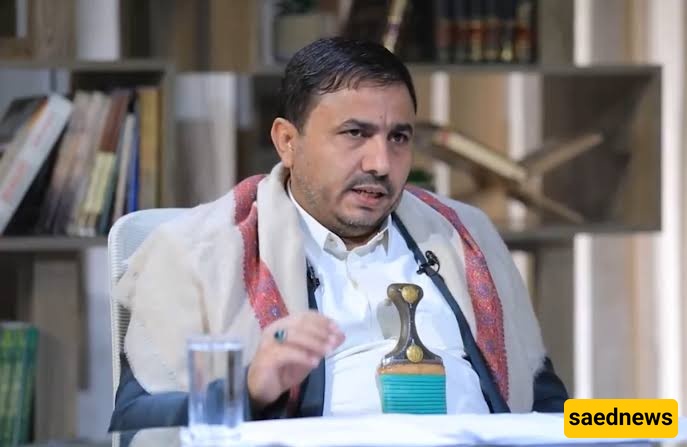
According to SaedNews: A senior figure in Yemen’s Ansarullah movement has delivered a forceful message to Saudi Arabia, accusing Riyadh of wasting time and opportunities while mistakenly believing that other countries will ultimately rally behind its policies in Yemen.
Muhammad Al-Farah, a member of Ansarullah’s political bureau, made the remarks in a post published on the social media platform X. His message presented what he described as an unavoidable outcome for Saudi Arabia and laid out a series of demands concerning its role in Yemen.
Al-Farah accused Saudi Arabia of being caught in what he characterized as a mistaken belief that the international community would step in to defend what he described as Riyadh’s failed policies and expectations.
He argued that some countries might offer political statements or condemnations to satisfy Saudi Arabia, or even announce what he called a formal alliance with Riyadh. But, in his assessment, such support would not necessarily translate into a decisive commitment on the ground.
The central message of Al-Farah’s statement was directed at Saudi Arabia’s continued involvement in Yemen.
He said that Saudi Arabia would ultimately be forced to leave Yemen and argued that Riyadh should pay compensation for the destruction caused during its involvement in the country.
His demands went further. Al-Farah called for an end to what he described as the Saudi blockade, for Saudi Arabia to withdraw from involvement in Yemen’s ports and airports, and for Riyadh to recognize what he called its limits.
The comments come in the form of a political warning rather than an announcement of a new agreement or policy change. The statement does not provide details of any negotiations, timetable or mechanism through which the demands outlined by Al-Farah would be implemented.
That distinction is significant. The remarks represent the position expressed by a member of Ansarullah’s political bureau and should not automatically be interpreted as evidence of an agreed settlement or a confirmed change in Saudi Arabia’s policy.
Nevertheless, the language used in the statement is strikingly direct.
Al-Farah did not simply criticize Saudi Arabia’s approach. He argued that Riyadh is wasting opportunities and failing to recognize the realities surrounding the Yemen conflict.
He also challenged the idea that international support would necessarily protect Saudi Arabia from the consequences of its Yemen policy. According to his argument, some governments could provide diplomatic backing or issue statements of condemnation, but that would not change what he portrayed as the ultimate trajectory of the conflict.
The most consequential part of his message concerned the future of Saudi Arabia’s presence in Yemen.
Al-Farah said Saudi Arabia would have to withdraw, compensate Yemen for destruction, end its blockade and distance itself from the country’s ports and airports. He framed these steps not merely as political requests but as outcomes he described as inevitable.
His statement also ended with a warning that Saudi Arabia should learn from the experience and understand what he called its proper boundaries.
For Yemen, questions surrounding foreign involvement, restrictions on access and control over ports and airports have remained deeply sensitive issues. Al-Farah’s comments place those questions at the heart of his message to Riyadh.
At the same time, the statement does not establish whether any of the demands are currently under consideration by Saudi authorities, nor does it cite a response from Riyadh.
That leaves the political significance of the message open to interpretation. It could be read as an attempt to reinforce Ansarullah’s negotiating position, as a warning to Saudi Arabia, or as a broader political statement about the future of Yemen.
What is clear from Al-Farah’s remarks is that Ansarullah continues to present Saudi Arabia’s role in Yemen as a central issue and is publicly calling for an end to Saudi involvement, compensation for destruction, the lifting of the blockade and reduced Saudi involvement in ports and airports.
The statement also reflects the wider sensitivity surrounding the conflict, where political declarations can carry significance even when they do not immediately produce concrete changes.
For now, there is no indication in the supplied statement of a new agreement or formal breakthrough. Instead, Al-Farah’s message is a strongly worded political warning directed at Riyadh.
Whether Saudi Arabia responds—and if so, how—could determine how much political weight these remarks ultimately carry.
For readers following developments around Yemen and the regional tensions surrounding the country, the statement is another indication that the future of foreign involvement, access restrictions and control of key infrastructure remains a major point of contention.
Al-Farah’s message leaves little ambiguity about the position he sought to communicate: Saudi Arabia, in his view, should end its involvement in Yemen, compensate for the destruction he attributes to it, lift the blockade and withdraw from the country’s ports and airports.
The question now is whether that message will remain a political declaration or become part of a broader process that produces concrete changes on the ground.