SAEDNEWS: In 1984, the crew of the Soviet Salyut 7 space station reported seeing luminous, angel-like beings. Medical and historical analyses suggest the phenomenon was actually a hallucination caused by cosmic rays and prolonged psychological stress in space.
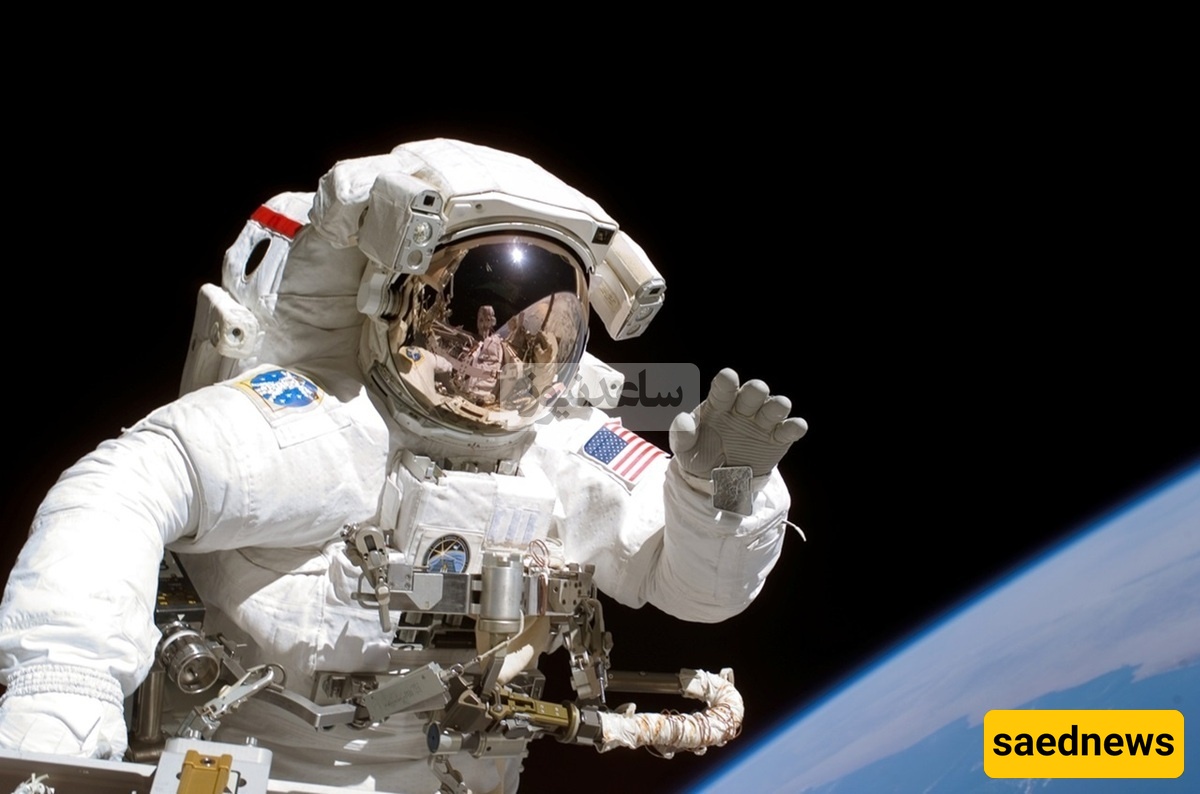
In the annals of space exploration, the 1984 Salyut 7 incident—when Soviet cosmonauts reportedly saw luminous beings or angels—remains one of the most sensational and enduring popular tales. While mainstream media and social networks often present this story as a “top-secret Soviet government mystery,” a careful review of aerospace medicine and historical records casts doubt on the claim.
To understand why such rumors gained traction, we must revisit the historical backdrop of the Space Race during the Cold War.
The Soviet secrecy wall: The USSR promoted successes with maximal fanfare while keeping failures and accidents under tight wraps. This culture of secrecy created fertile ground for space-related conspiracy theories, including the infamous “lost cosmonauts” myth.
Information gaps and speculation: In the absence of transparency, any unusual event or rumor could quickly be accepted by the public as a “hidden truth.” This psychological mechanism explains the long-lasting appeal of unverified stories, including the “space angels.”
Glasnost revelations: After the Soviet Union collapsed, the release of extensive classified documents revealed no verified records, photos, or ground-control communications confirming sightings of supernatural entities in orbit. The only documented cover-up involved the death of a cosmonaut during ground training—not in space.
The original account occurred in July 1984, during a long-duration mission of the Salyut 7 core crew—Leonid Kizim, Vladimir Solovyov, and Oleg Atkov—after 155 days in space, a period marked by extreme fatigue and psychological isolation.
Blinding light phenomenon: The cosmonauts reported that the station was suddenly bathed in intense, blinding orange light that even penetrated the station’s walls.
Seven luminous figures: Once their vision returned, all three claimed to see seven humanlike figures with wings and halos—resembling angels—moving alongside the station for about ten minutes.
Team two’s observation: Twelve days later, the second crew joined, and according to unofficial reports, the station was again enveloped in orange light. This time, all six cosmonauts reportedly saw winged beings. Descriptions were exaggerated, with the entities described as the size of a “passenger airplane.”
Importantly, none of the six cosmonauts ever publicly confirmed or testified about the sightings after the Soviet collapse. This silence, coupled with the absence of physical evidence, casts serious doubt on the story’s credibility.
Physical trigger: cosmic rays
The most likely explanation for the initial blinding light is a well-documented phenomenon called “cosmic ray visual phenomena,” or the “cosmonaut’s eye”:
Nature: Spontaneous flashes or streaks of light perceived by astronauts in darkness or with closed eyes due to high-energy cosmic particles interacting with the visual system.
Mechanism: Mostly caused by Cherenkov radiation, a blue light generated as high-speed cosmic particles pass through the eye’s vitreous fluid.
Salyut 7 relevance: The reported orange light was likely an unusually intense cosmic-ray visual event, temporarily disrupting vision.
Psychological interpretation: complex hallucinations
The transformation of a simple light flash into structured “angel” images is rooted in the cosmonauts’ psychological state:
Stress and isolation: Extended space missions (beyond day 155) impose severe psychological stress, chronic fatigue, and sensory deprivation—known risk factors for hallucinations and cognitive distortions (similar to documented cases in Soyuz 21, 1976).
Complex hallucination production: Under stress, the brain interprets ambiguous stimuli into meaningful images, often drawing on familiar cultural or religious symbols, producing structured visions like smiling angels.
Group phenomenon: The shared observation among six cosmonauts may reflect induced hallucinations or group suggestion. The second team, primed by the first crew’s account, likely interpreted the ambiguous orange light in line with the earlier report.
Observed Phenomenon | Likely Explanation (Aerospace Medicine) | Mechanism |
|---|---|---|
Intense orange light | Cosmic ray visual phenomena | Physical: direct stimulation of visual system by cosmic rays (Cherenkov radiation) |
Seeing angels, wings, halos | Complex hallucinations | Psychological: isolation, fatigue, sensory deprivation, cultural interpretation |
Observed by six cosmonauts | Induced hallucination / group suggestion | Psychosocial: structured images transmitted from first crew to second |
The Salyut 7 story is not a supernatural mystery but a crucial case study for long-duration spaceflight—especially missions to Mars. It underscores the need for robust protocols to monitor and manage crew mental health and cognitive performance on multi-year, high-stress missions. If elite Soviet cosmonauts were susceptible to such group hallucinations, maintaining cognitive integrity in deep space will be a significant, scientifically validated challenge.