SAEDNEWS: A clay jar unearthed at the ancient settlement of Tell Hajirat al-Ghuzlan in Jordan holds thousands of beads made from clay, bone, and shell. The discovery dates back nearly 3,600 years B.C.
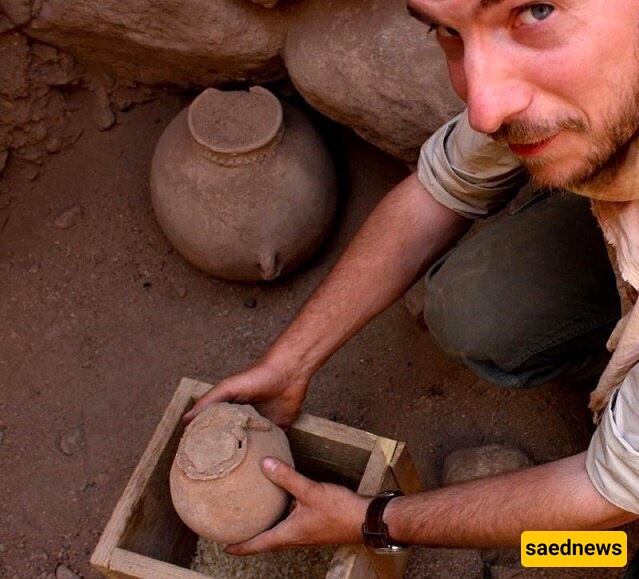
According to Saed News’ social affairs report, this jar was originally discovered in 2010, but the careful examination and cleaning of its contents took a long time. That year, archaeologists from the German Archaeological Institute were excavating the lowest layers of buildings at the ancient settlement of Hujairat al-Ghuzlan. In a room at the lowest level of a house, they found a small, round clay jar that was untouched and still sealed with a clay lid. When archaeologist Jens Notroff lifted it, the sound of objects rattling inside could be heard.
After cleaning the jar and carefully removing the lid, it became clear that the vessel was filled with tiny objects—each of which had to be individually extracted and cleaned.
Jens Notroff, archaeologist, moving the jar; another jar seen in the photo contained only sand.
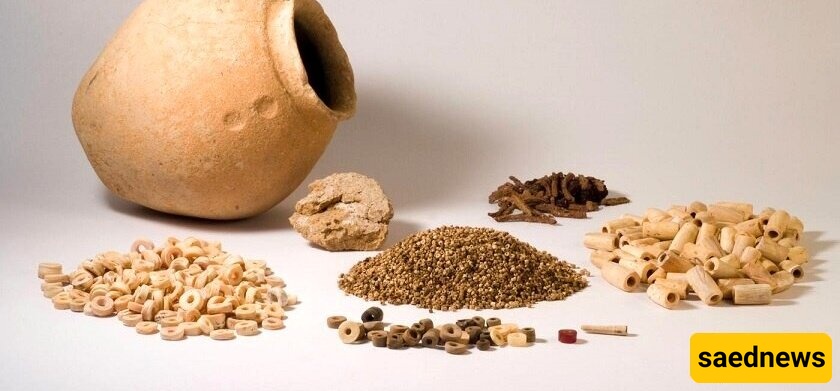
Ultimately, the jar’s contents turned out to be a treasure trove of beads made from bone and shell. There were thousands of tiny perforated and polished beads inside, some measuring just millimeters in size. Notroff notes that some were larger and more elongated than others. Cleaning and separating the beads was a time-consuming task.
What these beads were for remains a mystery that continues to puzzle archaeologists. Typically, such beads are known as jewelry or clothing ornaments, but the sheer number and context of this find are unique. Notroff suggests: “Perhaps this was a stockpile for a business. The precision and finesse of the beads’ cutting and polishing indicate they were likely of high value.”
The discovered jar contained thousands of polished bone and shell beads in varying sizes.
Findings from the adjacent room suggest this building may have had a special function. Images of animals were discovered on the back wall, pressed into still-damp clay with fingers. Mountain goats and predatory animals were among these depictions. Archaeologists also uncovered several goat horns and large layers of ash, indicating that the building may have been destroyed by fire.
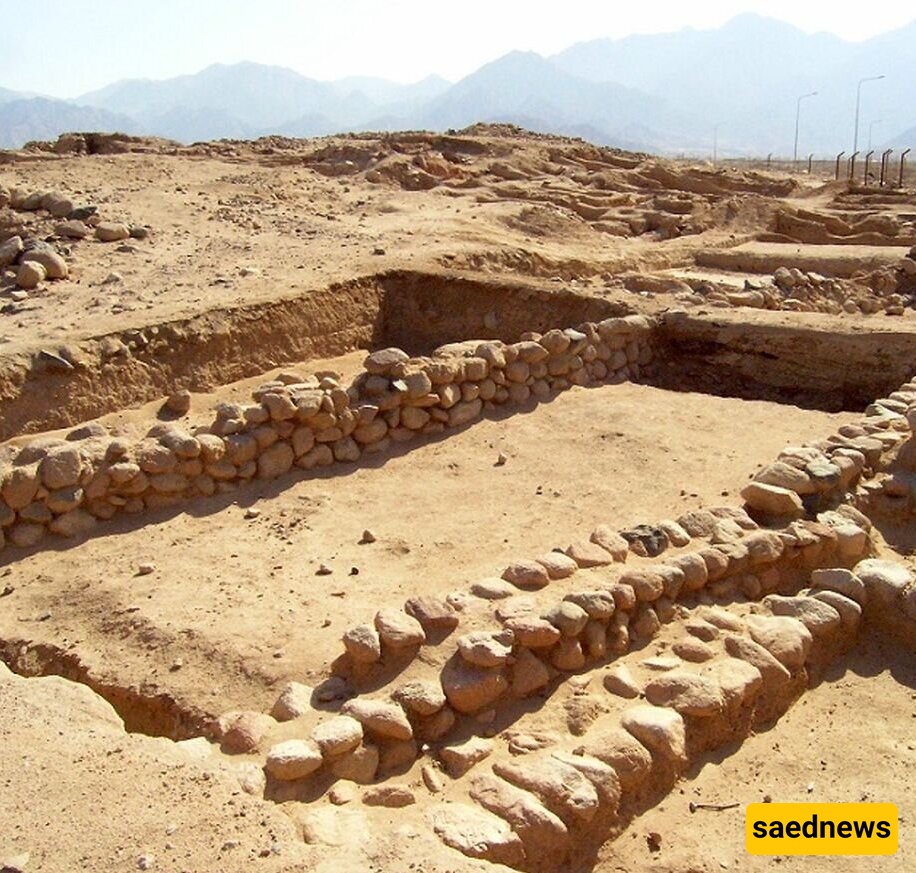
Hujairat al-Ghuzlan, located 2.5 miles north of Aqaba, was a fortified settlement occupied between 4000 and 3500 BCE. Structures featuring a mix of stone and mudbrick walls have been found there, some of which were reinforced after earthquake damage. Another earthquake, however, seems to have led to the site’s abandonment. Yet the remnants of this settlement’s labyrinth—walls up to five meters high, original plaster, windows, doorways, and columns supporting the roofs—still survive.
The site’s exceptional preservation and relatively brief period of occupation provide archaeologists with a rare opportunity to study a Copper Age settlement in its entirety—a period when copper smelting first appears in the archaeological record.
The mystery of the beaded jar remains unsolved, and the site of its discovery continues to be evaluated.