SAEDNEWS: See the image of Takhti refusing to bow to the Shah.
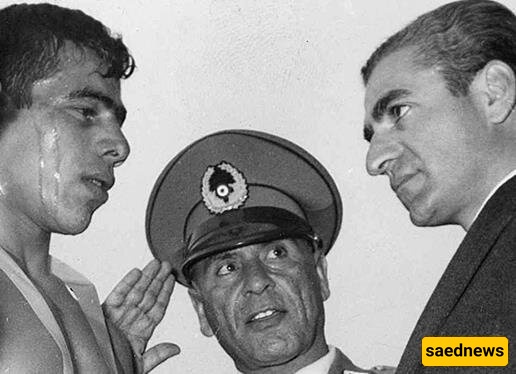
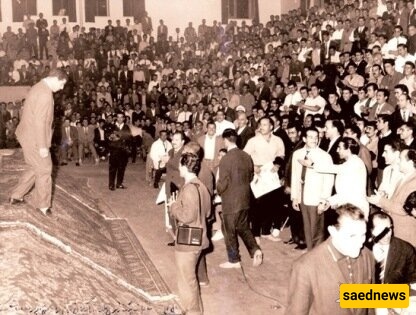
According to Saed News, citing Mashregh, while many in Iran once vied to kiss the Shah’s hand and curry favor, Gholamreza Takhti, the legendary wrestler, stood his ground when receiving the Pahlevani (Champion) medal. Country and military leaders, along with army commanders, were lined up around him. Takhti was to receive the armband and medal of Iran’s wrestling champion from the Shah. While others immediately bowed and kissed the monarch’s hand upon approaching him, Takhti first stood still, allowing the Shah to place the medal around his neck. He did not bow in front of Mohammad Reza Shah, instead compelling the Shah to lift his hands and drape the medal over the champion of Iran. Only afterward did Takhti shake the Shah’s hand and bow—an act of respect that was profoundly different from the sycophancy of the court.
Many close to the royal court were displeased by Takhti’s behavior and criticized him afterward. The wrestler’s expression in this photo is remarkable. May his soul rest in peace, and his memory endure forever.
How to Elevate Your Academic Profile?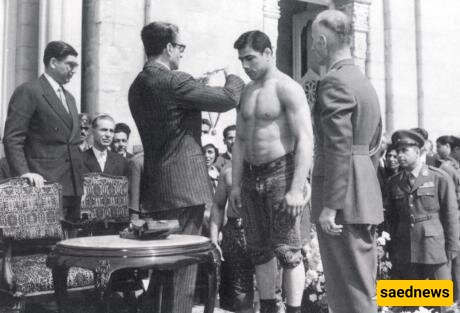
Takhti Receives the Medal
In another rarely seen photo of Takhti—so little known that some even doubted its authenticity—his disdain for the Pahlavi family is unmistakable. On the day Gholamreza Pahlavi, the elder brother of the deposed Mohammad Reza Shah, entered the wrestling arena, Takhti, instead of showing deference to the Shah’s brother, turned to the people in solidarity—a gesture that became part of the political challenges he posed against the monarch, as noted by a member of the National Front at the time. Unlike other reports, this incident was not documented in SAVAK files.
Ibrahim Afshar writes: “If we were to choose just two or three historical photos from a century of Iranian sports, with millions of images of events and personalities, this would be one of them. This extraordinary photo alone carries the entire political truth of Takhti’s life. It is the moment that led many writers of the 1970s and Takhti’s contemporaries to see him as the pioneer of political resistance, striking a blow at one Gholamreza Pahlavi through the defiance of another.”
Epic narratives, both oral and written, consistently trace the conflict between Takhti and the regime to this scene. When Gholamreza entered the arena, the crowd rejected him, and the incident fueled the resentment that shaped many later events in Takhti’s life. This documented image captures one of the most extraordinary moments of the champion’s life, setting the stage for countless subsequent truths, calamities, and rumors that would mark his legacy.