SAEDNEWS: Griffin: The Legendary Guardian of Power
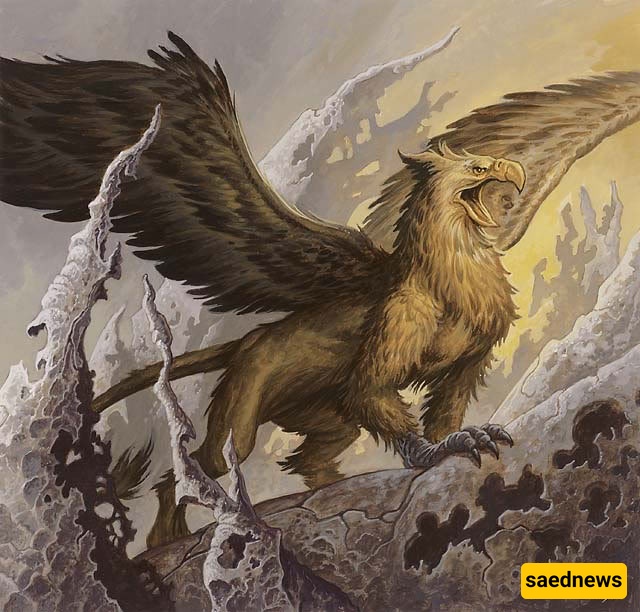
According to the History and Culture Service of Saed News, the griffin—a legendary creature with the body of a lion and the head and wings of an eagle—holds a prominent place in the myths and art of various civilizations, including Iran, Egypt, and Greece. Often regarded as a symbol of power and protection against evil forces, the griffin unites the lion’s earthly strength with the eagle’s celestial might, forming a complete and formidable guardian. Depictions of griffins in Achaemenid art and other ancient civilizations convey a sense of authority and confidence, frequently appearing in the design of columns, artifacts, and even royal tombs.
In ancient Iran, the griffin symbolized the power of kings and their dominion over enemies and malevolent forces, manifesting in both art and architecture. Surviving examples of griffin motifs at Persepolis and on ancient pottery reflect the special reverence the people of this land held for this mythical creature. Even in Persian folklore, similar creatures appear as royal guardians or beings endowed with extraordinary abilities.
The griffin also played a significant role in other civilizations such as Greece and Egypt. In ancient Greece, griffins were considered protectors of treasures and deities, appearing frequently in visual arts, architecture, and literature. In Egypt, griffins were associated with powerful goddesses and featured in royal symbolism. Across many cultures, these mythical beings were recognized as guardians endowed with supernatural power.
Overall, the griffin embodies power, protection, and the union of celestial and terrestrial forces. It played a vital role in the art, myths, and beliefs of ancient peoples and remains a symbolic and protective figure worldwide, continuing to inspire modern stories and artistic creations.