SAEDNEWS: Sweet lime and other citrus fruits are rich in vitamin C, but timing matters. Learn when and how to introduce them safely to prevent allergies and digestive issues.
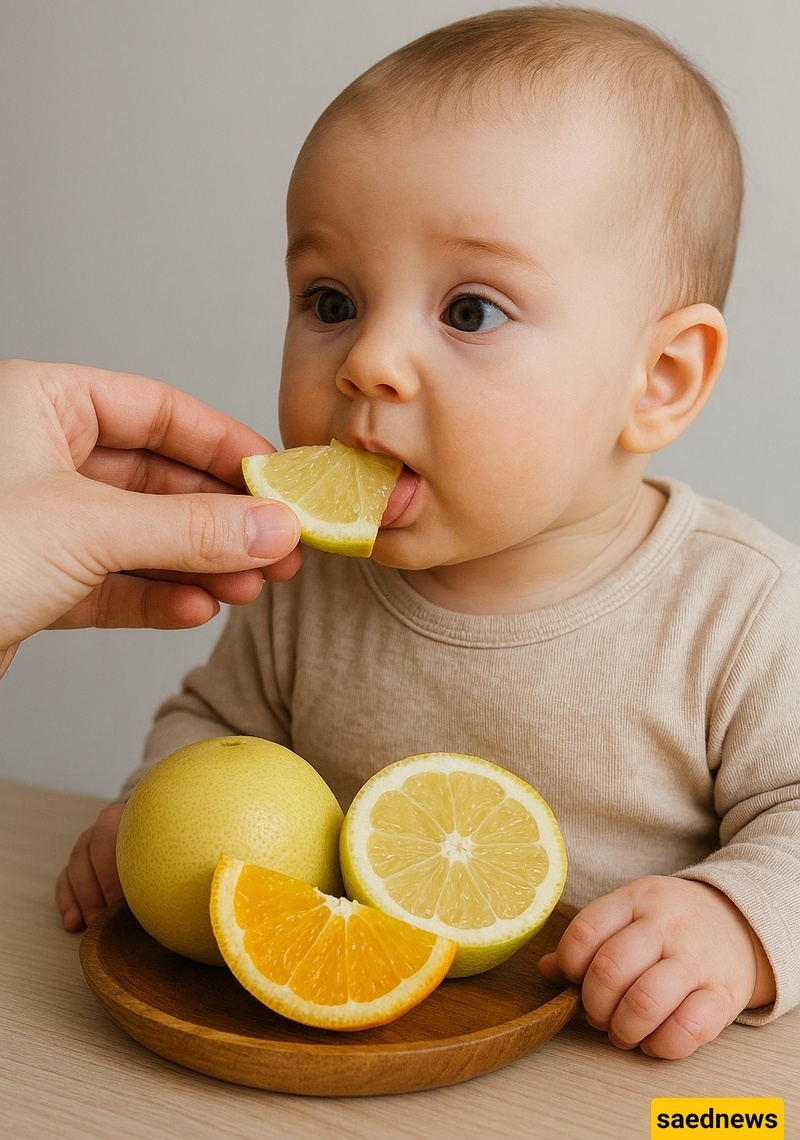
According to the Children’s News Service at Saed News, starting your baby on complementary foods is an exciting milestone for both parents and infants. Among these foods, fruits hold a special place. Sweet lemons and other citrus fruits, with their delightful taste and abundant health benefits—particularly vitamin C—can be very tempting. But a key question for many parents is: when is the right time to add these acidic fruits to a baby’s diet? Rushing this step can lead to digestive issues in sensitive infants. In this article, based on reliable sources, we explore the best timing and essential tips for introducing sweet lemons and other citrus fruits to your baby.
Child nutrition and pediatric experts generally agree that the best time to introduce citrus fruits like sweet lemon, orange, and tangerine is after the baby turns one year old. While some pediatricians may allow very small amounts of sweet lemon juice from around eight months with caution, the prevailing recommendation is to wait until 12 months of age.
The main reasons for this guidance include:
High acidity: Citrus fruits contain citric acid, making them acidic by nature. A baby’s digestive system in the first months of life is not fully developed and is sensitive. Acidic foods can disrupt their delicate stomach balance, causing reflux, stomach aches, or worsening existing digestive discomfort.
Risk of sensitivity and rashes: The acidity of these fruits can trigger or worsen diaper rashes. Some infants may also develop mild skin irritation around the mouth, characterized by redness or a burning sensation. This reaction is not necessarily a classic allergy but a response to the fruit’s acid.
Incomplete digestive enzymes: Enzymes required to properly digest certain fruits, including citrus, are not produced in sufficient amounts in babies until around their first birthday. Introducing these fruits too early can make digestion difficult.

Once your child reaches one year and is ready, you can gradually introduce citrus fruits. Follow these key tips:
The Three-Day Rule: For the first time, offer a very small amount of diluted sweet lemon juice or a small wedge of orange (without skin or seeds). Then, wait three days before introducing any new foods, carefully monitoring for any signs of sensitivity.
Watch for allergic reactions: Symptoms of citrus intolerance in babies may include:
Skin rashes, hives, or eczema
Redness or inflammation around the mouth or diaper area
Vomiting or diarrhea
Stomach pain or unusual fussiness
If any of these occur, stop giving the fruit and consult your pediatrician.
Start with sweet lemon: Among citrus fruits, sweet lemon has a milder acidity, making it a good starting option.
Remove skin and seeds: Always remove the peel, white pith, and seeds, as these can pose a choking hazard and are difficult for babies to digest.
A longstanding myth suggests using sweet lemon juice to treat jaundice in newborns. Pediatric experts strongly advise against this. In the first days and weeks, a baby’s digestive system is only ready for breast milk or formula, and any other food—including sweet lemon juice—can be dangerous, potentially causing diarrhea or more serious complications.
Sweet lemons and other citrus fruits are rich in essential nutrients for a child’s growth. However, introducing them at the wrong time can do more harm than good. Remember, your baby’s digestive system needs time to mature. By waiting until after one year and introducing citrus fruits gradually and carefully, you can safely share their benefits and expose your child to new, delightful flavors. Always consult your pediatrician about your child’s diet, especially if there is a family history of allergies.














![[Video] Two Aircraft Intercepted Near Trump Golf Club After Entering Restricted Airspace](https://en.saednews.com/storage/files/post/678cf3b4-38d3-4114-b229-5316bfbe9da7-vOkXyCloq1rXAPV1/1x1-image.jpg)