SAEDNEWS: Almost everyone takes antibiotics at least once in their lifetime. These drugs fight a wide range of bacterial infections, including pneumonia, bronchitis, ear infections, meningitis, urinary tract infections, and sepsis, saving millions of lives.

According to the History and Culture Service of Saed News, the first antibiotic, Penicillin G, was discovered in 1928 by Scottish biologist Alexander Fleming but was not used clinically until 1941. Around the same time, widespread use of another class of antibiotics, sulfonamides, began, saving thousands of lives during World War II. Over 80 years after the introduction of antibiotics, there are now more than 15 families of antibiotics, differing in chemical structure and mechanisms against bacteria. The issue of antibiotic resistance was first raised by Fleming in 1945. He predicted the dangers of misuse and warned that microbes could develop resistance to penicillin.
Initially, Fleming’s warning went largely unnoticed, and antibiotics became widely used from the 1940s onward. They were considered “magic bullets” that, alongside vaccines, dramatically reduced the impact of bacterial infectious diseases, at least in industrialized nations.
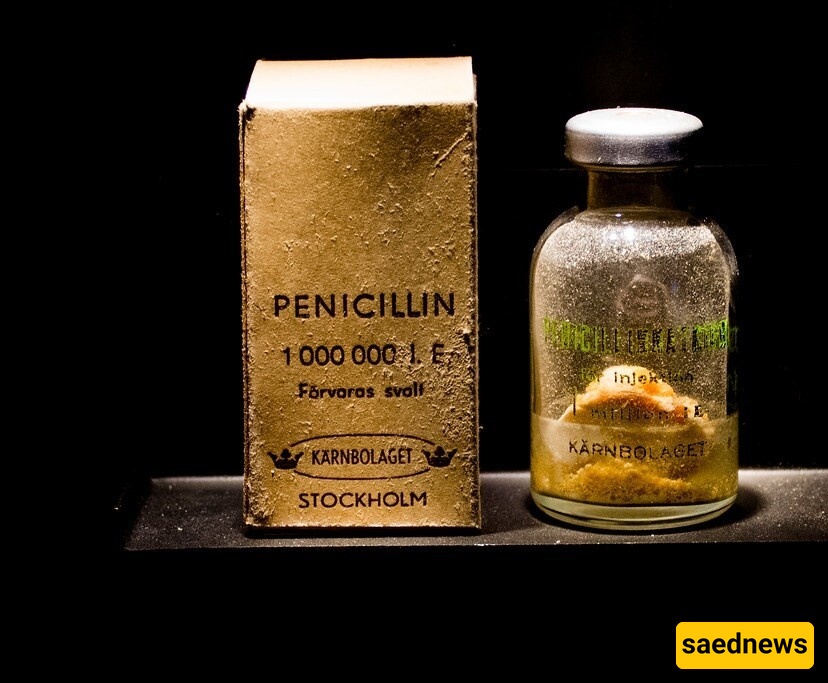
One of the first vials of penicillin is now displayed at the Nobel Museum in Stockholm.
However, the golden age of antibiotics ended in the early 1990s, as it became increasingly clear that a troubling number of bacteria had developed resistance. Doctors frequently encountered therapeutic dead-ends when treating patients because no antibiotic was effective against certain infections—and the problem continues to accelerate.
While penicillin could destroy around 100 types of microbes in the 1940s, today it is effective against only five.