SAEDNEWS: The President said that while Iran’s enemies seek to exploit recent events to create instability, domestic shortcomings must also be openly acknowledged and not blamed solely on outsiders.
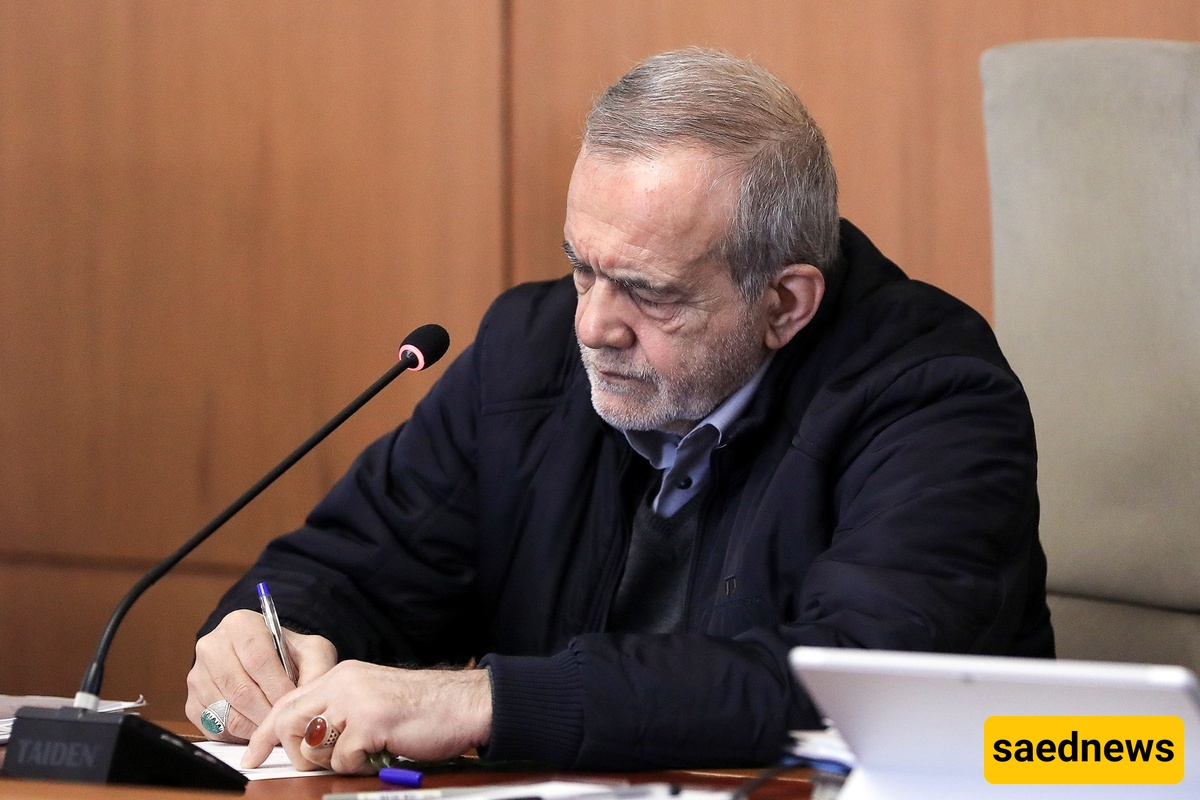
According to the Political Service of SaedNews, citing the official website of the Presidency, the 149th session of the Cabinet was held yesterday morning, Wednesday, 8 Bahman 1404 (January 28, 2026), chaired by Dr. Masoud Pezeshkian. Key topics on the agenda included executive, administrative, social, and foreign policy matters.
During the session, the President emphasized the necessity of responsible, on-the-ground management of the recent incidents’ consequences. Governors across the country were tasked with establishing specialized provincial working groups. These groups are required to meet regularly and in person with all affected individuals and their families, conduct detailed, case-by-case, evidence-based analyses of the causes and factors behind the incidents, and submit comprehensive reports to the government.
Dr. Pezeshkian highlighted the complexity of the recent developments, stating that while the enemies of the Islamic Republic of Iran constantly seek to exploit situations to create unrest and instability, a realistic approach requires that domestic weaknesses and shortcomings also be transparently identified, and that all responsibility should not be attributed solely to external factors.
Accordingly, ministries were instructed to form specialized working groups to identify and analyze the causes of the events. Through regular meetings and interactions with various social groups—including students, artists, public figures, athletes, and other relevant stakeholders within their areas of responsibility—they are to facilitate effective dialogue, inform public opinion, and follow up on legitimate demands.
The President also directed the Minister of Justice to coordinate with the Judiciary to expedite the release of relevant detainees. It was further stressed that interactions with artists and cultural figures should avoid any punitive measures, and that issues related to recent events should be resolved through dialogue and established governance mechanisms.
Dr. Pezeshkian also underscored the importance of identifying managerial shortcomings and clearly communicating Iran’s positions and actions both domestically and internationally.
In another session segment, the integration of customs and border management was discussed in detail. The Head of Iran Customs Administration presented a comprehensive report on the project’s dimensions, implementation requirements, and operational mechanisms for integrated management. The President, referencing successful international experiences in integrated border management, called for comparative studies with successful countries, particularly neighboring states, and emphasized the use of expert advisory capacities from countries with proven experience, if necessary.
The Foreign Minister provided an update on recent international developments, including the latest actions of the United States, which were thoroughly reviewed by Cabinet members.
Additionally, Dr. Aref raised a point regarding the closure of the newspaper Ham-Mihan, requesting clear explanations on the legal and administrative grounds for this decision. He stressed that shutting down media outlets solely for expressing criticism requires careful review and public justification. The government’s representative on the relevant committee was questioned, and the Minister of Culture and Islamic Guidance provided clarifications.
In the final part of the session, the issuance of motorcycle licenses for women by the General Command of Iran’s Law Enforcement Forces was discussed and approved. According to the resolution, the Law Enforcement Command is required to organize practical training for female applicants through female instructors, with examination processes prioritized for female officers. In the absence of sufficient female officers, qualified male examiners may be used under strict adherence to religious guidelines and direct supervision by traffic police.
Furthermore, aligned with national policies to reduce environmental pollution and reliance on fossil fuels, the Ministry of Industry, Mine, and Trade was tasked, in collaboration with the National Standards Organization of Iran, to prioritize the design, production, and distribution of electric motorcycles. These vehicles must meet all related safety requirements, including standard helmets, anti-lock braking systems (ABS), warning lights, and reflective equipment, for use by all citizens, both women and men.