SAEDNEWS: Fars’ cultural heritage department is set to use drones and electronic monitoring systems to oversee nationally and globally registered heritage sites scattered across the southern Iranian province.
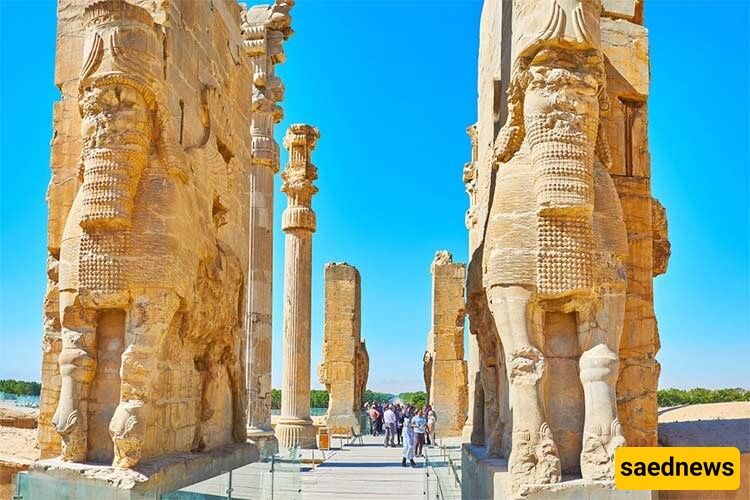
According to SAEDNEWS, The scheme will be implemented within the next month on many sites such as Persepolis, Pasargadae and Naqsh-e Rostam, to name a few, a provincial official said on Sunday.
Behzad Moridi, the provincial director general of cultural heritage, tourism and handicrafts, said an electronic monitoring center for historical sites will be launched before the Nowruz holidays in March 2026 to enable round-the-clock surveillance and management of archaeological areas.
“The establishment of a central electronic monitoring system for archaeological sites in Fars province is underway and is expected to be operational before Nowruz 1405,” Moridi told the ILNA news agency.
He said sites that have access to, or can be connected to, fiber-optic networks will be linked to the monitoring center within a month to allow 24-hour observation of historical areas.
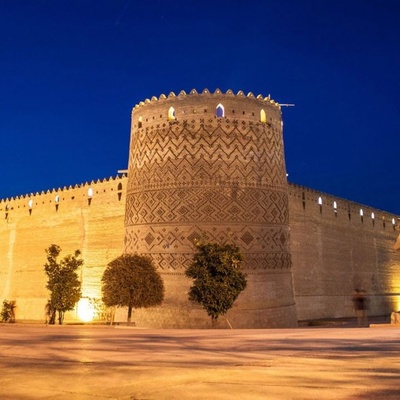
Moridi said priority will be given to major sites, including Persepolis, Pasargadae, Naqsh-e Rostam, Naqsh-e Rajab, Sarvestan Palace, Eram Garden, Hafezieh and Saadieh.
He said the system is not limited to preventing damage to heritage sites but can also be used for site surveys, monitoring visitor movement and managing crowds during peak periods.
“During busy days, especially the Nowruz holidays, monitoring visitor routes can help direct tourists toward less crowded sites and reduce congestion,” Moridi said.
He added that drones will be used, where permitted, to monitor large archaeological areas and detect illegal excavations, noting that some sites are already covered and that talks are ongoing with relevant authorities to obtain additional flight permits.
Moridi said traditional protection methods are insufficient given the scale of heritage sites in the province and limited human resources.
“Monitoring extensive areas such as Mount Rahmat or the ancient city of Beyza requires manpower that cannot be provided with current resources,” he said.
Fars province has more than 10,000 historical assets, including 11 UNESCO-listed sites, about 3,300 nationally registered monuments and around 7,000 sites eligible for national registration, Moridi said.
He expressed hope that expanding the use of electronic monitoring and drones would allow continuous and systematic protection of the province’s archaeological sites.
Fars province, historically known as Persis, was the heartland of the Achaemenid Empire (550–330 BC), founded by Cyrus the Great. It was later the administrative center under Darius I, who established Persepolis as the empire’s ceremonial capital. Today, Fars remains one of Iran’s most culturally significant regions, home to iconic poets, historical sites, and architectural marvels.
Shiraz, the administrative center of Fars, is celebrated as the city of poetry, nightingales, and gardens. It was a major center of learning in the medieval Islamic world and served as the capital during the Zand dynasty (1751–1794). The city houses several breathtaking landmarks, including the Afif-Abad Garden, the Tomb of Hafez, the Tomb of Sa’di, and the Atigh Jameh Mosque. Additionally, its lush Persian gardens, such as Narenjestan Garden and Eram Garden, continue to enchant visitors from around the world.
Persepolis, also known as Takht-e Jamshid, was founded by Darius the Great around 518 BC as the ceremonial capital of the Achaemenid Empire. The vast terrace and palatial complex, located 60 km northeast of Shiraz, was destroyed by Alexander the Great in 330 BC. Its ruins, including the Apadana Palace and the Hundred-Column Hall, are regarded as one of the world’s foremost archaeological sites.
Pasargadae developed into a city of some significance until it was superseded by Darius I’s magnificent palace in Persepolis. The key sights on this isolated plain are the Tomb of Cyrus, Darius' Garden, and Cyrus' private palace. Around 500m north of Cyrus’ private palace is the remains of the Prison of Solomon (Zendan-e Soleiman), variously thought to be a fire temple, tomb, sundial, or store. The 160-ha archaeological site of Pasargadae presents some of the earliest manifestations of Persian art and architecture.
Naqsh-e Rostam contains rock-cut tombs of four Achaemenid kings, including Darius I, and numerous reliefs from the Elamite, Achaemenid and Sasanian periods. The site has long been regarded as a religious and cultural centre, with inscriptions, reliefs and structures such as the Ka’ba-ye Zartosht reflecting its importance in pre- and post-Islamic Iran. Archaeologists say the discovery of funerary inscriptions at the site may shed new light on late Sasanian Zoroastrian burial customs and beliefs about purification and the afterlife. The name Naqsh-e Rostam, translates to “Picture of Rostam,” pays homage to the legendary Iranian hero celebrated in the Shahnameh and Persian mythology. In ancient times, locals mistakenly believed the carvings beneath the tombs depicted scenes from Rostam’s tales.
In 2018, UNESCO added “Sassanid Archaeological Landscape of Fars Region”, which is an ensemble of Sassanian historical cities in southern Iran, to its World Heritage list. The serial property is composed of eight selected archaeological site components in three geographical-area contexts at Firuzabad, Bishapur, and Sarvestan, all located in Fars.