SAEDNEWS: Discover Istanbul: Exploring the History, Culture, and Beauty of Türkiye’s Iconic City
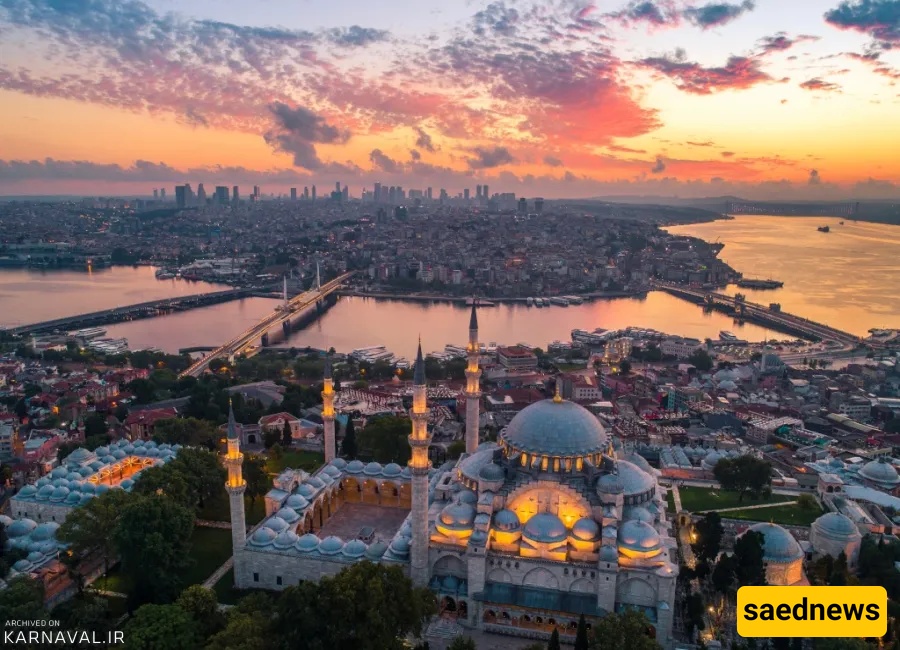
According to Saednews, Istanbul is the largest city in Turkey and its cultural and economic center. The city is situated along the Bosphorus Strait and the Sea of Marmara. The Bosphorus separates the continents of Asia and Europe, making Istanbul the only major city in the world located on two continents. The city is also home to the natural harbor known as the Golden Horn.
Istanbul was selected as the European Capital of Culture for 2010.
Some of the main public swimming areas in Istanbul are located in Bakırköy, Küçükçekmece, Sarıyer, and along the Bosphorus. Outside the city, popular coastal destinations include the Princes’ Islands in the Sea of Marmara, Silivri, Tuzla, Kilyos, and Şile on the Black Sea coast.
The Princes’ Islands, also known as Adalar, are a group of islands in the Sea of Marmara, south of Kartal and Pendik. They are accessible by regular passenger boats and fast ferries departing from Eminönü and Kartal.
Şile is a popular coastal resort and fishing town on the Black Sea, approximately 50 kilometers from Istanbul. Kilyos is another peaceful seaside destination located near the northern entrance of the Bosphorus on the European side. It is an excellent place for swimming and has become a popular recreational destination among Istanbul residents.
Kilyos also features a beach park with several restaurants.
Newsweek magazine has described Istanbul as a city connecting Europe. After decades of balancing its Eastern heritage with Western influences, Istanbul has rediscovered its identity as a modern and vibrant metropolis. The European side is particularly lively, offering a fascinating combination of traditional markets, Byzantine churches, and Ottoman architecture.
Many Iranian tourists choose Istanbul as a shopping destination, particularly for clothing and textiles. Turkish fabrics and garments are well known for their quality and craftsmanship, making Istanbul an excellent destination for shopping.
The city offers numerous shopping centers and traditional markets that attract shoppers from around the world. One of its well-known shopping destinations is Akmerkez Shopping Mall.
Akmerkez offers a wide range of products, including women's, men's, and children's clothing, toys, glasses, electronic equipment, and many other items.
Another famous shopping destination is the Grand Bazaar, known locally as Kapalıçarşı. This covered market contains more than 4,000 shops and boutiques. Its different sections include streets dedicated to carpets, clothing, jewelry, textiles, and other merchandise, making shopping in Istanbul a diverse experience.
According to market experts, the Grand Bazaar is one of Istanbul's most important shopping centers.
Interestingly, one of Turkey's traditional souvenirs exported around the world is the hookah, known in many European countries as a water pipe. Other popular souvenirs include handicrafts, rugs, ceramic and brassware, and various traditional Turkish products.
The western section of the Grand Bazaar, which includes the historic second-hand market, also offers a variety of antiques.
Another popular shopping destination is the Spice Bazaar, known as Mısır Çarşısı. This market specializes in spices and is filled with the aromas of numerous herbs, seasonings, and traditional ingredients.
Visitors can also explore traditional handicraft markets and historic workshops, such as those associated with Mehmet Efendi, established in the eighteenth century, and Caferağa Medrese, dating back to the sixteenth century. These places offer handmade products created by skilled local artisans.
However, clothing and textiles remain among the most popular purchases in Istanbul. The best shopping areas for garments and fabrics include Istiklal Avenue, Cumhuriyet Avenue, and Rumeli Avenue.
Istiklal Avenue is one of Istanbul's most famous streets, connecting the city center with Taksim Square. It features the latest collections of clothing, bags, and footwear.
Other shopping destinations worth visiting include Galleria Shopping Mall in Ataköy, Akmerkez, and Carousel Shopping Mall in Bakırköy.
Shopping opportunities in Istanbul do not end there. Other notable destinations include Atlas Passage, Capitol Shopping Mall on the Asian side, Bağdat Avenue, and Bahariye Avenue.
The Sahaflar Book Bazaar, also known as Sahaflar Çarşısı, near Beyazıt Square, is another interesting shopping destination. The Horhor Market is famous for furniture and home decoration. Other traditional markets include the Çukurcuma street market in Cihangir and the Büyükk Hamam area in Üsküdar.
Istanbul has two international airports.
The largest airport at the time described in this article was Atatürk International Airport, located in Yeşilköy, approximately 24 kilometers from the city center on the European side.
The other airport, Sabiha Gökçen International Airport, is located on the Asian side, approximately 20 kilometers from the eastern districts and around 45 kilometers from the European city center.
Public transportation in Istanbul includes private taxis, shared minivans, minibuses, buses, trams, light rail systems, funicular railways, and various passenger boats and ferries.
Taxis in Istanbul are traditionally yellow, and fares are calculated using a taximeter. However, taxi services can be relatively expensive.
According to the historical information in this article, the initial taxi fare was approximately $2. A journey of around 10 kilometers could cost between $20 and $30, depending on traffic conditions.
These taxis operate as private vehicles and do not normally carry unrelated passengers.
Another form of taxi service consists of shared minivans known as Dolmuş. These vehicles are also traditionally yellow and can accommodate approximately 10 passengers.
They operate on designated routes and charge a fixed fare. The historical fare mentioned in this article was approximately 1.5 Turkish lira per passenger, equivalent to around $1 at the time.
Unlike regular buses, Dolmuş vehicles do not necessarily stop at designated stations. They can stop upon passengers' requests.
Minibuses operating in Istanbul generally accommodate around 15 passengers and travel along specific routes.
Like shared minivans, they do not always have designated stops and may stop when passengers request to board or get off.
The historical fare mentioned in the article was approximately $1, or 1.5 Turkish lira.
Istanbul's bus network provides relatively regular services throughout the city.
Some buses are operated by the public sector, while others belong to private companies. However, fares were generally the same.
According to the historical information in this article, the fare was approximately $1, or 1.5 Turkish lira.
Passengers could pay using electronic tickets or cash. When paying in cash, the driver or assistant provided an electronic card that passengers placed in the designated machine to deduct the fare.
Istanbul was originally known as Byzantium.
In 196 AD, the Roman Emperor Septimius Severus attacked and occupied Byzantium, after which many Romans migrated to the city.
The emperor attempted to rename the city Augusta Antonina, after his son, but the name did not become widely accepted. Before the city was officially renamed Constantinople, people also used the name Nova Roma, meaning New Rome.
The city became officially known as Istanbul in 1930.
The name Istanbul, which was already in use before the Ottoman conquest, is believed to derive from the Greek expression "eis tin poli," meaning "to the city" or "into the city."
In 1770, Sultan Mustafa III issued coins bearing the name Istanbul, helping establish its official use alongside the older name Constantinople.
During the Republican era, on March 28, 1930, the Turkish postal administration requested that countries around the world use the name Istanbul in their official correspondence.
Istanbul has always been the economic center of Turkey, largely because of its strategic location connecting international land and sea trade routes.
According to the historical statistics presented in this article, Istanbul accounted for approximately 20% of Turkey's industrial workforce and 38% of its industrial business establishments.
The city also generated a significant share of Turkey's commercial activity and national production. Approximately 40% of the taxes collected in Turkey and 27.5% of the country's national output were attributed to Istanbul, according to the figures cited in the original source.
Until 1980, Istanbul's gross domestic product grew by an average of approximately 5% annually.
Today, Istanbul remains Turkey's leading industrial center. Many of the country's major manufacturing companies and production facilities are concentrated in the city.
Istanbul and its surrounding provinces produce cotton, fruit, olive oil, silk, and tobacco.
Important industrial products include:
Food and beverages
Textiles and clothing
Oil-based products
Rubber and metal goods
Leather products
Chemicals
Electronics
Glass products
Machinery
Paper and paper products
Another major part of Istanbul's economy is tourism. Thousands of hotels and tourism-related businesses operate in the city, providing professional services to visitors from around the world.
Istanbul can generally be divided into three main geographical and historical areas.
The historic peninsula, which forms the heart of old Istanbul, includes the districts of Eminönü and Fatih.
These areas are located along the northern shores of the Golden Horn, which separates the historic city center from the northern and more modern parts of the European side.
The historic peninsula ends at the Walls of Constantinople to the west. It is surrounded by the Sea of Marmara to the south and the Bosphorus to the east.
North of the Golden Horn are the historic districts of Beyoğlu and Beşiktaş, including areas associated with the residences of the last Ottoman sultans.
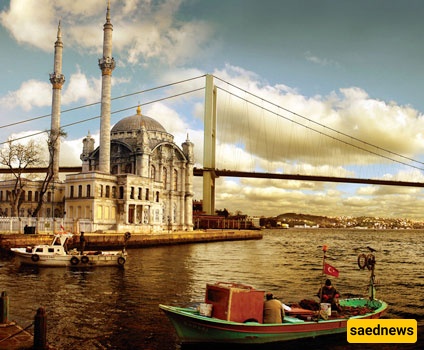
A chain of former villages, including Ortaköy and Bebek, stretches along the Bosphorus shoreline.
On both the European and Asian sides of the Bosphorus, wealthy Istanbul residents built beautiful wooden mansions known as Yalı. These waterfront properties were traditionally used as summer residences.
Üsküdar and Kadıköy are located on the Asian side of Istanbul.
Although they were historically independent towns, they have developed into modern commercial and residential districts. Together, these areas accommodate approximately one-third of Istanbul's population.
Urban expansion and the construction of residential and administrative buildings have largely concentrated in the northern parts of the European side.
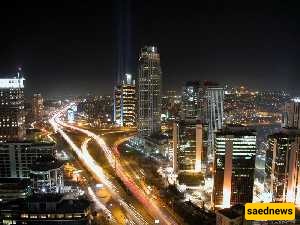
The districts of Maslak, Levent, and Etiler are particularly well known for their commercial centers, office buildings, and shopping malls. They are situated between the Bosphorus Bridge and the Fatih Sultan Mehmet Bridge.
Istanbul's suburban expansion took place mainly during the second half of the twentieth century. During this period, significant parts of the city expanded through unauthorized construction and informal settlements.
In more recent years, many of these areas have been demolished and replaced by large-scale development projects, including My World, Supreme Court-related developments, and other projects led by public-sector companies.