SAEDNEWS: A suitcase may need replacing when damaged wheels, broken zippers, structural wear, or unreliable handles make travel difficult or unsafe.
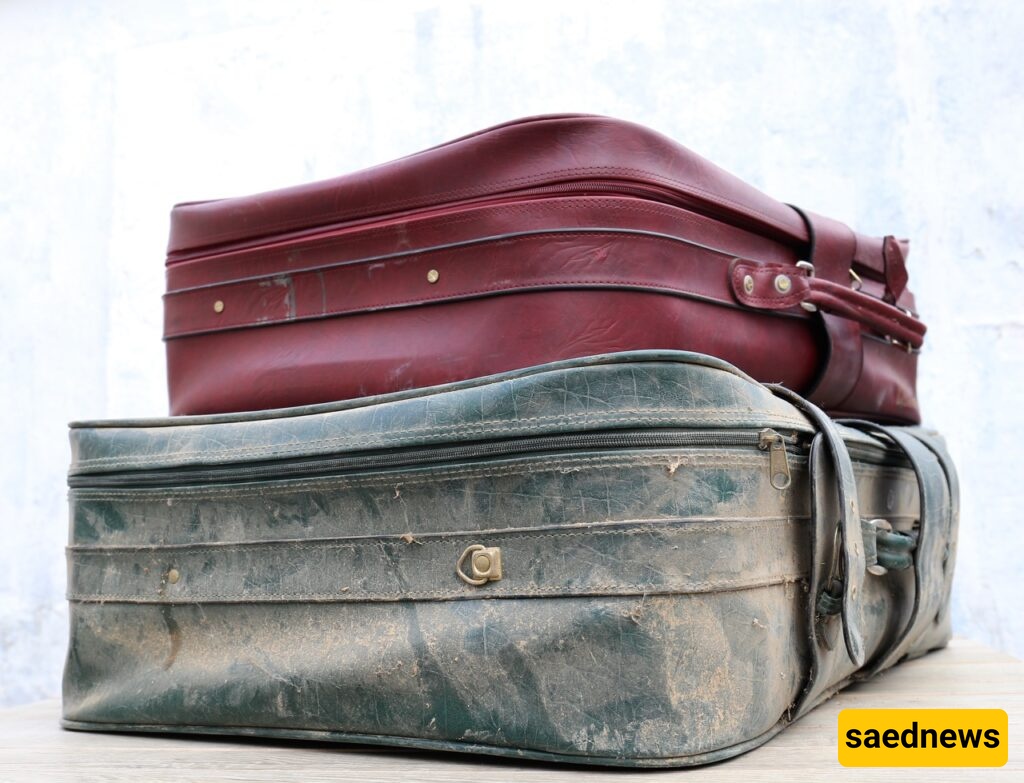
According to SAEDNEWS, an old suitcase does not necessarily need to be replaced simply because it has been used for many years. The more useful question is whether it can still protect belongings and move easily without creating problems during a trip. Visible damage and repeated functional issues are often better indicators than age alone.
Pay attention to these warning signs:
Cracked or badly damaged shell: Small cosmetic scratches are usually harmless, but deep cracks can weaken the suitcase and expose its contents to damage.
Wheels that no longer roll properly: Wheels that stick, wobble, or repeatedly come loose can make moving through airports and streets unnecessarily difficult.
A faulty handle: If the telescopic handle jams, feels unstable, or refuses to lock securely, it may become unreliable when the suitcase is fully packed.
Broken or difficult zippers: A zipper that repeatedly separates or gets stuck may eventually fail while the suitcase is being handled.
Damaged seams or fabric: On soft-sided luggage, torn fabric, weakened seams, or damaged corners can reduce the suitcase's ability to protect what is inside.
Not every problem means the suitcase has reached the end of its useful life. A suitcase with a minor wheel problem, loose screw, or small cosmetic defect may be worth repairing, particularly if the main body remains strong and the repair is practical.
Replacement becomes more reasonable when several components are failing at the same time. For example, repairing a wheel may not solve the larger problem if the handle is also unstable and the zipper is repeatedly malfunctioning.
Before traveling, pack the suitcase with a typical load and check a few basic functions:
Roll it on different surfaces to see whether the wheels move smoothly.
Extend and retract the handle several times and make sure it locks securely.
Open and close every zipper without forcing it.
Inspect the shell, fabric, seams, and corners for cracks or significant damage.
Check the closure system to make sure the suitcase stays securely closed.
If these checks reveal recurring problems that cannot be repaired reliably, replacing the suitcase before the trip can prevent a minor defect from becoming a travel-day inconvenience.
A well-maintained suitcase can remain useful for years, while a heavily used one may develop serious problems sooner. How often it is traveled with, how it has been handled, its construction, and how well it has been stored can all affect its condition.
The clearest reason to replace an old suitcase is therefore loss of function rather than age alone. If it still rolls smoothly, closes securely, protects its contents, and has a stable handle, continued use may be reasonable. If several essential parts are unreliable or the structure is significantly damaged, a new suitcase may be the more practical choice.