SAEDNEWS: Read everything you need to know about the Moscow Kremlin Palace in Russia, including its history, visitor information, opening hours, guided tours, and what to expect when exploring the magnificent interiors of this iconic Moscow landmark.
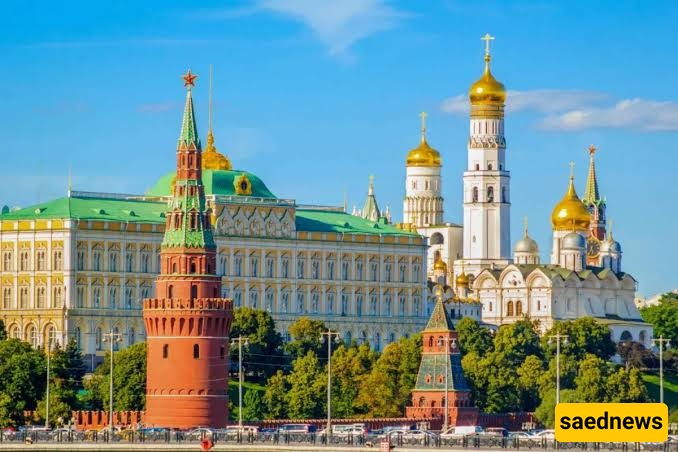
According to Saednews, The Moscow Kremlin is one of Russia's most iconic landmarks and the historic heart of Moscow. Located beside Red Square, this magnificent fortress has served as the political, cultural, and religious center of the country for centuries. Today, it remains the official residence of the President of Russia and is recognized as one of the world's most significant architectural and historical complexes.
Designated as a UNESCO World Heritage Site in 1990, the Kremlin is far more than a single palace. It is a vast fortified complex containing palaces, cathedrals, museums, towers, gardens, and government buildings that together reflect more than six centuries of Russian history.
The origins of the Kremlin date back to the 15th century, when it was established on the northern bank of the Moscow River as a fortified citadel. Rather than being just a royal residence, it functioned as the stronghold of the Russian tsars, protecting them from invading forces.
Following the Mongol invasions, which caused extensive destruction, Grand Prince Dmitry Donskoy ordered the reconstruction of the fortress between 1366 and 1368. The original wooden defensive walls were replaced with strong limestone fortifications, greatly improving the city's defenses.
His successor, Vasily I, expanded the complex by building several churches and monasteries within the Kremlin walls.
During the late 15th and early 16th centuries, Ivan III (Ivan the Great) initiated a major rebuilding program. He invited renowned Italian Renaissance architects, including Pietro Antonio Solari and Marco Ruffo, to redesign much of the Kremlin. Their work introduced Renaissance architectural techniques while preserving traditional Russian styles.
One of their most remarkable achievements was the Ivan the Great Bell Tower, which became the tallest structure in Russia for centuries. Until the early 17th century, no building was permitted to exceed its height.
Today's Kremlin largely reflects the vision created during this extensive Renaissance reconstruction, although later additions and restorations have shaped its modern appearance.
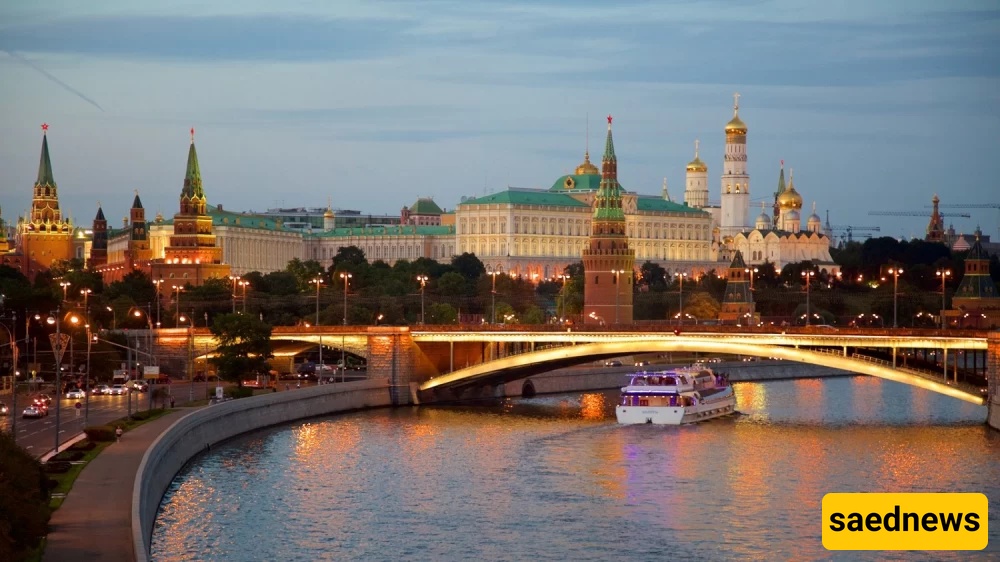
The Kremlin occupies approximately 275,000 square meters and is enclosed by massive triangular defensive walls stretching around 2.2 kilometers.
The complex includes:
Four palaces
Four major cathedrals
Twenty defensive towers
Historic walls and gates
More than 700 rooms
Spacious ceremonial courtyards
Government buildings
Museums and historic monuments
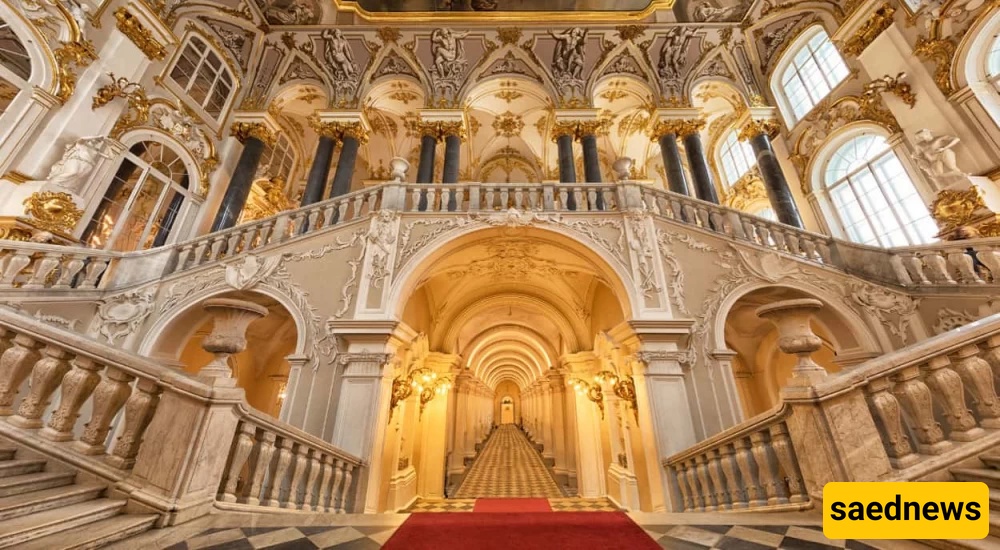
Several grand ceremonial halls—including St. George Hall, St. Vladimir Hall, Alexander Hall, St. Andrew Hall, and St. Catherine Hall—are used for official state ceremonies, diplomatic meetings, and national celebrations.
Originally, the Kremlin's walls were painted white before later acquiring their distinctive red appearance.
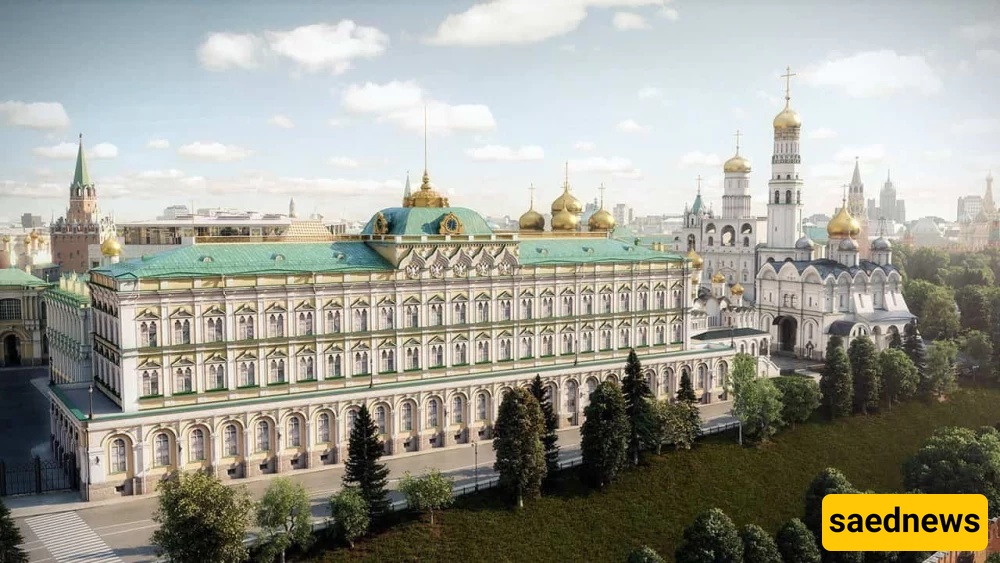
The Grand Kremlin Palace represents one of the most impressive imperial residences in Russia. Completed in its current form in 1849, the palace stretches approximately 125 meters in length.
The palace contains nearly 700 rooms, including royal apartments, ceremonial reception halls, government offices, and state meeting rooms. It was designed to accommodate both the imperial family and the administrative functions of the Russian Empire.
Today, many official state ceremonies continue to take place within the palace.
At the heart of the Kremlin lies Cathedral Square, the historic religious center of Russia.
Among the six principal buildings surrounding the square, three are major cathedrals. The most important is the Cathedral of the Dormition (Uspensky Cathedral), constructed between 1475 and 1479.
For centuries, Russian tsars were crowned inside this magnificent cathedral. Designed by the Italian architect Aristotele Fioravanti, it features five gilded domes and remains one of the finest examples of medieval Russian religious architecture.
The State Kremlin Palace, originally known as the Palace of Congresses, was completed in 1961 during the leadership of Nikita Khrushchev.
Originally built to host Communist Party congresses, the palace now serves as one of Russia's premier venues for:
Ballet performances
Opera productions
Concerts
National celebrations
Official ceremonies
Its modern architectural style contrasts with the surrounding historic buildings. The main auditorium seats approximately 6,000 people, and the facility contains hundreds of dressing rooms, conference spaces, press rooms, and technical areas.
Remarkably, construction of the palace took only 16 months, and its architects were awarded the prestigious Lenin Prize.
The Senate Building serves as the official residence of the President of Russia.
Designed by the celebrated Russian architect Matvey Kazakov under the orders of Catherine the Great, the building originally housed the governing senate of the Russian Empire.
Following the Russian Revolution, it became the workplace of Vladimir Lenin. Today, it remains one of the Kremlin's most important government buildings.
The Kremlin Armoury was established during the reign of Peter the Great as both a weapons workshop and military arsenal.
Following Russia's victory over Napoleon in 1812, the Armoury was transformed into a museum celebrating Russian military achievements.
Today, it houses one of Russia's richest collections of historical treasures, including:
Royal regalia
Imperial crowns
Ceremonial weapons
State carriages
Fabergé eggs
Historic armor
Diplomatic gifts
Many of the artillery pieces displayed outside the Armoury were captured from Napoleon's retreating army.
Russia experiences long, cold winters, making summer the most popular season for tourism. Summer temperatures generally reach up to 30°C (86°F), creating pleasant conditions for sightseeing.
However, summer is also the busiest travel season.
Visitors seeking fewer crowds and lower accommodation prices may prefer traveling during:
Late spring (May)
Early autumn (September)
These seasons offer comfortable weather while avoiding peak tourist numbers.
The Moscow Metro is the easiest, fastest, and most economical way to visit the Kremlin.
The nearest metro stations are only a short walk from the Kremlin complex, allowing visitors to enjoy both convenient transportation and the famous architecture of Moscow's historic subway stations.
Several of Moscow's most famous landmarks are located within walking distance of the Kremlin:
State Historical Museum – approximately 1 km
Lenin's Mausoleum – approximately 1.1 km
Red Square – approximately 1.2 km
Pushkin State Museum of Fine Arts – approximately 1.4 km
Old English Court Museum – approximately 1.9 km
A visit to the Moscow Kremlin offers an unforgettable journey through Russia's political, cultural, and architectural heritage. Whether exploring its ancient cathedrals, imperial palaces, historic museums, or ceremonial halls, visitors gain insight into more than 600 years of Russian history.
The Kremlin is best explored as part of a full day in central Moscow, often combined with visits to Red Square, St. Basil's Cathedral, Lenin's Mausoleum, and nearby museums. Comfortable walking shoes are recommended, as much of the complex is explored on foot. Visitors should also check opening hours and ticket availability in advance, especially during the busy summer season.